
November 7 – 20, 2026
In the Footsteps of the Buddha
Pilgrimage to India
14 days from
US $7,450
Activity Level
Light
Service Level
Premium
Group Size
Max 30
Closing Soon — Book by August 1st!
Saal Pilgrimage to India and Nepal
- Pilgrims on the ‘Saal Pilgrimage’ (the Buddha passed away under the Saal tree) will make a transformative journey through India and Nepal, visiting all the major traditional pilgrimage sites from the life of the Buddha.
- Travel to Bodhgaya, the site of the Buddha’s enlightenment; Sarnath, where he first taught the dharma; Lumbini, the site of his birth, and Kushinagar, where the Buddha died, and more.
- Immerse yourself in history and culture with the help of your world-class guide Shantum Seth, an expert with over 35 years of experience leading transformative tours, teaching and writing about the life of the Buddha.
- Visit local homes, meet local people, and experience Indian life—traditional and contemporary, bustling and serene. You will explore vibrant centers of pilgrimage and areas of rural tranquility where little has changed since the Buddha’s time.
- Two optional trips include a visit to the city of Agra, home of the Taj Mahal; and viewing the magical rock-cut cave monuments of Ajanta and Ellora.
Closing Soon — Book by August 1st!
Your Journey Leader
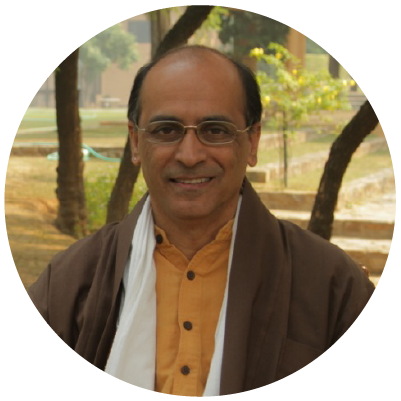
Dharmacharya Shantum Seth, an ordained dharma teacher in the Zen Buddhist lineage of Thich Nhat Hanh, is a world expert on sites associated with the Buddha and has been leading pilgrimages with his tour company Eleven Directions since 1988. He has co-authored books such as Walking with the Buddha, and has been a consultant for films such as BBC Discovery’s Life of the Buddha and BBC-PBS’s The Story of India, as well as advising the World Bank and the Indian Ministry of Tourism. Learn more at Eleven Directions.
*An alternate Eleven Direction’s guide may be used for groups of 10 or less participants.
“With each step and breath, the Buddha comes alive. Shantum’s knowledge, insight, and humor brings joy to those journeying with him in the footsteps of the Buddha.”
Thich Nhat Hanh, Vietnamese Zen Master, Plum Village, France
Itinerary
Soak up the color and vibrancy of modern India and visit UNESCO World Heritage sites, such as the place of the Buddha’s enlightenment in Bodhgaya and the ruins of Nalanda, one of the world’s most ancient universities, and experience the quiet corners of India—where little has changed in 2,500 years—as you follow in the Buddha’s footsteps.
Learn more about trip extensions below.
DAY 1 | New Delhi
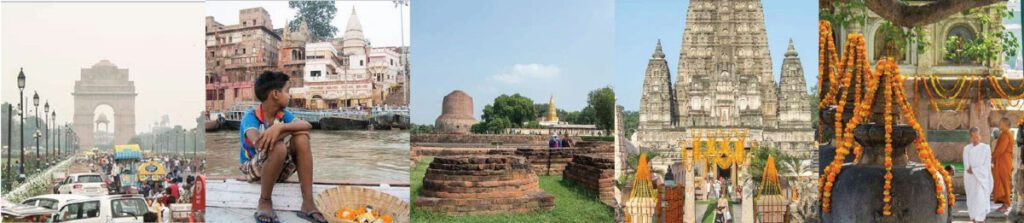
Begin your journey in New Delhi with a visit to the place where Mahatma Gandhi, the father of India, spent his last days. Gandhi’s commitment to peace and unity, the simplicity of his lifestyle, and his courage in the face of oppression offers an insight into those values which are also shared by Buddhists across the world.
DAY 2 | New Delhi – Varanasi
Fly to Varanasi, known as the spiritual capital of India. Also called the “City of Light,” Varanasi is one of the most important destinations for Hindu pilgrims who come to the bathing ghats on the banks of the Ganges.
DAY 3 | Varanasi – Sarnath – Varanasi
Watch the sun rise over the sacred city of Varanasi with a dawn boat ride on the Ganges. Gain unique insight into this atmospheric and spirited ancient city, where life and death meet on the riverside ghats. After breakfast, you will visit Sarnath. It was in the Deer Park at Sarnath that the Buddha gave his first sermons on the Middle Way, the Four Noble Truths and the Eightfold Path to his five fellow seekers who became the first monks of the order. Visit the fine archaeological museum which houses the Ashokan Lion capital (3rd century BCE) and the Teaching Buddha (5th century CE), among other great artifacts.
DAY 4 | Varanasi – (Bodhgaya by road)
Board your comfortable private coach to travel by road across the great Gangetic plains to Bodhgaya, site of the Buddha’s enlightenment. Today you’ll learn more about the central event of the Buddha’s life as you explore the Mahabodhi Temple at Bodhgaya, the UNESCO World Heritage site that now marks the spot of the Buddha’s great liberation. Soak up the cacophony of bells, gongs, and mantras and the colors of prayer flags and robes, and see the “diamond throne” marking the spot where the Buddha sat down and awakened beneath the bodhi tree.
DAY 5 | Bodhgaya
A second full day in Bodhgaya allows you the space to meditate, explore, and absorb the impact of this profound and magical place. You can also opt for a gentle gentle walk across fields to the village where Sujata, a milkmaid, offered the Buddha rice pudding, his first nourishment after his ascetic period.
DAY 6 | Bodhgaya – Rajgir
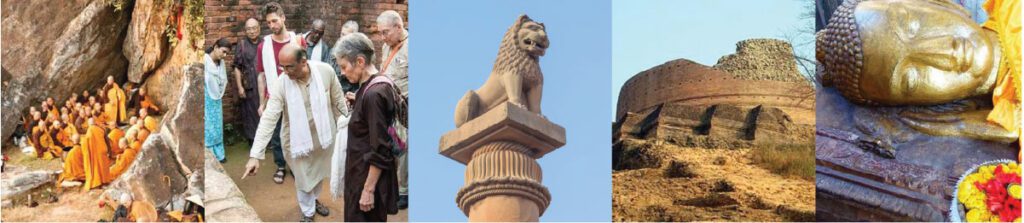
Leaving the hubbub of Bodhgaya behind you’ll travel on to Rajgir, the ancient capital of King Bimbisara, who was a great friend and protector of the Buddha. Visit some of the sites where the Buddha taught, including the iconic Vulture Peak, festooned with marigold garlands and prayer flags. It is said that the Buddha first delivered some of his most famous sutras at this spot, including the Heart Sutra and the Lotus Sutra.
DAY 7 | Rajgir – Nalanda – Rajgir
Set out from Rajgir for a daytrip to Nalanda, the UNESCO World Heritage site of one of the greatest monastic and scholastic institutions dating from the 5th century CE to the 12th century CE. Monks from all over Asia traveled here to study philosophy, mathematics, astronomy and, of course, Buddhadharma. Visit the site museum and explore the vast scale of the ruins—only a fraction of which have been excavated.
DAY 8 | Rajgir – Vaishali
Travel on across the bridge over the Ganges to peaceful Vaishali, an ancient city the Buddha visited many times and the site of the world’s first republic. Vaishali was a rich and prosperous city in the Buddha’s day, renowned for the beauty of both its lotus pools and its most famous courtesan, Amrapali, who renounced worldly life and became an arhat upon meeting the Buddha.
DAY 9 | Vaishali – Kushinagar
Drive on to Kushinagar. Forty-five years after achieving enlightenment, the Buddha died, age 80, surrounded by his monks in a grove of blooming sala trees here at Kushinagar. Spend some time in the Mahaparinirvana Temple to take in the great six-meter-long reclining statue representing the Buddha’s death, and then explore the stupas and shrines throughout the beautiful gardens. Also visit the site of the Buddha’s cremation.
DAY 10 | Kushinagar – Lumbini
Crossing the border into Nepal you’ll head to Lumbini, the Buddha’s birthplace, which is another UNESCO World Heritage Site. As was the custom, the Buddha’s mother Maya was returning to her maternal home to deliver her baby. She gave birth en route, at the grove in Lumbini.
DAY 11 | Lumbini
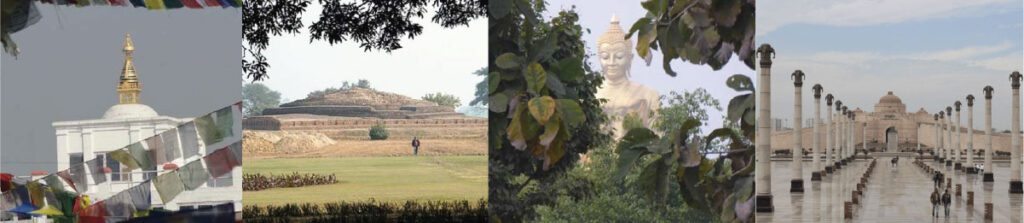
Visit the Ashokan pillar and the Maya Devi Temple marking the spot where the Buddha was born, and the sacred pool where mother and child were bathed. You will also have time to visit many of the monasteries and temples from diverse Buddhist traditions.
DAY 12 | Lumbini – Kapilavastu – Sravasti
Visit the Buddha’s childhood home of Kapilavastu, where for 29 years he lived a life of luxury in the palace. One day, the sheltered young man famously encountered the “four heavenly messengers” of old age, sickness, death, and a holy man. At that moment the Buddha vowed to leave palace life behind for the life of a wandering ascetic and set out to achieve liberation. Enjoy some time wandering the peaceful ruins in their beautiful meadow setting, and then travel on to Sravasti.
DAY 13 | Sravasti-Lucknow by road
At Sravasti, where the Buddha spent 24 rainy-season retreats, you’ll discover the ancient stupas, viharas, and temples, including the famous Jeta Grove. Sravasti was one of the largest cities in India at the time of the Buddha, and he spent more time here than anywhere else. By the time the Chinese chronicler Xuanzang arrived about 640 CE Sravasti was already in ruins, and so it remains today—a quiet vista of ruined stupas and formal gardens with monks meditating in the shade. Leaving rural tranquility behind you’ll travel on to Lucknow, the colorful and multicultural capital of Uttar Pradesh.
DAY 14 | Lucknow | Delhi
We have a closing ceremony for the pilgrimage. We then fly to Delhi (unless opting for the Building Love – Agra extension).
–Optional ExtensionS–
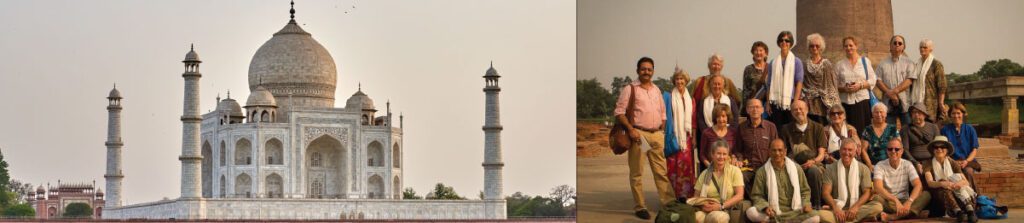
BUILDING LOVE – Agra and the Taj Mahal Option
DAY 14 | Lucknow – Agra
Take the road from Lucknow to Agra. A stronghold of the Mughal empire for centuries, Agra boasts the remarkable UNESCO-listed Agra Fort, a walled city built by the Emperor Akbar in the 16th century.
DAY 15 | Agra – Delhi by road
A stronghold of the Mughal empire for centuries, Agra boasts the remarkable UNESCO-listed majestic Taj Mahal. Commissioned in 1631 by Shah Jahan as a mausoleum for his beloved wife Mumtaz Mahal, the Taj Mahal is considered the jewel of Muslim art in India and one of the greatest examples of Islamic architecture in the world. You’ll have ample time to discover both sites before your return to Delhi by road in the evening.
EXQUISITE CAVES – Ajanta and Ellora Option
DAY 15-16 | Delhi | Aurangabad
An overnight stay in New Delhi is included on Day 15 for those who have taken both the Pilgrimage and the Agra option. On Day 16, we fly from Delhi to Aurangabad.
DAY 17 | Aurangabad – Ajanta – Aurangabad
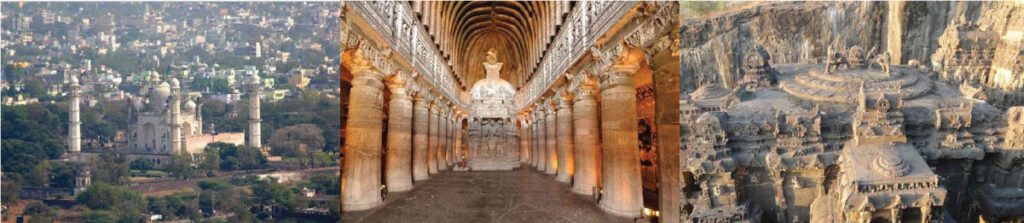
Visit the first of two UNESCO-listed cave sites. Ajanta is a horseshoe-shaped complex of 30 caves painstakingly excavated from the rock over a 900-year period from the second century BCE. For over nearly a millennium, artisans decorated the walls by lamplight, leaving us an unsurpassed legacy of sophisticated Buddhist frescoes and carvings to explore.
DAY 18 | Aurangabad – Ellora – Delhi
Continue your discovery of Buddhist cave art with a trip to Ellora. The site is one of the largest rock-cut monastic cave complexes in the world, illustrating the religious harmony of ancient India with its mix of Buddhist, Hindu, and Jain influences. The star attraction is the vast Hindu Kailash Temple—the largest monolith in the world at twice the size of the Parthenon. Marvel at the sheer scale of the structures and the carvings that pulsate with life on every surface. You’ll then return to Delhi by air.
From sacred temples to breathtaking landscapes, your journey through India awaits. Booking closes soon! Secure your spot by August 1st.
Details & Pricing
The total price includes guide services, transportation, meals, site entrance fees, bottled water, and lodging arrangements for the duration of the journeys.
The total cost for the In the Footsteps of the Buddha pilgrimage (November 7 – 20, 2026) is US $7,450, based on double occupancy. The single room supplement is an additional US $1,950*.
The cost of the Building Love (Agra and Taj Mahal) extension (November 20 – 21, 2026) is US $545 with a single room supplement of US $170*.
The cost of the Exquisite Caves (Ajanta and Ellora) extension (November 21 – 24, 2026) is US $1,810 with a single room supplement of US $635*.
* Please note that in the event that we are unable to room solo travelers with someone of the same gender, participants will be liable to pay 50% of the single room supplement. Due to the number of tourists visiting these sites in peak season it may be difficult for hotels to provide a single room, and in some very exceptional circumstances, even twin rooms may be unavailable. We ask for your understanding should this circumstance arise.
What’s Included:
- airport transfers and escort services in New Delhi
- guide services
- transportation inside India including local flights as scheduled
- site entrance fees
- all meals and bottled water
- lodging arrangements for the duration of the journey
What’s Not Included:
- international airfare to and from New Delhi
- visas and other international arrangements
- costs for any extra days spent in India beyond the dates of the journey
- any additional activities not included in the itinerary
- excess baggage fees on flights
- medical or other insurance coverage including travel insurance
- phone calls during the journey
- laundry
- spending money
- tips
To register, a non-refundable deposit of US $500 per person is required at the time of booking, with the remainder of the cost due by August 1, 2026. All registration fees are payable in US dollars or the equivalent in other currencies.
What to Expect
The Buddha lived and taught throughout the Gangetic plains of Northern India, where your journey will take you from New Delhi, through two states of northern India: Uttar Pradesh and Bihar, as well as Nepal. India’s populous cities stand in contrast to the more peaceful villages and each has a distinct and interesting lifestyle. Varanasi and Bodhgaya are both significant pilgrimage sites, having their own distinct character. In these places we get a closer view of how modern and traditional India co-exist. Kushinagar, Sravasti, and Rajgir are relatively quiet smaller towns, giving travelers the opportunity to absorb the nuances of local culture and society.
The pilgrimage offers the freedom to explore and discover the Buddha’s India with all the security and comfort of traveling in a group with an expert guide, Shantum Seth. At each pilgrimage site along the way, Shantum will tell stories of the Buddha’s life and give teachings to help us understand the Buddha as a human being, the drama of his life, and the significance of what he taught. Time is scheduled for daily sitting and walking meditation, regular discussions, and contemplation. The creation of a traveling sangha will be an important aspect of this trip, giving the journey a greater cohesiveness and building a sense of support for those seeking to deepen their practice. You’ll stay at the best available accommodations in the vicinity of the sites (which are normally five-star hotels, heritage hotels, and guest houses) with a private bath or shower and toilet.
Transport is by comfortable private coach (apart from internal flights and airport transfers). All meals are included, with a large variety of delicious local dishes and plenty on offer for vegetarians. Bottled water is also provided. English is widely spoken, and transportation and infrastructure are good, but travelers must still expect the unexpected! India is a place of contrasts: often crowded and impoverished, but also friendly, colorful, and magical. A good sense of humor, flexibility, patience, and a sense of adventure will stand you in good stead.
Reflections from Journeys with Shantum Seth
“Shantum’s ability to coordinate scheduling, living accommodations, and transportation was impressive. His skill and knowledge as a guide are unsurpassed. He made the journey highly meaningful for me and my fellow travelers, all from the States. His passion for the history and teachings of the Buddha made the experience a life-changing one.”
— Katharine Bertolet, participant
“Shantum’s love of buddhadharma and in-depth historical understanding was a constant source of enrichment. For me, the value of an ‘outer’ pilgrimage is the ability to nourish the ‘inner’ pilgrimage – traveling with Shantum did just that.”
— Larry Rosenberg, Author and guiding teacherCambridge Insight Meditation Center, USA
“What was important to me was to be guided by someone with intimate knowledge of and sensitivity to the dharma, the sacred sites, the land and its people. Shantum Seth manifested this rare combination. For me, the pilgrimage was very rich and fulfilling. I will savor it for years.”
—Eloise Ross-Jones., participant
“As a friend of Buddhist sanghas and communities, I was so happy that Shantum did not require me to be Buddhist to join. The nature of the journey is deeply spiritual, and everything that Shantum offers from Thich Nhat Hanh’s teachings was eagerly received and nourished my soul. Shantum is a Master Teacher, Wise Counselor, and a beautiful dear friend. Participating in his traveling sangha will most likely lead to numerous life-altering experiences. As Mike Dooley often says, “Thoughts become things. Choose the good ones.” After four journeys with Shantum and his wonderful staff and, most recently, with his family, he’s one of the best.”
— Aura Wright, participant
Step into one of the world’s most vibrant Buddhist cultures. Join us in India for a pilgrimage through sacred sites and timeless wisdom.
Closing Soon — Book by August 1st!
About Shantum Seth and Eleven Directions
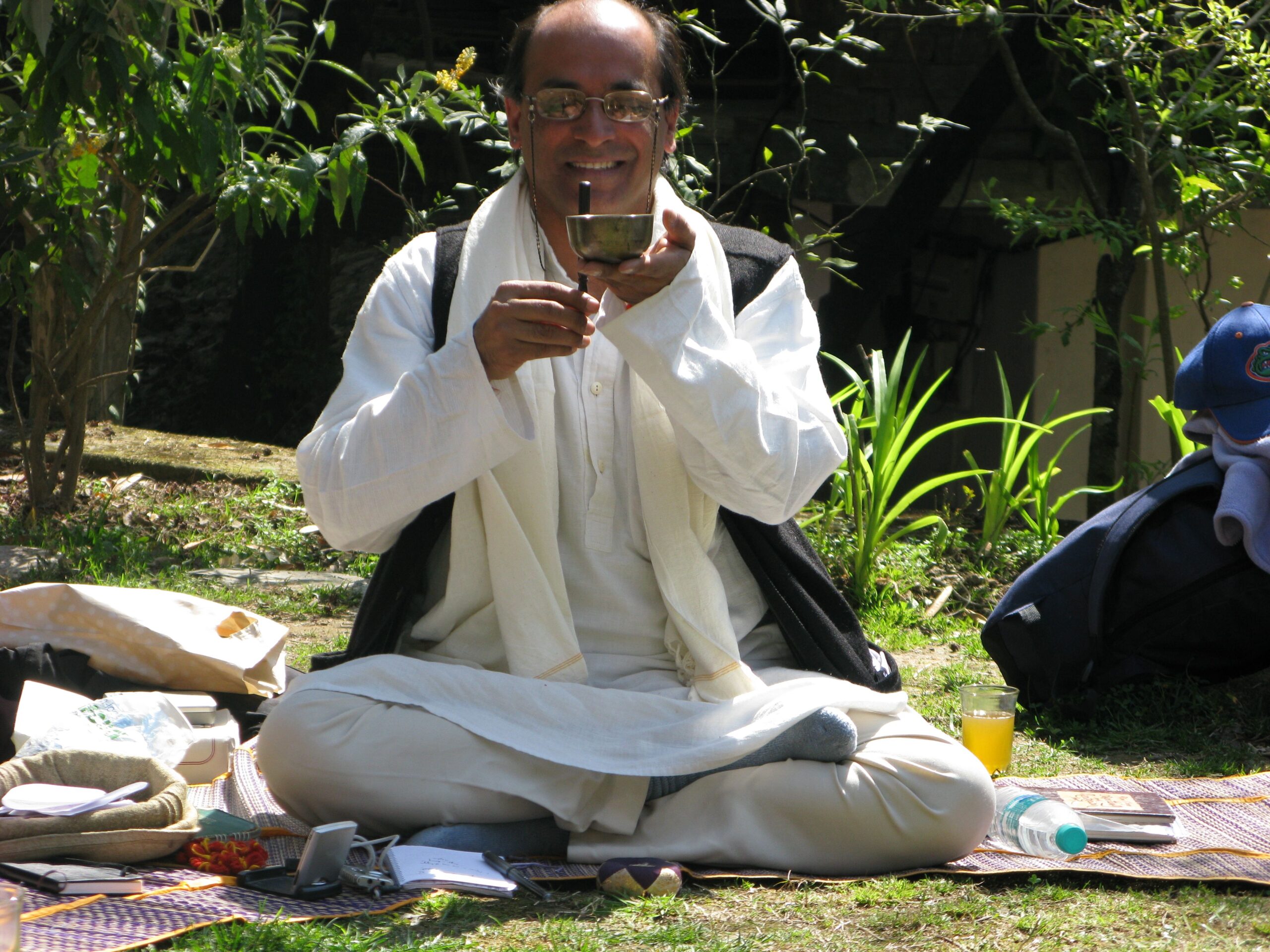
Shantum Seth is one of the world’s foremost teachers and guides to the sites associated with the Buddha. He is an ordained Buddhist teacher (Dharmacharya) in the Zen tradition of the Vietnamese master, Thich Nhat Hanh. He teaches in India and other countries and has been leading his acclaimed pilgrimage In the Footsteps of the Buddha since 1988. In the last few years he has been leading interfaith, educational, cultural, and spiritual journeys to diverse regions of India. He has been deeply involved with social and ecological development issues for over 40 years.
He has contributed to a number of books including Walking with the Buddha, I Have Arrived, I Am Home, and Volunteers Against Conflict. He has also been a consultant on films including Life of the Buddha, made by the BBC/Discovery and Michael Wood’s The Story of India, by BBC/PBS. He and his work have been featured in many magazines and newspapers including National Geographic, Qantas, The New York Times, Newsweek, Times of India, Outlook, India Today, and Hindustan Times.
Seth has been a consultant to the World Bank and the International Finance Corporation to help promote Buddhist tourism in India. He has been on the Government of India’s expert committee for the promotion of Buddhist teaching and learning, has trained guides for the Government of India and UNESCO, is on the Indian executive of the interfaith group Temple of Understanding, and has addressed a number of forums and universities including the Chicago Council of Global Affairs, the Young Presidents’ Organization (YPO) and the UNDP executive board, among others. He has also given a TEDx talk.
He is an accredited guide with the government of India, though he sees himself not merely as a guide but as a friend. He opens up his home, helps connect interesting people from all strata of society, and develops lasting friendships. A great cultural interpreter, he enjoys sharing the subtleties of India’s religions, society, economy and politics, especially with thinkers from around the world—anyone interested in understanding the mind of India and their own mind. He lives with the mission of making the world a better place and helping people awaken to their fuller potential by exposing people to different ways of living and thinking, thereby expanding consciousness and building cross-cultural understanding.
Reserve your place by August 1st to join this incredible pilgrimage.
About Lion’s Roar
Pilgrimage has been an important aspect of Buddhist practice since the time of the Buddha himself. In the Mahaparinirvana Sutra, the Buddha said:
Ananda, there are four places the sight of which should arouse a sense of urgency in the faithful. Which are they? “Here the Tathagata was born” is the first. “Here the Tathagata attained supreme enlightenment” is the second. “Here the Tathagata set in motion the wheel of the dharma” is the third. “Here the Tathagata attained parinirvana without remainder” is the fourth.
Lion’s Roar is delighted to offer this opportunity to explore the historical context of Buddhism and gain a deeper feeling for the Buddha himself, with the expert guidance of dharma teacher and writer, Dharmacharya Shantum Seth. With more than 35 years of experience, Shantum Seth is one of the world’s leading experts on the life of the Buddha and the places where he lived, taught, and attained enlightenment. In the Footsteps of the Buddha is a once-in-a-lifetime journey of discovery, meditation, and friendship that will bring you to the very core of what it is to be Buddhist.
Lion’s Roar presents this pilgrimage in affiliation with Eleven Directions and Dharmacharya Shantum Seth. Lion’s Roar receives a commission for pilgrimage bookings which helps support our charitable mission and activities.
FAQ’s
Health Concerns
We stay in clean, safe places, and the food in the places we stay will be hygienically prepared, fresh, and cooked to suit a delicate digestive system. You will be provided bottled mineral water for drinking. If you have any special dietary or medical needs, please let us know at time of registration.
What is the cancellation policy?
For cancellations received up to eight weeks prior to the commencement of the tour, only the deposit will be forfeited. There is no refund for cancellations made within eight weeks of the beginning of the journey, 100% of the total cost will be forfeit.
What travel insurance will I need?
Participants are required to carry medical insurance. Range of coverage can vary significantly from policy to policy, and travelers are encouraged to speak with a travel agency to identify a policy that suits their needs. Things to consider are travel delays, trip cancellation or interruption, medical coverage, and baggage loss or delay. Before purchasing insurance, you may wish to check with your health insurance carrier to see if your policy includes medical care overseas. Please note that many insurance carriers require that insurance be purchased at the time a deposit or final payment is made; check with your carrier for details.
What happens upon arrival?
The pilgrimage begins and ends in New Delhi, India. Participants are responsible for making their own flight arrangements to and from New Delhi. Flights to and from India are frequently full, so book early. Most international flights arrive at night or early morning. If you have any questions, feel free to check with us before you confirm your flight bookings. The journey will begin at 12.00 noon on November 7, 2026. We will arrange a complimentary airport transfer on arrival.
What happens upon departure?
We will arrange a complimentary airport transfer for your departure. The journey will end at noon on November 20, 2026 in New Delhi. You should book a late evening or night flight for your departure.
The Building Love – Agra and the Taj Mahal option will end at noon on November 21, 2026. You should book your departure flight for late evening on November 21.
The Exquisite Caves of Ajanta & Ellora option will begin on November 21, 2026 and will end on the evening of November 24. You should book a late-night flight on November 24 or early morning of November 25, 2026.
What travel documents are required?
You will need a valid passport and visas for both India and Nepal. Normally visas are valid for 6 months from date of issue. We recommend you carry photocopies of all documents in case of loss or theft. Please carry a physical copy of your international return flight ticket or your e-ticket, as this will be checked before you are allowed to enter Indian airports.
Indian visa information
TRAVEL DOCUMENTS REQUIRED FOR THIS TRIP
You will need a valid passport and visa for India.
The visa for India should be obtained before travel and should be a Double Entry or Multiple Entry. The visa should be obtained before travel. Please make sure that the visa covers the dates of your travel.
An Electronic Travel Authorization (ETA) as e-Tourist Visa on Arrival (eTVA) is available for some countries.
The Link for e-Tourist Visa
Home Page
https://indianvisaonline.gov.in/
If there are payment issues on the e-visa portal, please try and use PayPal along with your Debit card if you fail to do so by Credit card.
You may need to submit the following information about the tour company:
Company Name: Eleven Directions Pilgrimages LLP. (Government-Approved Tour Operators) 309-B Sector 15A, Noida 201301, INDIA
Tel: +91-120-4334284
Email: [email protected]
Nepal visa information
The visa for Nepal can be obtained at the Indo-Nepal border while on the tour at a cost of US $30 in cash (please bring clean and un-torn notes). Please ensure you have an empty page on your passport and one passport-sized photograph.
What are the transportation arrangements?
We provide all transportation during the journey, including your airport transfers on arrival and departure in New Delhi. There is no extra charge for meeting you at the airport and airport transfers, but for those who want to make their own arrangements, Delhi airport has taxis. The taxi stand is located just outside the airport exit. Depending on the time you arrive, the taxi fare will be in the range of Rs. 900-1200. Upon departure it is easy to get a taxi to the airport from the hotel for the same price.
Once the tour begins, transport is by comfortable private coach. Local flights are included in the cost, but please be aware of the weight allowances (15kg/33 lbs for checked baggage and 7kg/15 lbs as cabin baggage). Participants are liable for any excess baggage fees.
Can I book extra nights?
For those wishing for an extra day or two to recover from air travel before the journey begins, or who wish to stay longer after the journey ends, we would be happy to book on your behalf. October through November is a busy time of year so please make your hotel booking request well in advance.
What are the accommodations like?
Accommodations are the best available in the vicinity of the sites, which is normally five-star hotels, heritage hotels, and guest houses. Prices are based on shared, twin-bedded rooms with a private bath or shower and toilet. If you prefer a single room (where available, as the Buddhist route can occasionally get very full in November), there is a price supplement. Solo travelers who wish to room with another participant will be accommodated where possible, however in the event that the solo traveler must room alone they will be liable to pay 50% of the single supplement. Please note that in some rare cases hotels are not able to provide single, or even twin, rooms owing to the sheer volume of tourists at this time of year. In these cases we would ask for your understanding.
Will I need to bring money? How does tipping work?
Hotels, food, transportation within India, and guide services are all covered by the tour fees. It is suggested that travelers carry cash for expenses like gifts or souvenirs. Travelers will also need money if they are planning to extend their stay in India before or after the journey. Credit cards such as VISA or American Express are accepted in some of the hotels and large shops in Delhi or Varanasi, but not in all the places we visit. There are ATM machines in most places where one can access cash, but their presence is not universal as it is in the US or other countries. We recommend that you exchange your money in New Delhi. There is no need to exchange it in the US.
US$ 500 in cash currency is a suggested amount to carry to India. One US Dollar approximates 90.75 Indian Rupees as of February 9, 2026. We recommend that you convert some cash at the airport when you arrive in New Delhi. There is no need to exchange it in your country — it is best to do so in India. There are a couple of banks with a standard exchange rate at the airport both before and after you clear Customs. Please keep your bank receipts carefully in case you need to change the money into dollars when you return home.
Travelers often have questions about tipping. We have developed a system where a kitty is collected at the beginning, and the tips are distributed from it (contributing is optional). This covers all the incidental tipping/donations during the pilgrimage at hotels/restaurants etc. A tip for the guides and drivers is an optional addition to this kitty. Thus far, this has worked well. It usually works out to $10 to $15 per person per day. It would be a good idea to set aside $200 for tips.
If you arrive before the start of the journey or stay after it concludes, the general rule is as follows: tipping someone who has carried your luggage is common and we would suggest Rs. 100. In restaurants, one normally leaves a tip of between 5% to 10% of the entire bill, unless a service charge has already been levied. It is not necessary to tip taxi drivers; however, if you have hired a car for the day and you are happy with the driver, a tip of between of Rs. Rs. 200 to Rs. 500 is appropriate.
Do I need a plug adaptor?
India uses 220 volts, 50 cycles AC. Plugs/sockets can be an issue (the electrical sockets in India have round holes, not flat ones, so please ensure that your plug has rounded stems). It’s best to travel with a universal plug adapter.
What should I pack?
Given that there can be a high variation between the daytime and evening temperatures (the general range is from 10 – 30°C/50 – 85°F), layering is a practical approach. India is a conservative country so it’s important to be comfortable and modestly dressed. We recommend that you bring one coat or jacket and a light sweater for the evening; perhaps a shawl if you want to meditate in the morning. For the warmer part of the day, cotton shirts, T-shirts, and cotton trousers will work well. There is no need to bring formal clothing.
Generally, the weather is dry with a small possibility of light rain or fog in some places. It is handy to have an umbrella that can double as a sunshade if it gets too sunny or even be used as a walking stick. Please bring comfortable sneakers or sandals (which you can wear with socks if it gets cold). We do not go on treks, but one or two of the (optional) walks are long. We also visit a number of temples where you will need to remove your shoes, so it is helpful to bring a pair of socks (the slip-ons provided by some airlines are very convenient). It is always useful to have a hat or cap to protect you from the sun, and bring a money belt for carrying passports, cash, and other necessary valuables. Please bring along your meditation cushion (if you have difficulty sitting on the floor, a folding camp stool is a good substitute). We are allowed 15kg (33 lbs) check in baggage and 7kg (15 lbs) as cabin baggage on Indian airplanes, so we recommend that you travel light. You can carry extra baggage, at an additional cost. Laundry facilities are available at all the places we stay, and laundry is returned within 24 hours.
Will I need vaccinations?
If you are coming from Africa or some parts of Latin America, a certificate of yellow fever inoculation is required by the Indian authorities. If you are coming from Kenya, you will need to take the OPV (Oral Polio Vaccine) before you travel.
There are no other medical restrictions upon your entry into India. We recommend a Hepatitis A inoculation and a tetanus shot, but please speak to your physician for the most up-to-date requirements. We do carry a first aid kit with us, but many people prefer to bring their own supply of medicine as you may not be able to purchase the same range of medicines you are used to. If you take any prescription medications we recommend you bring them in the original labeled packaging. We would also recommend you bring an insect/mosquito repellent and also medicine for both diarrhea and constipation.
Can I use my mobile in India?
It is easy and inexpensive to get a local SIM card for your mobile phone at the Delhi airport. You’ll need one photograph and a copy of your Indian visa and passport. If you have an iPhone, you may need to ‘unlock’ it before you come to India. Mobile telephony in India is inexpensive. Internet and wi-fi is available at the hotels we use.
Are there any age restrictions?
Under-18s must be accompanied by an adult.