

In Buddha’s Lions: the Lives of the Eighty-Four Siddhas, a collection of short biographical tales of Buddhist adepts written in the 11th or 12th centuries, there is one individual known as Dharmapa — “the man who has the wisdom gained by study,” or simply, “the eternal student.” He was spoken of as someone who earnestly studied the dharma but who lacked the necessary wisdom to integrate all he had learned.
One day, encountering a mysterious yogin who knew of his plight, he was given this instruction: “Just as the particles of precious metal become well-fused by the smith, so the various things you have studied must melt together in your mind.”
As he realized in his mind the unified wholeness of the many doctrines he had heard, he obtained the siddhi of Mahamudra.
I encountered this story shortly before I began formally studying Tibetan Buddhism in 1994, and it has stayed with me ever since. Dharmapa’s dilemma felt like my own: a lifetime of earnest study and practice in multiple traditions, struggling to unify them into something coherent, something lived. Like many practitioners, I have journeyed through several Buddhist schools, finding great wisdom in each, but always wrestling with how to hold them together without betraying any of them.
***
My initial entry into Buddhism was through Zen — drawn in by my father’s stories of Japan after the war, by the temples and their silence, by the directness of Rinzai and Soto practice. I sat sesshin with Joshu Sasaki Roshi, lived in Japan from 1983 to 1988, sat in Eiheiji in the cold autumn. I spent more than twenty years in that world of Zen. I loved its simplicity, its silence, its enso — the brushed circle that says everything without saying anything at all.
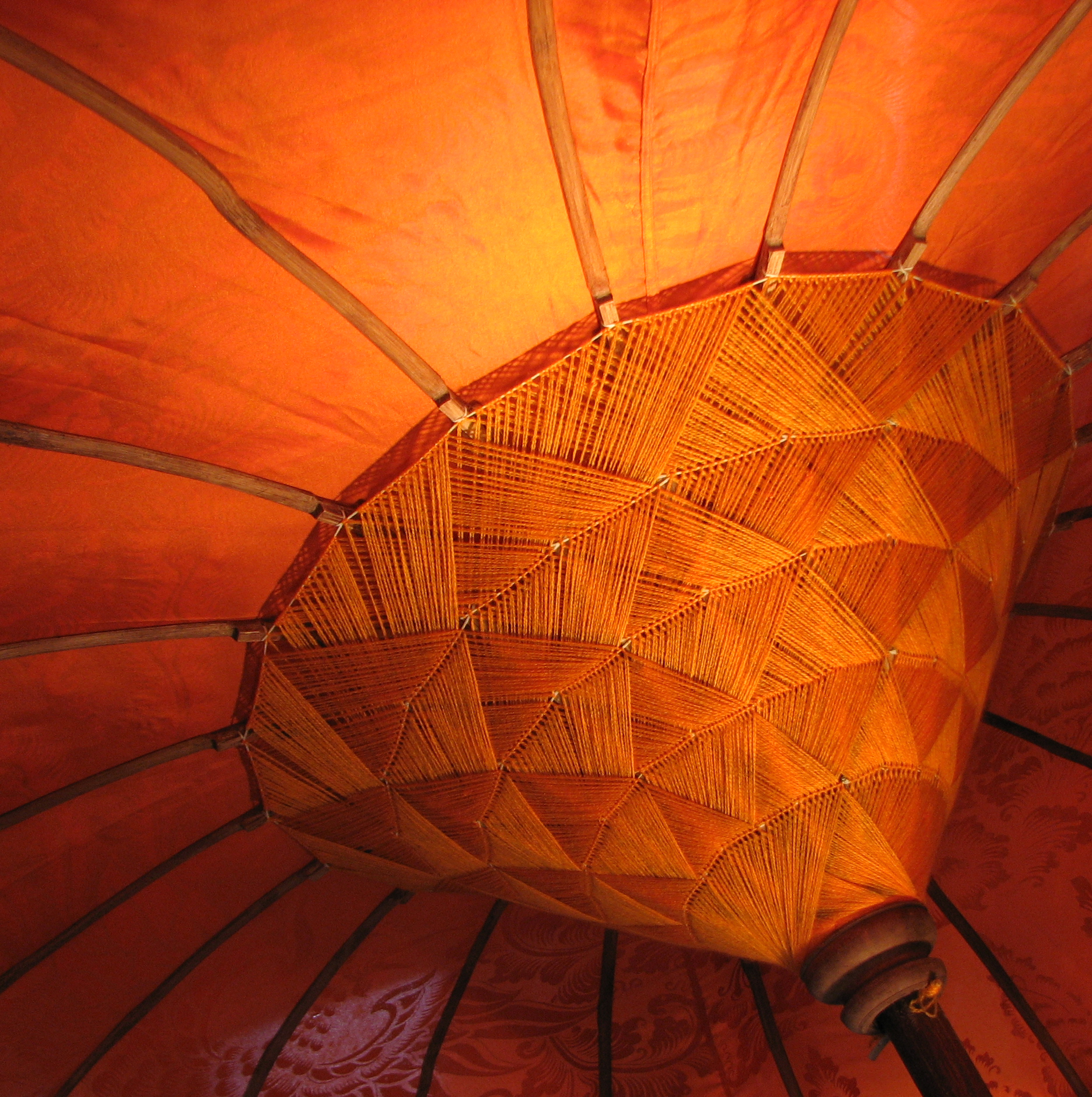
What took me away from Zen and then to other practices was never dissatisfaction with the dharma itself. It was something harder to name — a longing for the complete thing, the one practice that would hold all of me, the one teacher who would see everything I was bringing and say: yes, this too belongs. Under a bigger umbrella.
In 1994, I was a burnt-out former union president and Latino rights activist looking to finish his education and so I entered The Naropa Institute in Boulder, Colorado. I went in as a Zen Buddhist but soon met Chagdud Tulku Rinpoche and felt something I had never felt in another human being’s presence: a natural ease coupled with a charisma clearly derived from decades of committed practice. I was hooked. I took refuge and bodhisattva vows with Dzogchen Pönlop Rinpoche, received my dharma name — Sherab Changchub Wangchuk — and began practicing Vajrayana in earnest.
Then, while I was working in San Francisco, in 1999 my father died. And everything I had built — the Zen years, the Vajrayana vows, the decades of practice — failed to console me. I was simply broken. It was then that I remembered a brief encounter from 1983, before I´d moved to Japan at Cornell University´s Seminar on the Sutras, with Prof. Taitetsu Unno and his presentation of Jodo Shinshu. The idea of Amida’s light as embrace — a place where even the broken and unable-to-practice are still held — felt like exactly what I needed.
I walked into the BCA headquarters near the hospital I worked at one day and immediately felt at home. A few years later, in 2003 after I moved to Iceland, with Prof. Unno’s sponsorship, I was ordained a Jodo Shinshu priest and given the name “Kōkai” — Ocean of Light. But that´s when the real practice began.
I had young children, I was living overseas yet again, and my contacts to a sangha were thinning. Money was also tight and I struggled to keep my connection to buddhadharma.
***
I’d like to be honest about what practice has actually looked like for me. Not the lineage names, not the vows taken, not the teachers met — though all of those matter. The daily reality.
For example, back in San Francisco in the late 1990s I was commuting nearly four hours a day — Pleasant Hill to Pacific Heights, bus and BART, BART and bus, there and back — supervising chaplaincy students at California Pacific Medical Center while trying to be a father, a partner, and a Vajrayana practitioner. I had received my refuge and bodhisattva names from Dzogchen Pönlop Rinpoche. I was Sherab Changchub Wangchuk — “Knowledge Bodhishiva.” I liked that. It felt big and honorable. But on the bus, physically tired, emotionally exhausted, I couldn’t think of anything but getting home. The practice was slipping. And I told myself what practitioners in that situation tell themselves: I’m a fake. I can talk about Buddhism but I can’t live it. Maybe the name was never aspirational. Maybe it was simply true. I just couldn’t see it yet.
Shin had rescued me from despair, given me a sense that I needen´t try so hard, but letting go and fully entrusting were still difficult for me. Gradually I pulled back, seeking a way in through “self-powered” practice again.
In 2017 while in Iceland, I joined Dzongsar Jamyang Khyentse’s Ngöndro Gar — a virtual gathering of students from around the world working through the foundational practices of the Chetsun Nyinthik. This was a Nyingma ngöndro, an advanced foundational set of practices designed to be completed before permission for tantric practices were given. I couldn´t yet abandon that Vajrayana connection. I loved it. But the obstacles were familiar: a PhD I was trying to finish, children, work, an instructor living in Australia whose time zone made regular contact almost impossible. I asked whether I could do the Vajrasattva practice on the bus — eyes closed, visualizing through the noise and the stops and the wet coats of strangers. The answer was yes. So that became my practice ground.
One evening in winter — cold, wet, the bus crowded and quiet at once — I was holding the visualization of Vajrasattva above my head, the purifying nectar descending through my crown, my throat, my heart, carrying with it every defilement, every cruelty, every word said in rage, every small and large darkness accumulated over a lifetime. We reached Hamraborg station outside Reykjavík. A few people got off. A few came on. The bus tilted downward towards home. And then — without warning — I began to cry.
When I walked home I was wobbly and tearful and elated all at once. For the first time in my life I understood what visualization practice was actually for.
In one enormous second, I felt every single harmful thing I had ever said or done or thought, reaching back to elementary school, forward to the recent past, from family to friends to strangers to myself. I felt them move through me — slowly, vividly — and release into the seat, into the ground beneath the moving bus. I turned my face toward the window so nobody would see me crying.
When I walked home I was wobbly and tearful and elated all at once. For the first time in my life I understood what visualization practice was actually for. Not the retreat center. Not the teacher’s presence. The bus in Iceland. Hamraborg. Winter. The whole practice happening anyway, in the gaps of my life, without permission or guidance.
The Nembutsu, the ritual chanting of Amida´s name which is the fundamental “practice” of Shin Buddhism is different. Something about its history — the cry of the broken, the embrace of limitless Light and Life — makes it a practice I keep for my most solitary moments. Above my home office, in a converted storage space I’ve made into my main altar, I put my hands together and begin. I sometimes become self-conscious about it. I can do zazen in front of others. Visualization, eyes closed, feels contained. But the Nembutsu is the one practice that held me up when I was falling — and so when I say it, I mean it in a way that feels almost too exposed to witness. Even by me.
What happens is gradual. It gets quiet — not silent, because I have tinnitus and that never stops — but a deepening quiet underneath the ringing. The self that begins saying it feels a little shaky. I don’t want to trust anything that deeply. But I do. And then something shifts — it feels like falling into a well, except something in me recognizes that nothing bad will happen. I’m plugging into a current that was already running. It keeps going the more I chant. Sometimes I get deep quickly. Sometimes it takes a while. And sometimes — not always, but sometimes — it gets bright. Not like turning on a light. But the feeling, the appearance of a beautiful, brilliant spaciousness. And in some far distance I can hear myself chanting the Name. Like that.
One guy chanting. And then — something entirely different than one guy chanting.
***
What I would later call “the room”, the space where practice and Life fuse, was already there, LONG before I had a name for any of this.
I was just over 30 years old. A Sunday in Burbank — no car, nowhere to be, waiting for the phone to ring. Coffee, probably a cigarette, the Burbank mountains invisible behind the smog a few miles away. I was at the kitchen table when I noticed dust particles moving through a beam of light coming through the window. I turned my head slightly. Just wondering. About Life, about work, about nothing in particular.
And then it happened. In one instant — not built toward, not practiced into — I was immediately overwhelmed by an immense realization that somehow, the entire universe was present in that room. Not as a metaphor. As a fact. I even said it out loud as if I had to convince myself it was happening even though I couldn’t believe it:
“The whole universe is here and no one knows it.”
Then I wrote it down, thinking it might make a good line for a poem. I smiled but it lingered. The whole universe was here, right now, and nobody knows it!
It never left me. Forty years later I understand that moment as the same recognition the Nembutsu opens into, the same spaciousness that Vajrasattva’s nectar was pointing toward, the same light that Prof. Unno described as the ground of Shin Buddhism — the place where the broken self is met, not judged. Not three different things. The same room. I just kept arriving at it through different doors — zazen, the bus at Hamraborg, the altar above my desk in Iceland — not knowing that the room is here, is there, and has always been.
This room with three doors is my experience. The bigger umbrella is what I’m asking for — for all of us.
***
There is a tension built into the Buddhist world that I have felt my whole practice life: a tendency toward sectarian exclusivity that, in part, mistakes the cultural container for the teaching itself. Japanese Buddhism in particular draws sharp lines between school and school, sect and sub-sect, demanding loyalty to a tightly defined set of beliefs and practices. I understand why. I really do. Lineage matters. Transmission matters. But the insistence that Self-Power and Other-Power, the two divisions used to describe the heroic self-effort to achieve Awakening such as in Zen or Vajrayana, and the Pure Land (Shin) path of reliance on Amida, Infinite Light and Infinite Life are irreconcilable opposites, for example, or that Zen and Shin cannot speak to each other, that a practitioner must choose — this has never matched my experience. Not because I am undisciplined, but because the practices themselves, when followed honestly, keep pointing at the same thing. The cultural containers are just different. What they contain is not.
The Ekayana, the One Vehicle, is not a modern compromise or a Western invention. It is the oldest claim in Mahayana Buddhism: that all vehicles, rightly understood, are one. And that no sincere practitioner should be made to feel guilty for the practice that brought them home.
There is one more thing I need to say directly. Shinran taught that we live in Mappo — the degenerate age, when self-powered practice no longer leads to liberation. This is why he taught Nembutsu only, and why the institution he founded has largely kept that boundary intact. I understand the reasoning. I also respect the sincerity behind it. But I cannot accept it as the final word on my own experience. I have sat with great teachers and watched serious students, and I have seen with my own eyes that Zen works, that Vajrayana works, and that Nembutsu works, too. I cannot unknow that. And I will not pretend otherwise out of institutional loyalty.
What is often forgotten is that Shinran himself came down from Mount Hiei — where Zen, Vajrayana, and Pure Land had coexisted under one roof since Saichō founded Tendai in the ninth century. All the sectarianism came after.
The bigger umbrella came first.
I am not suggesting something new. I am asking for something that already existed — and that was dismantled by the same historical forces that always mistake the container for the teaching. The Ekayana, the One Vehicle, is not a modern compromise or a Western invention. It is the oldest claim in Mahayana Buddhism: that all vehicles, rightly understood, are one. And that no sincere practitioner — whatever their tradition, whatever their temperament, whatever the circumstances of their life — should be made to feel guilty for the practice that brought them home.
***
Dharmapa, the eternal student, received his instruction from a yogin he met by chance. Not in a monastery. Not from a lineage holder. In an ordinary encounter, the teaching arrived that melted everything together. I have always loved that detail. It suggests that the convergence doesn’t happen in the right place or the right tradition or after completing the right prerequisites. It happens when you’re ready — which usually means when you’ve stopped insisting on the conditions.
I love Buddhism so much that I have always wanted to be all of its best exemplars at once. Milarepa and Shinran. Ippen and Huang Po. Naropa and Saichi. Marpa and Layman P’ang. I wanted to be the monk and the hermit and the priest and the scholar and the joyful Puertorican practitioner all at once. And for most of my life I felt I had failed at all of them — the ngöndro unfinished, the retreats missed, the institutional belonging that was never quite right, the solitary practice in Iceland feeling more like exile than realization.
But the universe arrived in Burbank on a Sunday morning without asking whether I had completed my ngöndro. Vajrasattva’s purification happened on a bus in Iceland at 6:30pm without a retreat center or a teacher present. The Nembutsu regularly opens into something I can only call luminous presence — not because I earned it (I certainly haven’t) but because it was already there, running, waiting for me to plug in. These are not three different practices producing three different results. I believe they are three doors into the same room. The room was always here. Is here now. Has always been.
The bigger umbrella is not a place or a tradition or an institution. It is space enough for all of me — for all of us — to be who we are, as we are, knowing that our practice is connected to something real, without the need for approval or legitimation. Dharmapa finally melted his metals together not by finding the perfect school but by receiving a teaching he wasn’t looking for, in some ordinary moment of his life. I think that’s what happened to me, too. It’s just taken me forty-plus years to see — and accept it.