

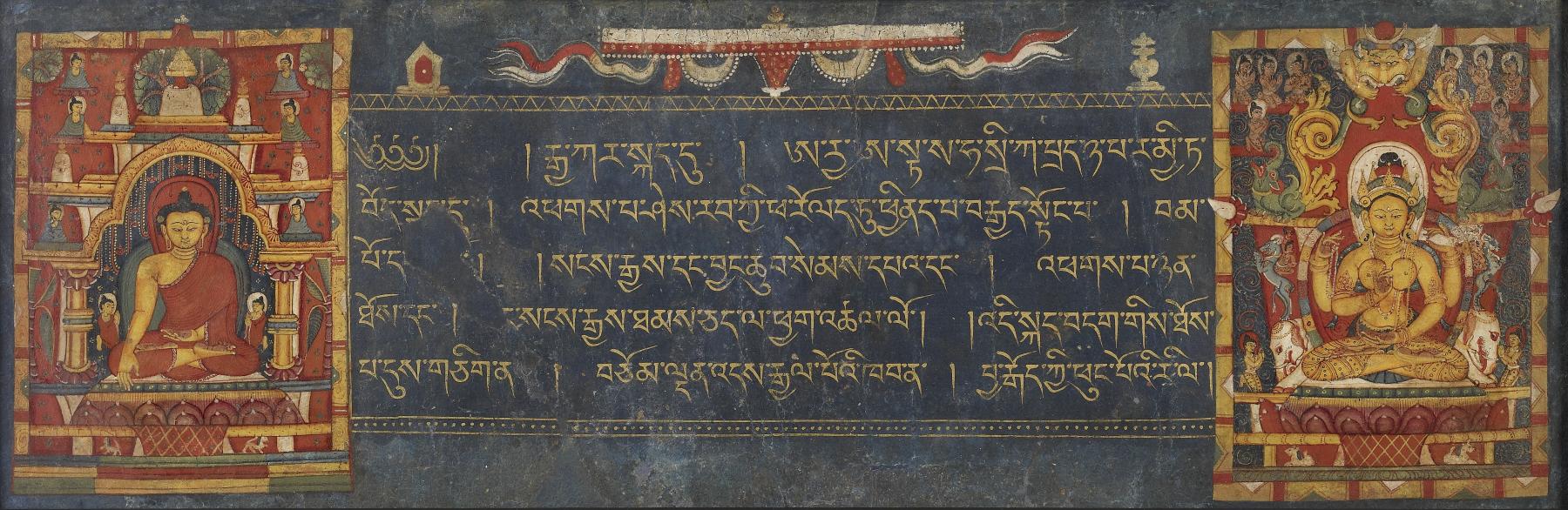

Some journeys begin with a map. Mine began the first time I heard the sound of the Tibetan language.
As a translator, interpreter, and language teacher, I have long been fascinated by how each language opens a different way of seeing the world. Growing up in a Spanish-Uruguayan family and working across Latin America deepened my appreciation for the cultural richness languages carry — an experience that continues to shape both my work and my path. My encounter with Tibetan Buddhism gave a new dimension to that passion, leading me to translate Buddhist texts from English and Portuguese into Spanish, interpret for teachers, and coordinate dharma projects.
In 2005, while searching for my spiritual path, I came across Voice of Tibet — a collection of mantras, prayers, and recitations by the Nyingma teacher, Chagdud Tulku Rinpoche (1930-2002). The sound of the language immediately resonated deeply in my heart, as did the chanting of Tibetan texts during ceremonies and meditation, especially during my first visit to Chagdud Gonpa Khadro Ling, the Brazilian temple Rinpoche founded in 1995. Its sounds, rhythm, and melody seemed to carry the dharma in a unique way.
As I continued listening to the teachings of many masters — often offered in a blend of Tibetan and English — a quiet yet persistent aspiration arose: to understand their words directly in Tibetan. Over time, this aspiration took root and gradually became a genuine path of study.
This journey unfolded between 2010 and 2015, alongside the demands of everyday life. In those years, studying Tibetan was far more challenging than it is today: access to qualified teachers was limited, and structured learning materials were often scarce. I began with a rather complex textbook and an introductory online course, which was quite limited at the time, slowly becoming familiar with the alphabet, basic vocabulary, and foundational grammar. Though the path was not without its difficulties, it was continually sustained by the encouragement of my dharma teachers, whose guidance inspired me to persevere. These early efforts laid a steady foundation for deeper, more formal studies in Classical Tibetan in the years that followed.
Along the way, I was struck by how Tibetan grammar reflects the relationship between language and experience, indicating whether something is known through direct perception, inference, or shared understanding — inviting a deeper awareness of how knowledge itself arises. Another defining feature, especially in formal contexts, is its refined system of honorifics, which expresses a profound sensitivity to relationship and context, particularly when referring to teachers or sacred subjects. In the Dharma context, this language conveys not only meaning but also attitude, carrying humility and reverence, and inviting the translator to preserve not just what is said, but how it is expressed.
For those called to become translators — working from Tibetan or other languages into their own — translation requires sensitivity to meaning, context, and intention. It is rooted in lineage, responsibility, and care.
In many ways, studying Tibetan mirrors the practice of the six perfections (paramitas): generosity, in offering one’s time and effort to preserve and transmit the teachings; discipline, in sustained commitment; and patience, in meeting the challenges of study. It also calls for diligence, the joyful perseverance that carries the path forward; concentration, in attending carefully to nuance and meaning; and, at times, the subtle discovery of the wisdom carried within the words.
The Inspiration of a Tibetan Language Teacher
While searching for ways to deepen my studies, after two years in the Dharma Sagar Translator Training Program of the Khyentse Foundation, I discovered in 2022 the work of the remarkable teacher and author Franziska Oertle. Her teaching videos, featuring her memorable “non-human students” — animal characters such as Ms. Giraffe, Mr. Sloth, Ms. Ostrich, Ms. Black Sheep, and Mr. Turtle — immediately drew me in. Through dialogues and questions, these characters illustrate grammar in a way that is both playful and profound. Each reflects a subtle metaphor for language learning, bringing warmth and humor into the process and making Tibetan feel clear, accessible, and alive.
Inspired by the teachings of His Holiness the Dalai Lama, Franziska left her native Switzerland to study Tibetan in Nepal, with the aspiration to one day understand the teachings in their original language. Her work has since opened that possibility to students around the world. Her research led to the creation of The Heart of the Tibetan Language, a widely used three-volume textbook series that combines traditional Tibetan grammar with modern pedagogy. Affectionately known as “the one who cracked the code of teaching Tibetan,” she has guided countless learners in approaching this profound language.
Through her amazing work, an unexpected opportunity arose in my own path. Inspired by an idea from my colleague Estefanía, we began the project of creating a Spanish edition of Volume 1 of her textbook series, together with its accompanying exercise book, with the wish to make these materials accessible to a wider community. I had the privilege of coordinating the project and contributing as translator and editor, working closely with Franziska and a dedicated team across Spanish-speaking countries.
For Those Beginning the Journey
Even though I am still aspiring to a fully immersive experience in a region where Tibetan is widely spoken, I continue my studies and regularly practice conversation with native speakers, both in person and online, as part of an exciting and never-ending learning process.
Those drawn to the living language can gradually develop a foundation in colloquial Tibetan through online courses, supported by regular conversation practice with native speakers. Immersive experiences in regions where Tibetan is spoken, while not essential, can enrich and even accelerate the learning process.
For those seeking to engage with the original texts of Buddhist teachings, Classical Tibetan becomes essential. This path calls for patience, consistency, and familiarity with both the language and the worldview embedded in the texts. Online programs provide valuable access, while participation in in-person study communities or academic environments can further deepen understanding.
For those called to become translators — working from Tibetan or other languages into their own — translation requires sensitivity to meaning, context, and intention. It is rooted in lineage, responsibility, and care, and benefits greatly from guidance, peer support, and collaboration. At its heart, translation is both a discipline and a relationship — grounded in a sincere wish to serve the dharma.
Looking back, what began as a simple wish — to understand teachings once heard from afar — has blossomed into a path of study, collaboration, and shared discovery, guided by a heartfelt aspiration to help preserve and disseminate the Tibetan language and to support translations from Tibetan into Spanish.