


Four verses from the sixteenth chapter of Buddhism’s Lotus Sutra poetically assure us that it is possible to live without suffering even in the midst of the greatest difficulties:
Ga jo do fu ki — My pure land is never destroyed
Ni shu ken sho jin — Yet all see it as consumed by fire
Shu jo ken ko jin — When living beings see great fires burning
Ga shi do an non — This land of mine is tranquil and calm
We can find peace and ease, these verses tell us. We can find a safe place. We can find refuge and sanctuary.
Sometimes when I stand in front of a tree and really look at it, touch it, breathe with it, I start to feel like there is no me here and tree there. In that moment, I begin to feel a sense of expansion and wholeness as my shields drop and I no longer invest so much energy into maintaining my filters and boundaries. I feel peace and ease.
It’s not like I disappear into something else though. Instead, it feels like a softening and sense of connectedness. I’m still here and still me; I just don’t have the same urgency to defend and protect it.
The interesting thing is that I didn’t physically move. The change was entirely a perspective shift. And this offers us a glimpse into consciousness and sentience. One of the most famous verses from the Lotus Sutra is: Only a buddha together with a buddha can fathom the ultimate reality of all things (yui butsu yo butsu, nai no ku jin, sho ho jis’ so). The operative word in that verse is “together.” Hans Jonas said pretty much the same thing in his 1966 book The Phenomenon of Life: Toward a Philosophical Biology: “life can be known only by life.”
Equanimity is not what good Buddhists achieve. It is what any sentient system achieves when it stops adding distortion to its registration of reality. Equanimity then is simply what health looks like.
My sense of peace and ease came from connecting with something else. A tree. But wait you might say, a tree isn’t conscious or even sentient! The Lotus Sutra, however, tells us this isn’t so. Buddha-nature isn’t limited to sentient beings; even plants and pebbles possess it. Zhanran (711–782 CE), the sixth patriarch of the Tiantai school, wrote in his Diamond Scalpel: “A plant, a tree, a pebble, a speck of dust — each has the innate Buddha nature, along with the other causes and conditions needed to attain Buddhahood.” And later, Nichiren (1222-1282) wrote in his King Rinda gosho (Writings of Nichiren Daishonin, Vol 1 #136 p. 984), “The plants and trees have the earth as their mother, the sky as their father, the sweet rains as their food, the wind as their spirit, and the sun and moon as their wet nurses… In the same manner, all living beings have the true aspect of all phenomena as their earth…”
Buddhism assures us that all things have inherent buddha-nature. The next question, of course, is what is buddha-nature?
Buddha-nature can also be called Dharmakaya. Dharmakaya is not a person, place, or thing, but the active, ongoing process of true reality. Dharmakaya is a verb. It is existence itself constantly manifesting in new ways, through dependent origination (paticcasamuppada). Paticca means “dependent on.” Samuppada means “arising together.” Not just arising but arising together. This is the same togetherness the Lotus Sutra already named: only a buddha together with a buddha can fathom the ultimate reality of all things.
Consciousness, I want to suggest, is an emergent property of dependent origination. The corollary is that sentience is a response to impermanence (anicca).
Sentience is a core survival function. Sentience, like consciousness, is not a person, place or thing; it is an activity, a function, a response. It is what allows anything to exist at all in an impermanent universe. If something has no agency to adjust, it perishes. Impermanence is not the problem sentience must overcome. It is the condition that makes sentience necessary for life to exist.
Western consciousness studies has spent decades trying to explain how subjective experience arises from physical matter. This is what philosopher and cognitive scientist David Chalmers in 1994 called the hard problem of consciousness. It is “hard” because the problem as it is framed presupposes a gap between physical matter and something called consciousness that needs to be bridged — mind on one side, matter on the other. Western philosophy of mind keeps trying to build the bridge from one shore to the other, discovering that the other shore keeps receding. Like the forever receding horizon for a sailor at sea. Yet they keep chasing it and end up with a bridge to nowhere.
Cognitive scientist Arthur Reber’s work on cellular consciousness offers a different starting point — one that is much closer to how Buddhism sees reality. Sentience in Reber’s account is not an emergent property of complex nervous systems. It is the basic capacity of even single-celled organisms to register environmental change and respond to it. The amoeba detects a gradient, a change in chemical concentration across its environment, and responds by moving. The bacterium senses a chemical signal and adjusts. These are not metaphors for sentience. They are sentience at its minimal expression. In this sense sentience is not self-aware consciousness.
The implication is significant. Sentience isn’t some late-stage evolutionary development. It is built into all life from its earliest forms because life cannot survive without it. A hardwired system in a world of constant change is a dead system. What survives is what registers and responds.
Now combine this with Buddhist theory. Dependent origination describes reality as conditioned, relational, and impermanent. Things arise dependent upon conditions. When conditions change, what had arisen will pass away, with something else arising in its place. Impermanence is not a moral lesson or a melancholy observation. It is a structural feature of reality that operates by dependent origination.
The two accounts converge. Sentience is what arises in a world of dependent origination as the local strategy for surviving impermanence. The flux is what makes sentience necessary, and sentience is what makes life in the flux possible.
Buddhism identifies two modes of sentient response.
The first is simple registration, feeling tone (vedana) as a gradient detector of sensory contact as pleasant, unpleasant, or neutral. It is the full range of experience compressed into a three-valued logic. A big part of meditation practice is learning to sit with, observe and just feel how we’re feeling, without judgment or criticism.
The second mode of sentient response is reactivity, the reaction to these feeling tones, either pursuing pleasant ones or recoiling from unpleasant ones.
The first is functional. The second can become the chronic state of dysregulation that Buddhism labels dissatisfaction (dukkha).
Equanimity is what sentience looks like when it is in a state of balance, feeling the first mode without overreacting to the second. The system registers what arises. The system registers its passing. The system stays in balance through both.
The word equanimity in English carries unfortunate connotations: Composure. Stoic detachment. The unruffled poise of the holy man who has risen above mere human emotion. None of this is what Buddhism means by equanimity.
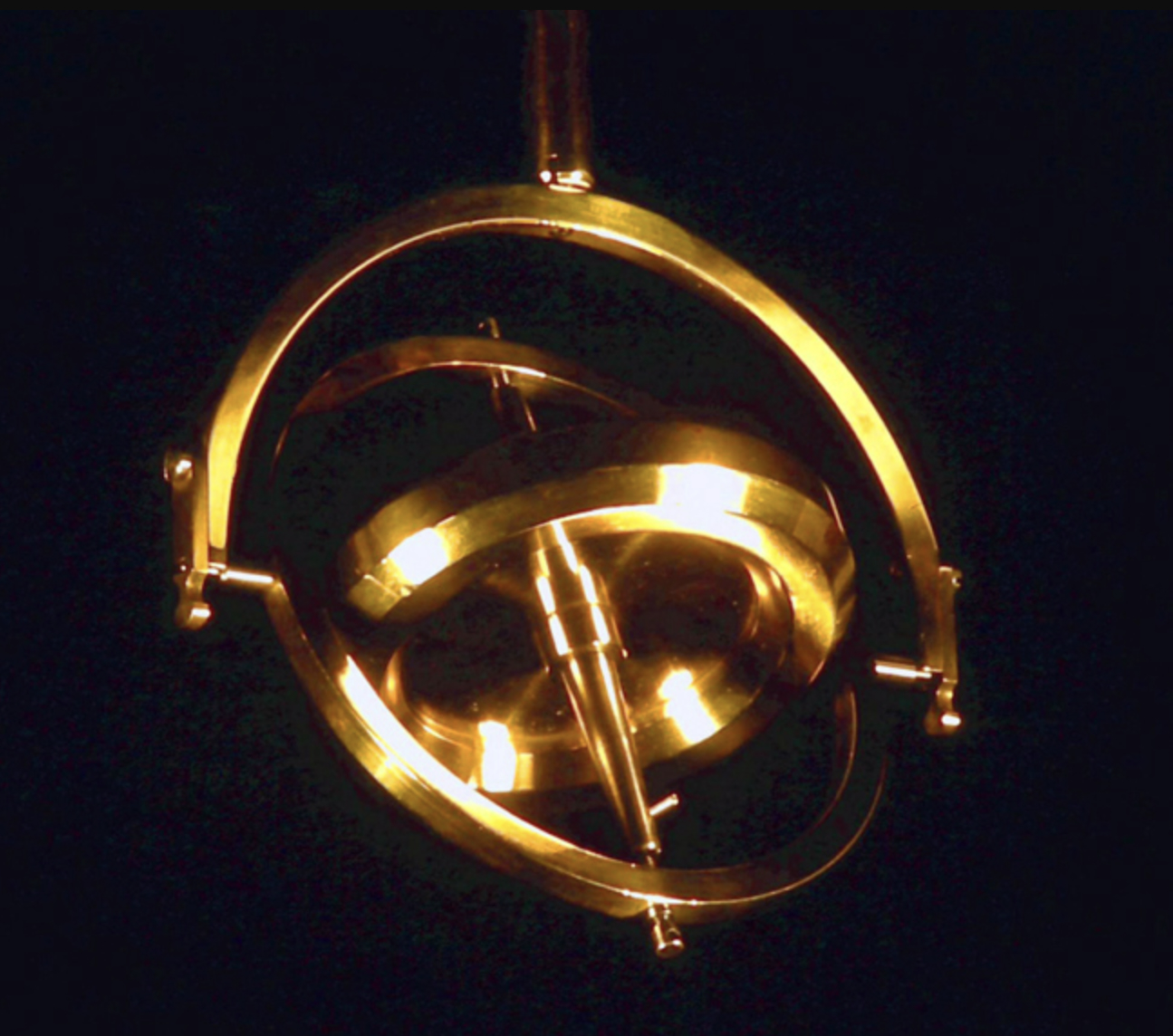
Equanimity is not the absence of feeling. It is instead a well-regulated mindful engagement with feeling without being reactive, like a gyroscope maintaining balance no matter what counter forces are applied to it. The metaphor extends further when we notice the velocity with which the gyroscope is spinning. It spins fast. Constant, intense motion and movement.
To clarify things, let’s define equanimity and its near and far enemies:
Equanimity: The calibrated response to impermanence. Sentience in homeostatic balance — fully present to experience without being destabilized by it.
Near enemies: Indifference, detachment, apathy, passivity. States that resemble equanimity from the outside but are actually forms of withdrawal or numbness rather than engaged balance. More dangerous than the far enemies because they are harder to detect.
Far enemies: Craving and aversion. Reactivity in its chronic forms — grasping after the pleasant and recoiling from the unpleasant. The far enemies announce themselves; the near enemies feel like practice.
The far enemies are obvious; the near enemies are more insidious because they work. Indifference and detachment share enough of equanimity’s surface signature, calm, low reactivity, that they feel acceptable rather than wrong, which is exactly what lets them function as spiritual bypassing: not an obvious failure, but a sustainable avoidance mechanism, sustained because it resembles the thing it’s standing in for.
The traditional Buddhist literature does a good job describing equanimity phenomenologically but hasn’t made the biological and ontological link explicit.
The theorem provides the grounding. If sentience is a response to impermanence, then equanimity is how the system maintains balance. Equanimity is homeostasis at the level of consciousness.
Reactivity, then, is not a moral or psychological failure. It is a calibration error. The organism that grasps after the pleasant has overshot. The organism that recoils from the unpleasant has overcorrected. Both are out of homeostasis with the conditions to which they are responding. Our Buddhist practice doesn’t eliminate the response; it refines it toward accurate calibration.
This reframing matters because it shifts equanimity out of the moral register and into the functional one. Equanimity is not what good Buddhists achieve. It is what any sentient system achieves when it stops adding distortion to its registration of reality. Equanimity then is simply what health looks like.
The big question is why such homeostatic health is possible at all. If reality is impermanent and sentience is a response to impermanence, what stable ground does equanimity stand on? Why does the system not simply dissolve along with everything else?
Mark Siderits’s new book, Buddhist Physicalism? Non-self Metaphysics and Phenomenal Consciousness attempts to answer this question. Siderits proposes that Buddhism can adapt to modern science by accepting materialism. Jay Garfield, reviewing the book sympathetically in Tricycle’s Summer 2026 issue, pushes back by arguing for a multi-level realism in which conventional truth and ultimate truth can both count as genuine. Both are working within Nagarjuna’s two-truths framework that treats the conventional and the ultimate as different orders of reality requiring negotiation.
Fifteen centuries earlier, in China, Zhiyi had already solved the problem implicit in Nagarjuna’s two truths. Zhiyi’s Threefold Truth holds that reality is empty (lacking inherent existence), conventionally real (functioning as causes and effects in the relational nexus), and middle (these two truths simultaneously and mutually containing each other). The middle is not a compromise position between the empty and the conventional. It is the recognition that both are fully present in each, with no remainder.
This is Tiantai’s significant philosophical step forward because it dissolves the entire architecture of the materialism problem. Once empty, conventional, and middle are seen as mutually containing, the question of how the mental relates to the physical simply goes away. There is no fundamental level to which higher levels must reduce. There is no higher level that floats free of its physical substrate. There is the seamless arising of conditioned reality, fully empty and fully conventional at every point, with no seam where they meet.
For the theorem at hand, the consequence is direct. Equanimity is possible because its stability is not separate from the impermanence to which it responds. The tranquil ground and the burning land are not two realities awkwardly stacked on top of each other. They are the same reality seen with different calibration. The fire and the tranquility are mutually containing.
Without the Threefold Truth, equanimity becomes a psychological coping strategy. With the Threefold Truth, equanimity becomes the natural mode of a system that has accurately registered the structure of what it is registering. The fire burns. The ground is tranquil. Both are true at the same time and in the same place because the structure of reality is such that they cannot be otherwise.
Zhiyi collapses the architecture into a mutually contained self-referential whole. This collapse is what dependent origination requires, taken to its logical conclusion.
If the Threefold Truth explains why equanimity is possible, the four divine abodes (brahmaviharas) describe how it actually works.
The four divine abodes are loving-kindness, compassion, sympathetic joy, and equanimity. They are usually presented as parallel virtues, four sublime states to be cultivated through practice. The standard sequence treats them as a progression, with equanimity arriving last as the most refined attainment.
I prefer another reading, drawn from commentarial tradition and consistent with the theorem: metta (friendliness, loving-kindness) is the foundational quality, and the other three are how metta expresses itself depending on what conditions it encounters. Compassion is metta meeting suffering. Sympathetic joy is metta meeting flourishing. Equanimity is metta meeting the whole of conditioned existence without requiring any particular condition to be present.
This reading clarifies that the four divine abodes are not four separate skills. The four divine abodes are one capacity expressing itself in different modes. It also locates metta as the orientation that precedes any particular encounter. Metta is sentience at its most fundamental affirmative posture, the basic yes to existence that precedes any particular registration of conditions.
On this view, equanimity is not a withdrawn or distanced version of love. It is metta fully matured. Love that has stopped requiring conditions because it has fully understood what conditions are.
Chapter Sixteen of the Lotus Sutra is the textual home of everything I have been offering. The Buddha reveals in this chapter that his buddha-nature is unborn-undying suchness. This unborn-undying suchness has been awakening beings for incalculable kalpas and will continue to do so.
In the middle of this revelation comes the verse that serves as this essay’s epigraph:
When living beings see great fires burning, [shu jo ken ko jin]
this land of mine is tranquil and calm. [ga shi do an non.]
Read superficially, the verse seems to describe two different perspectives on a single reality. Beings see fire. The Buddha sees calm. The reader is invited to choose which perspective to adopt.
Read through the Threefold Truth, the verse describes one reality with two simultaneously present features. The fire is real. The land is tranquil. Neither is illusion. Neither is more fundamental than the other. The fire is the conventional truth of conditioned existence registering itself in the sentience of beings caught in the dysregulated response. The tranquil land is the same conditioned existence registered without distortion, the homeostatic balance that the fire cannot disturb because the fire isn’t other than the ground. The verse describes the difference between dysregulated and calibrated sentience. The same reality. Different responses. Burning beings and tranquil ground are not two places. They are two ways of registering the same place.
This is equanimity at the cosmic scale. Neither detachment, nor removal. The fully matured response of metta to the entire field of conditioned existence. The same quality of mind a meditator might glimpse on the cushion, extended without limit through the structure of reality itself.
The Buddha is not exempt from impermanence in this passage. He is not standing outside the world watching the world burn from a privileged position. He is fully embedded in the same reality the beings inhabit. What distinguishes him is the quality of his response. He sees what they see. He feels what they feel. The fire is the fire. And yet the ground he stands on does not become unstable, because he is no longer adding the secondary distortion that turns registration into reactivity.
This is equanimity at the cosmic scale. Neither detachment, nor removal. The fully matured response of metta to the entire field of conditioned existence. The same quality of mind a meditator might glimpse on the cushion, extended without limit through the structure of reality itself.
The burning house parable in Chapter Three makes the same point in narrative form. The father stands at the door of the burning house, calling his children out. He is not untouched by the danger. He is not distant from their distress. He is, however, the one who can see clearly enough to act, because his response to the fire is not itself on fire.
Sentience responding to impermanence. The response refined to homeostasis. Homeostasis matured into love. Love extended without condition through the whole of what arises. The Buddha at the door of the burning house. The tranquil land in the midst of the fire.
Reality arises through dependent origination. What arises includes consciousness as one of its emergent features. Consciousness, once arisen, exists as sentience in continuous response to the impermanence of the conditions that produced it. The response can be dysregulated, in which case the system experiences dukkha. The response can be calibrated, in which case the system experiences equanimity. The fully matured response is metta extended without condition through the whole of conditioned existence.
This is not an escape from impermanence. It is not a transcendence to a permanent realm beyond change. It is the recovery of accurate calibration in a system designed to live within change. The Buddha’s awakening is not a removal from samsara. It is the discovery that samsara, fully understood, is not different from nirvana.
Practice, in this frame, is what is needed. Not as a religious obligation or a spiritual achievement but as the continuous refinement of sentience’s response to impermanence. Each cushion is a recalibration. Each chant of Namu Myoho Renge Kyo is a reorientation toward the affirmative ground that precedes all particular registration. Nichiren taught this chant, the title of the Lotus Sutra itself, as more accessible than silent sitting, a single invocation carrying the whole of the sutra’s twenty-eight chapters and the merit of the Buddha’s own practice. Each gesture of compassion is metta meeting suffering and finding itself adequate to the meeting.
The pure land is never destroyed. The fires burn. The land is tranquil and calm. These three statements are not in conflict. They describe a single reality from inside the response which stopped requiring it to be other than what it is.
That response is equanimity. It is what sentience looks like when nothing distorts its registration: peace and ease. That is Buddhism’s gift to us: we can all be fully engaged and fully liberated. All we need to do is stand in front of a tree, touch it, and breathe with it. Let go of all the extra effort of protecting the illusion of a separate self and allow our sentience to register and regulate itself naturally.
Namu Myoho Renge Kyo