


Thirty years ago, after a traumatic enlistment in the Marines, I felt angry and out of place. I was in a broken, PTSD‑plagued state where my only relief came from a cocktail of adrenaline and alcohol. I’d do reckless things on purpose, like driving drunk at high speeds down dark roads with my lights off. Predictably, I lost control and crashed straight into jail. At least I was still breathing.
Inside lockup, I met men who’d been held for long periods because no one could post a few dollars’ bond. Many were mentally ill, substance abusers, or cycling in and out of trouble since youth. Even with the advantages I had, navigating the system was brutal. Most of those guys didn’t have a chance. They were neglected and forgotten, but to me they were like lost little brothers who could’ve used some direction and care.
Jail woke me up. Once I cleared my record, I’d go back in and help, but I had to show up for myself before I could show up for others. I found the courage to reach out for substance‑abuse and mental‑health treatment. I stripped my life down to the basics and focused on healing.
Knowing I was caring for myself and my children without running away cleared my conscience enough to genuinely practice. From the start, I didn’t see spirituality as a way to erase my past or escape the everyday. I sensed it offered the steadiness and meaning I needed to appreciate what was already present in my life.
I read widely, tried different approaches, and eventually gravitated toward Soto Zen. Zazen’s directness drew me in: no sales pitches — just sit. Like the Marines, it didn’t promise a rose garden.
At first, I practiced at home. But I had a lot of questions, so I looked for guidance. I wasn’t selected by my teacher — I sought him out. Because of that, he pushed me hard, knowing I needed authenticity, not reassurance. Every dokusan (private interview with the teacher) felt like a Marine inspection where the most minute details mattered. He knew what he was doing. I give all credit to him and our tradition. I stayed focused and disciplined, studied and attended sangha meetings, and things began to snap into place.
The compassionate heart of Buddha is meant to help steady the pulse of the world. The simplest way to begin is to step outside, meet the people in your community, get involved, and trust that your practice will find its place there.
After sitting daily zazen for a period longer than — and sometimes as challenging as — my enlistment, I took bodhisattva vows and earned lay entrustment. Practice was not about me anymore, proving my worth or getting over my issues — it was about service. My sangha was in California, far from home in Florida, and that divide shaped what came next.
It wasn’t until I started serving others that zazen made its way into the work. First, I helped fellow vets navigate the VA system. I didn’t push it, but if they were interested, I sat with them.
Everything in my life began to move through the lens of practice. As a high-school soccer coach, I realized that meditation could be a valuable training tool. I guided players through simple focus drills, helping them see more of the field and make better decisions. I didn’t call it Buddhist practice — that might have unsettled their often conservative parents — but the work helped the kids be present and move together as a team.
I live in the South. My views often differ from my neighbors’, but those experiences helped me become part of my community. My intent wasn’t to spread the good word or convert anyone. The more involved I became, the less I spoke in the usual Buddhist terms. Skillful means wasn’t just something discussed in dharma talks — I applied it through service. I simply met people where they were and followed the direction my life was already taking.
If vets and teenagers appreciated stillness and silence, I thought, more people in my community might. Next was the local assisted‑living home. The seniors roped in my heart. I meditated with them and drove them around on a huge bus I nicknamed “Further,” in tribute to Ken Kesey’s infamous “Furthur” bus.
It wasn’t all fun. Most residents had been placed there by family who could no longer manage their decline. Death often came without warning. The weight of losing friends so regularly pressed hard on my heart, and the work was physically demanding. I frequently came home feeling drained and ill.
I was out sick from work when the idea of going back into jail bubbled up. I was watching a series about death row, and Inmate #375690, incarcerated in Florida, owned his actions. “I put myself in this position. Reality guides me. I see things as they are.”
I found his address and wrote only a few words: “On TV, you said you see things as they are. Really?”
His reply was equally as blunt: “Hit me with reality.”
After I told him about my past and earned his trust, I navigated the red tape required to visit him. When we finally meditated together, guards and other death‑row inmates watched — confused at first, then quiet. Our sitting posture won the respect of the room. I joked that we were in the perfect place to stare at the wall. It felt natural.
#375690 has softened over the years. He expresses genuine remorse and guides others these days. A condemned murderer turning toward self‑care and compassion is no small thing. He and I ensure that people with no outside support get presents on special occasions. We operate outside the system, but no one objects. Like our zazen, we just do it. We formed a death row sangha, but we don’t label it or draw attention.
Even the most hardened hearts can shift when someone sits with them without judgment. Men who use their toilets as baths and clothes washers, in the constant presence of death, can still manage some peace of mind and a sense of community. This doesn’t undo the harm they caused or ease the grief carried by the families of their many victims, but it is better than regressing and causing more harm.
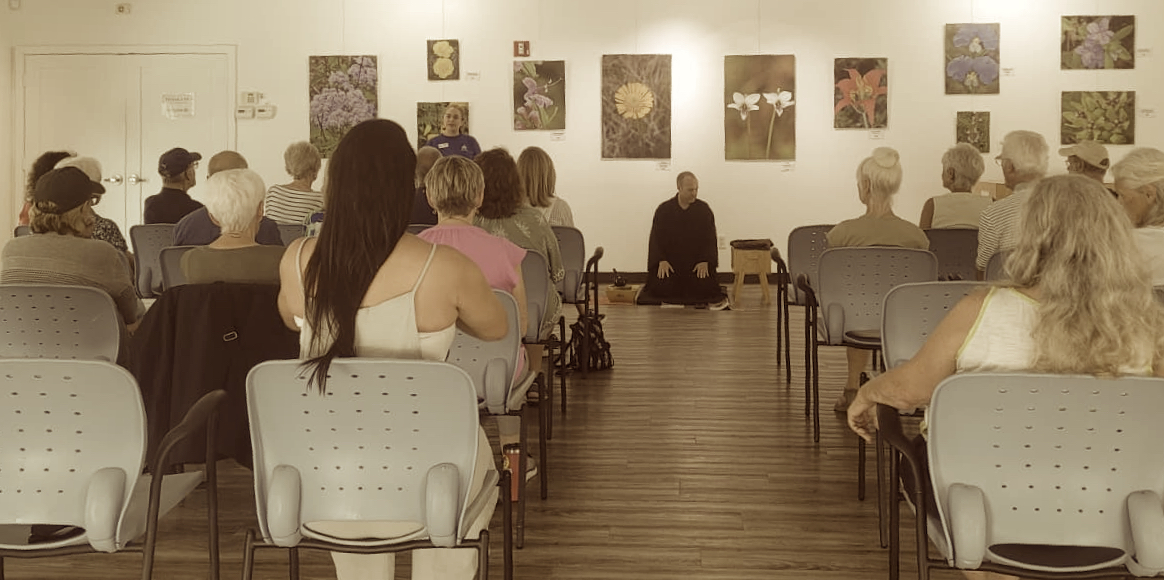
As a natural extension of these experiences, I formed StareAtTheWall.org to offer meditation guidance to anyone who may appreciate the stability it brings. It’s a simple website, book (Just Stare at the Wall!) and a modest practice space, which together quietly became resources that educators, administrators, community leaders, and struggling individuals turn to when they think meditation might help.
I’m assisted by a small team that has meditated with me for years. It’s all about trust. Everything we do is free, both literally and ideologically. We’re not concerned with titles or labels. We come from diverse backgrounds and belief systems, but we all agree that the balanced meditation posture has improved our lives and deepened our appreciation for them. We just stare at the wall together as equals.
We offer support, not answers. When a person appears to need mental‑health counseling rather than meditation, we refer them to the free community clinic. And when someone is drawn to more traditional practice, we send them to Jeff at the Clearwater Zen Center on the other side of the state. Knowing our limits has become essential.
A lot of our work is done online through video meetings, podcast appearances, and remote check‑ins, but we also visit local institutions and individuals when in‑person support is requested. We’ve meditated with a wide range of groups — grieving widows, veterans’ organizations, incarcerated individuals, the local center for spiritual care, suicide‑prevention teams, the county Hispanic association, the school district, and the environmental learning center, to name just a few.
The individuals and communities may differ, but the human need underneath is common, familiar: steadiness, kindness, someone who listens without judging. Buddha said life is suffering, and suffering is the common denominator. My suffering is no longer a tyrant demanding all my attention, so I’m free to help others who aren’t so privileged. I’m a product of favorable conditions as much as my own efforts. It’s that simple.
No matter our practice or how we express it, we can agree that Buddha’s teachings are a gift — and gifts are meant to be shared. Once the boundary between spiritual practice and ordinary life began to dissolve, I realized that the compassionate heart of Buddha isn’t meant to beat only in the bodies and meditation halls of Buddhists. It’s meant to help steady the pulse of the world. The simplest way to begin is to step outside, meet the people in your community, get involved, and trust that your practice will find its place there. Pay close attention to your own biases, limitations, and intentions.
Zen students know the old saying: to go eastward one mile is to go westward one mile. The wrong turns and accidents we struggle with are often the very ones that lead us to practice. And if we stay on the journey long enough — focused, steady, sincere — our mistakes may carry us toward the places in our communities and beyond where our experiences, anchored by the Buddha’s love and wisdom, are needed most.