
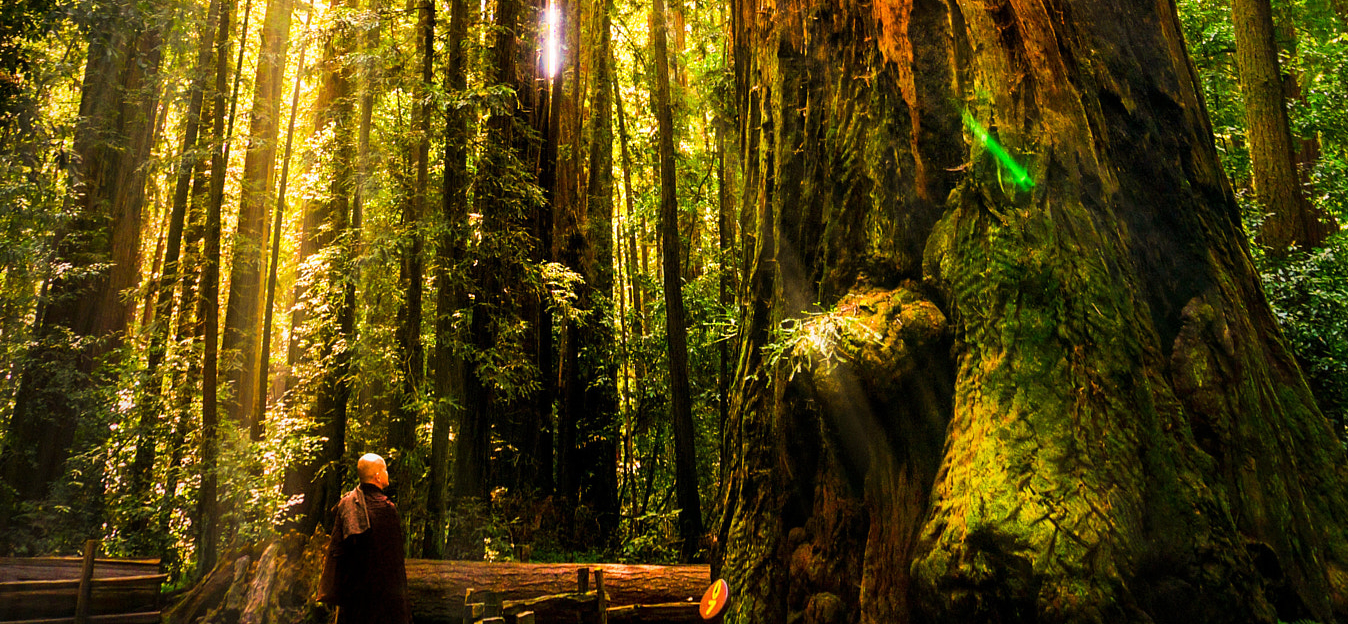

The night before leaving for a group retreat in the redwoods of Mendocino County, every cell in my body was on high alert. My chest was throbbing, my stomach clenched, my breath was nowhere to be found — a full-on panic attack. No NO NO. I’m too old for this. Why did I ever agree to such a batshit crazy idea?
The problem was it was no longer an idea. I had signed up and paid for a five-day Chöd retreat (more on Chöd below) with the dharma teacher Anam Thubten and it was too late to get my money back. I lay sleepless in my comfy bed listening to a train pass by, its loud horn slowly fading in the distance. I would have given anything to be on that train heading any direction but Mendocino.
Fear of the unknown, fear of failing, fear of exposure. Years of entering new schools in new countries had sealed that fear into my bones. It didn’t matter that I was now a grown woman, an elder, a longtime meditator; that night I was once again a child.
Morning arrived and my friend Sandra came and we loaded my bag and extra pillow and blanket into her car and off we went. We took our time, fueling each other’s reluctance with well thought-out reasons why the next few days were not appealing to either of us, but at some point, we ran out of excuses to stop for one more bathroom break. We turned off the highway onto a gravel road that ended at the entrance to Camp Navarro, the retreat site. We were there.
I climbed out of the car, and took one look at the sea of meditators, yoga ready, in Birkenstocks and flowing outfits, their hair in loose buns, greeting each other, animated and open, and my stomach began to churn. I made it through dinner and, foregoing the first night’s talk, retreated to my freezing cabin, climbed into bed, and huddled under the covers shaking with cold and anxiety. This is not a good idea. This is a supremely bad idea. I’ve got to get out of here.
I grabbed my phone and texted my daughter, who was four hours away in Sacramento. Not Delivered. I tried again. Same message. I looked at the little bars on my phone; there were none. No cell reception. No WIFI. No car. No way to escape.
I lay back down still as a corpse in the icy bed and stared out the window. The light was slowly fading, dark tree trunks framed a sliver of pale grey sky. I was alone, in silence, with nowhere to go. And no way to get there.
My countless identities were all on parade and at the same time, in the space of silence, they were becoming more fleeting and insubstantial. I could feel the engine of my mental chatter grinding down.
It was fully dark when I finally fell asleep. I dreamt of a Native American man, stocky and middle-aged, with one long braid down his back and a kind open presence. Without speaking he seemed to be welcoming me. When I awoke at dawn, the panic was no longer front and center. I sat up and took a deep breath. Okay. I can do this. Whatever comes, I’m okay.
Anam Thubten began his first talk by dismantling our misconceptions about the “Doorway to Liberation.” It can sound inviting, welcoming even, but don’t be fooled, he told us: the doorway can be fraught with obstacles, emotional upheavals, fist clenching and heel digging.
That pretty much captured my experience of the previous 48 hours.
Ultimately, he went on to say, we are being asked to give up everything we think is important for our well-being, all the identities we have constructed over lifetimes, our defenses, our attachments to what we believe will keep us safe and bring us happiness. Deconstructing was the word he used. Log by log with meticulous precision or with one big blow of a sledge hammer, either way deconstructing our defense systems and exposing our genuine beating heart can be scary as hell, but without looking directly at the fears that bind us and even embracing them, he told us, there is no liberation.
As I listened to Anam Thubten talk, out of the blue, I was “back” at Lookout Valley ranch, heading out for a ride on my new horse, Rain. He was big, willful, smart, and stubborn, and I was a fifty-year- old inexperienced rider facing the wide open space of a mountain valley with creeks to cross and bears lurking in the woods. I was so anxious I could barely breathe. Out of the blue, a song from my childhood bubbled up and I started to sing, “All of me, why not take all of me.” Gradually, my shoulders relaxed, I settled into the saddle and off we went. I had the mantra I needed to keep the fear at bay, and I would keep on using it from then on.
We were now in silence, which helped soften the prickly edges of my aversion to my fellow retreatants. The stream of mental chatter became more random, flitting here and there without a solid storyline to hang on to. My self-important identity, my less-than identity, my unappreciated identity and countless others were all on parade and at the same time, in the space of silence, they were becoming more fleeting and insubstantial. I could feel the engine of my mental chatter grinding down.
The trees helped. Sitting at a picnic table during meal times, I became immersed in the dance of branches with leaves dark and light moving back and forth, surrendering to the breezes going this way and that. They weren’t holding tight to any concept of being a tree. An important tree. A failed tree. Any tree.
The days were full, beginning with a 6 AM meditation and alternating talk, practice, meal, break, talk, practice, meal, and ending with two hours of practice after dinner. By dinner time, I was done sitting on a hard chair for hours trying to breathe into my aching back. I would sneak out of the hall and stagger up the rocky hill back to my cabin, leaning on my cane, breathing hard.
The practice was Chöd: cutting through our attachment to all the ways we hang on to the storylines we carry about ourselves ––that we are good or bad, important or useless, that we need this or that, that we like that but not this and on and on, all the elements that form the identities we cherish and that keep us trapped. Suffering older woman was high on my list.
Chöd is a radical practice that uses visualizations, chanting to music played with large handheld drums, bells and trumpets traditionally made of human thighbones, and reciting a text in which we offer our bodies and all our cherished neuroses to gods and demons and all beings.
It’s not for the faint of heart.
Sitting in a room full of practitioners chanting and drumming as loudly as they could I felt like I was being pummeled by a meat tenderizer; I could surrender or go crazy trying to ward off the cacophony. After a brief struggle I surrendered and began chanting along, reading the text in English, letting the words and images crash down on and through me. No thoughts, no self, just pure experience. Gradually I let go of doing it right, of trying to understand what the hell I was doing and just went with it, a full body experience.
The trees kept swaying, rain fell in torrents and drizzles, patches of sun appeared and disappeared. Every now and then, a flicker of fear would arise in my chest and then dissolve into space.
Every now and then another memory of living at Lookout Valley ranch would arise. The rocky terrain, the unfamiliar sights and sounds, the flickers of fear of being lost, of dying. The demons of old childhood wounds. The joy of a hawk swooping the tops of the trees.
Just as at the ranch, each day at the retreat my heart was softening, my opinion meter slowing down, my nervous system easing out of high alert.
By day 3, the parade of meditators walking barefoot across the lawn to get in line for lunch, the yoga stretches and tai chi moves, the service dog taking up all the space on the one couch, all were just the activities of fellow beings carrying sorrows and confusions, wounds and joys — all of us unique and all of us the same.
“All our relations” is a Lakota saying that until that day at Camp Navarro I’d never understood. Sitting surrounded by the trees and the flow of fellow meditators it now made perfect sense that we are all related in this web of living, connected from our first breath until our last and, who knows, even beyond.
The next day, I was sitting in my usual spot at the picnic table when the words I used to be important popped into my mind. I turned to Sandra who was sitting next to me and whispered, “I used to be important” and we both burst into laughter.
So many years of wanting to be important, of needing to be important, of doing everything I could to become important, of never quite being as important as I thought I should be, all of it, for that one moment, gone. Perfect! Another huge identity bit the dust!
On our last day, I woke up to the realization that soon I would be leaving the rarified world of Chöd and heading back to the real world, with all its challenges and opportunities of unawareness, of losing it, of holding tight to all my worn out identities. I felt raw and vulnerable, even a little scared.
Then later, as I sat watching the trees swaying one last time, my heart full and tender with a nameless familiar sorrowful joy, it came to me why I kept being visited by memories of those years at Lookout Valley ranch.
The teachings of Chöd — trample on what scares you, do what you thought you could never do, journey into haunted ground — were my daily experience living in that wild and unfamiliar place alone. It was a place where I was haunted by old traumas, where I began to turn toward my fear riding my horse Rain, a place where I got down and dirty snowplowing and fence fixing and healing injured horses, all unfathomable to a city girl. Living alone in a remote mountain ranch, so many old identities began to collapse. It was a full on journey into haunted ground, my very own Chöd retreat.
Leaving Camp Navarro and settling back into my new senior mobile home community in Davis, I am once again walking into haunted ground. This time it’s a community of strangers, elders dealing with the daily challenges of aging, of no longer being useful, of physical pain, of losing friends and partners. Every day I am interacting with new neighbors, all my demons of wanting to be loved and appreciated, of judging and worrying I said too much right here with me. Every day I have a choice to close the blinds and stay hidden or to step out and trample on what scares me, let go of my self-conscious identity, my more important than, my scared of rejection identities and keep on keeping on.
Confidence and courage and compassion, Anam Thubten told us at the retreat, are what is uncovered when we cut through our confusion with the practice of Chöd. In the years I have spent living and practicing, I have come to believe that following any genuine path of dharma, confidence and courage and compassion will be revealed.
It takes courage to wake up each day and meet our minds. Each day we journey into another haunted ground, unearthing old wounds, painful memories, encountering people who trigger difficult emotions. Even an endless and irritating encounter with Verizon customer service is another opportunity to have compassion for ourselves and for the being at the other end of the line.
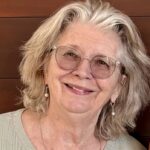
As a 78-year-old woman, that is the non-conceptual wisdom I want to embody. Each day I want to show up, to embrace my fear, to be genuine and curious, to relax, to laugh and to let my heart be broken. My hands are too arthritic to wield a drum, my mind wanders when I chant a language I don’t know. But that’s okay. I can bring Chöd into my life and embody the wisdom of turning towards what scares me and not running away when things get tough.
I am a haunted ground filled with gods and demons, ghosts of old wounds, of injured limbs, of ancestral trauma, of looking for love in all the wrong places, of worn out storylines, and opinions. I can embrace them all. I can let them all go.
I have been blessed with access to brilliant teachings and spiritual practices. For whatever time I have left, I want to live them each day with confidence and courage, deconstructing as I go. Each day, I want to sit, settle into my body, let my mind mingle with space. I want to let go of what no longer serves me. Not sweat the small stuff. Be kind.
Eventually, even my longtime Buddhist practitioner identity will need to crash and burn.