

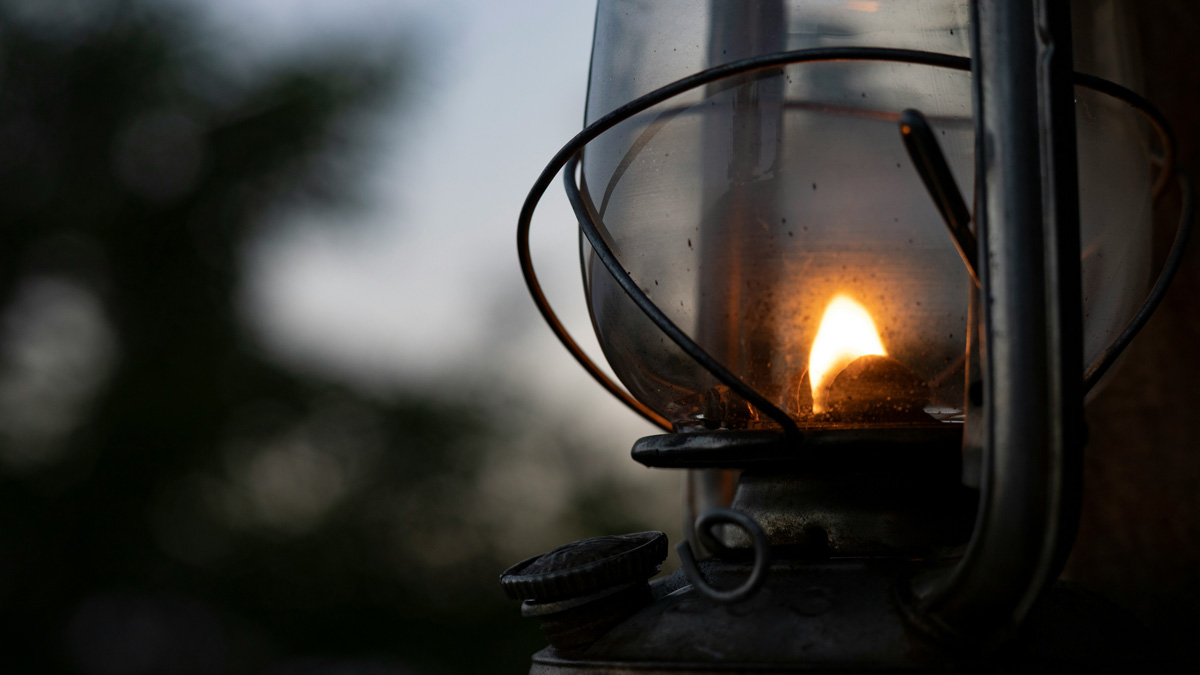
Imagine an oil lamp. The flame burns inside a glass chimney which becomes smudged over the years with accumulated soot. The light is still there, burning as brightly as ever, yet less of the light reaches the room — the filter between them has become occluded.
The Lotus Sutra‘s Chapter Sixteen Chapter Sixteen offers us a moving verse that explains the persistent, unborn, and undying quality of this light, or buddhahood, within all of us:
In truth, though, I am not extinguished,
For I always abide here teaching the Dharma.
The lamp and light are not separate things. The lamp is a system providing light in this specific configuration of conditions. The only thing distorting the illumination is a failure to clean the soot.
Many people think mental wellness is a given — something you either have, or you don’t. They think some lucky people are born calm and resilient, the rest of us stuck with whatever wiring we were born with. This way of thinking has created a widespread stigma about mental illness that causes so many to avoid the very things that would make them feel better, for fear of labeling themselves ill. But mental wellness isn’t an inherent trait. It can be cultivated, the same way physical wellness can be cultivated.
We easily accept that to be physically healthy you need to eat well, get enough sleep, exercise regularly, and see the doctor. We also largely agree that physical health requires effort. Our minds are no different. My own wiring tends to get hot and fritzy with anxiety under stress. As a Nichiren Buddhist, while my primary practice is chanting Namu Myoho Renge Kyo, I’ve also found that mindfulness, meditation, contemplative reading, and sitting quietly with the breath are real, powerful and effective methods to stay balanced and at ease when everything around us is pushing on us. These tools aren’t just for people who “need them.”
In high school, my soccer coach told us that innate talent was a myth and that mastery came down to touches on the ball. It’s true — you could read everything that’s ever been written about swimming and still drown. At some point, you have to get in the water. Being able to read a map isn’t the same as actually navigating the road. You don’t get good at anything without doing it, often over and over again. A regular practice gives us the mental hygiene skills that can relieve suffering in the here and now, no matter what situation you find yourself in.
Reflecting on the image of the oil lamp, we often blame the dim light when what really wants attention is the glass. Practice allows us to clear the glass. It doesn’t seek to acquire a new, brighter lamp, or search for light in other places. With practice, we clean the glass, loosen any accumulated grime, and allow what’s already present to fully function.
Over time, you can feel the benefits of mental hygiene — cleaning the soot — in your own life. Maybe you have a moment of recognition when you step out of a difficult conversation, your shoulders dropping half an inch all on their own. Or you find yourself sitting quietly one morning and notice, without quite knowing how, that the pressure you’ve been carrying all week is no longer there. These moments are not flukes. They’re the glass clearing. The light hasn’t changed. You’ve just been cleaning your lamp’s glass. The more you practice, these small moments of clarity and calm happen more often, last a little longer, and stop feeling so random.
The Lotus Sutra also offers us a useful teaching called “the mutual possession of the ten realms” (jikkai-gogu). The ten realms are not actually cosmological places; they’re states of being that we all experience. There’s the six lower states of hell, hunger, animality, anger, humanity, heaven, and the four wisdom states of learning, absorption, bodhisattva and buddhahood. Some consider them as a hierarchy you climb. The mutual possession tells us something much more useful: every world contains every other world, fully, with nothing left out. The Buddhist technical term is “without remainder.”
Why this is so reassuring is that even the hell realm contains buddhahood. Right now, even in our most contracted state of suffering, buddhahood is present. Even with the lamp’s near total occlusion of soot, the light still burns bright. This light is not a distance promise, or something you might eventually access. It’s already here. Now.
Consider this lovely verse from Chapter Sixteen:
If there are living beings in other lands who are reverent and sincere in their faith, then among them as well I will teach the unexcelled Dharma.
Traditional readings of the sutra consider this cosmology. Other lands, even other planets in the far-flung universe. Other beings being taught elsewhere. I’ve never related to what I consider, frankly, a sort of science fiction fantastical reading. Instead, I like to read these verses as the profound teaching of the mutual possession of the ten realms. These other lands are the realms we experience in our daily lives. Buddhahood is present (teaching) in every realm and every moment. Buddhahood is there in your hell realm. The teaching has not been withheld from any realm, it is not contingent on anything else. When we are sincere and open ourselves – cleaning the glass – the light shines through.
A few verses later, the sutra describes who can perceive this and who cannot:
Those errant living beings, because of their bad karma, never hear of the names of the Three Treasures throughout immeasurable kalpas. But those who perform virtuous deeds and are gentle and upright of nature will all see me here, teaching the Dharma.
These verses describe the consequences of old negative habit patterns (bad karma) as being unable to hear, shutting out the music of the world around us. The good medicine described in Chapter Sixteen is not intellectual mastery of doctrine or philosophy. It is being mentally agile, gentle and upright, an orientation of sincere, heartfelt engagement with the practice.
That is the gate — an opening. The bodhisattva vow offers us encouragement: “Dharma gates are inexhaustible, I vow to walk through them all.”
Hold this with another verse from the same chapter:
Such is the power of my wisdom
That its light shines infinitely.
My life span is of countless kalpas,
Attained through long cultivation of practice.
This might at first appear to be a contradiction. The light shines infinitely. And the lifespan attained through long cultivation of practice. If the light was always there, what is practice cultivating? It isn’t the light, which has no beginning and no end. It takes practice for the light to shine through clearly.
Each sitting. Each utterance of Namu Myoho Renge Kyo is a soft cloth’s pass over the smudged glass. Each return to breath and sound when the mind has wandered is the practice. The light does not get brighter as you do this; you begin to have confidence and trust that the light will reach the room as long as the glass is clean.
So, why does any of this matter? It matters in so many ways — personally, familiarly, and societally. It’s about being well, happy, at ease, and peaceful. When we allow our lamps to become coated so thoroughly in soot that we can’t see things as they are — when we are driven by greed, hatred and ignorance — we all suffer. Living a good life takes effort, both physically and mentally. Life isn’t coin-operated. It isn’t transactional. It is a continuous cycle of things happening, much of which is outside of any of our control. Our only control is how we register what is happening and how we choose to respond to it. Through fear — the occluded, soot-covered lamp. Or through love — the pure, clean light.
The Buddha gave many teachings over forty-five years, but two stand at opposite ends of the arc and frame everything in between. His first sermon, given shortly after his awakening, was the Four Noble Truths. Suffering is real. Suffering has a cause. Suffering can end. There is a path. The Buddha called himself “the great physician,” and this is the diagnosis: he names the illness, identifies the cause, gives us the prognosis that healing is possible, and prescribes the treatment.
The Lotus Sutra is the other bookend. Nichiren Buddhism considers the Lotus Sutra the complete and perfect teaching, complete because it holds and recontextualizes all the other teachings into a single grand vision, where the Buddha shows what the medicine actually does. Chapter Sixteen contains the parable of the skilled physician whose children have poisoned themselves and refuse the cure he has prepared. He leaves and sends word that he has died. Only then, shaken by loss, do the children finally take the medicine. They recover. The medicine had been available the entire time. What was missing was the willingness to take it.
The two teachings are not in tension. The Four Noble Truths tell us that the illness has a cure. The Lotus Sutra tells us the cure has been in our hands the whole time, waiting for us to take the good medicine. The Buddha as physician at the beginning, the Buddha as physician at the end, with everything else in between. Nichiren described the medicine as chanting Namu Myoho Renge Kyo, simple enough that anyone could chant it anywhere and anytime, profound enough that these seven characters contained all 28 chapters of the Lotus Sutra.
Buddhism considers suffering (dukkha) as a specific diagnosis of illness. It’s not a punishment, nor the cosmic price of being alive. Many misunderstand the idea that “life is suffering.” That isn’t it at all. It means suffering happens when we misunderstand how life actually works. By thinking the lamp is broken when the light can’t shine through the years of accumulated soot and our insistence on chasing after all manner of bright shiny things. That’s where the pain of suffering lives, in the compulsive grasping and fighting. The relief is not pushing any of this away. It’s simply in the everyday act of practice.
Every time you sit and your shoulders drop, that is real. Every time you chant Namu Myoho Renge Kyo and the static in your head quiets, that is real. Every time you notice the contracted state without identifying with it quite as completely as you did a minute ago, that is real. These moments are not previews of something better coming. They are the relief itself, partially recognized.
At the very end of his life, as he lay dying among his disciples, the Buddha gave one final teaching. All conditioned things are impermanent. Strive on with diligence. The first sermon named the illness. The complete and perfect teaching showed the medicine had always been in our hands. The last breath confirmed that the work is never finished, and that this is not a failure but the nature of the path. Strive on.
These verses from the Lotus Sutra assure us that the pure land is not a destination after death. It’s what our lives have been all along, the miracle we can experience when the lamp is clean enough for the light to shine through.
Our mental hygiene practice isn’t another self-improvement project. It’s not something we do well or badly, succeed at or fail at. It’s how we tend to our body and mind, because this is where we live, and we deserve to be treated with love and kindness.
Chanting Namu Myoho Renge Kyo is a touch on the ball. Sitting with our breath is getting in the water. Wherever you are in the ten worlds, the light is there to guide you on your journey. However you feel, your buddhahood is already in you, ready and waiting to give you strength.
The pure land is never destroyed. The fires of life burn, you don’t have to add to them. Your inner land is tranquil and calm. Not somewhere else. Here.
This morning, this breath. This recitation of Namu Myoho Renge Kyo. Clean your lamp every day.
This article is not intended to provide or replace treatment options for those who may suffer from anxiety, depression, or other forms of mental illness.
If you are in need of help, you can call the Suicide & Crisis Lifeline by calling or texting 9-8-8 to access free, 24/7 confidential service for people in suicidal crisis or emotional distress, or those around them. The Lifeline provides support, information, and local resources.