
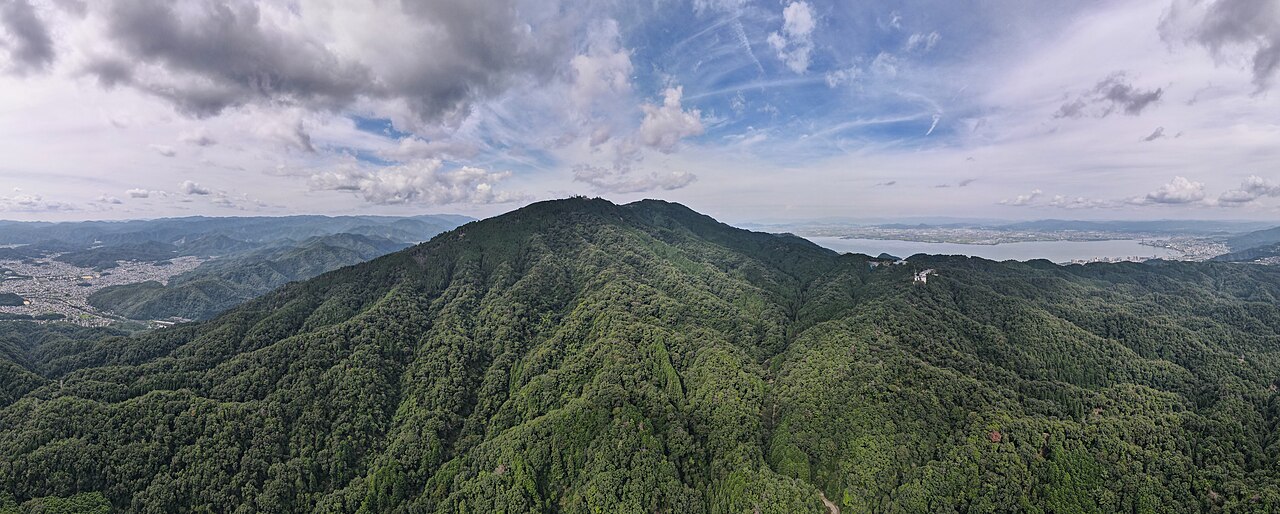

Nine months from now I’ll spend a night on a mountain outside Kyoto, Japan. Mount Hiei doesn’t draw the crowds Kyoto’s temples do; no line at the gate, no crowds blocking your photograph. Buddhism had already been in Japan for centuries. But so much of what people now think of when they hear the word — Zen, Pure Land, Nichiren — traces back to this one mountain.
In 788 a monk named Saicho built a small temple up there, Enryaku-ji, and started teaching what he’d learned in China. He called it Tendai. He wasn’t trying to create a new sect. But that’s what happened.
Honen trained on that mountain, then left to found Pure Land Buddhism. His student Shinran trained there too, then broke off in his own direction and founded Jodo Shinshu. Eisai trained there before bringing Rinzai Zen back from China. Dogen trained there before founding Soto Zen. Nichiren trained there before founding the school that carries his name. Five schools, one mountain. That’s why it gets called the mother mountain of Japanese Buddhism.
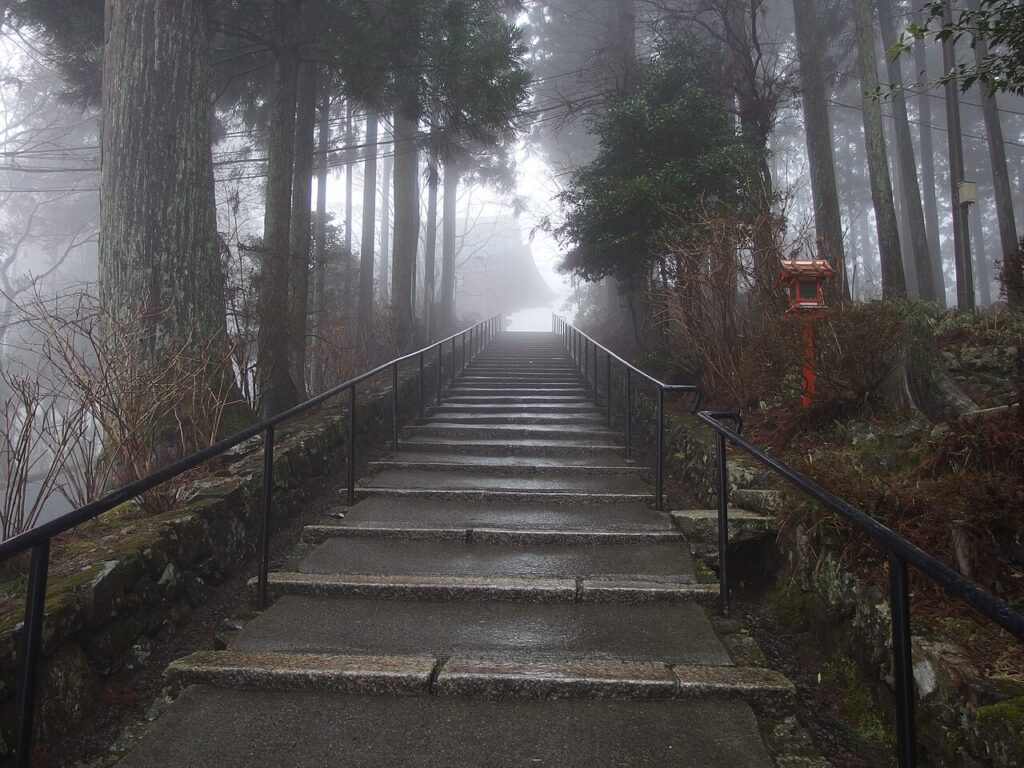
The temple itself isn’t one building but three separate areas spread across the mountain, Todo, Saito, and Yokawa, connected by paths through cedar forest rather than gathered around a single courtyard. At its height it held something like three thousand buildings and its own force of armed monks, powerful enough that in 1571 Oda Nobunaga marched on the mountain and burned nearly all of it to the ground, determined to break that power for good. What stands there now was rebuilt afterward, smaller than it once was, though still enormous by any ordinary measure.
Though I’ve studied Zen for years, it isn’t my own lineage. My first teacher was Chögyam Trungpa Rinpoche, whom I met in Boulder in 1973, introducing me to the Tibetan tradition rather than a Japanese one. He was close friends with Suzuki Roshi, the teacher who’d brought Dogen’s Soto Zen to America. A number of Trungpa’s own students, including friends of mine, came out of Suzuki’s Zen Center in San Francisco.
I recently found a copy of the original edition of Zen Mind, Beginner’s Mind in Spain. It has one line many modern folks know even if they’ve never read the book: “In the beginner’s mind there are many possibilities, but in the expert’s, there are few.” He wasn’t proposing a new philosophy. He meant something plainer: see this cup, this breath, this cushion with fresh eyes, as if for the first time, before you know enough about it to stop seeing at all.
Decades ago I took a single calligraphy class from Kobun Chino Otogawa Roshi, another teacher in that same Soto lineage. He was a friend of Shibata Sensei, who taught me kyudo (archery; “the way of the bow”) in Boulder when I was young, and whose school I later taught children in. I don’t know of any link between kyudo and this mountain. But Kobun’s own line runs straight back to it, through Dogen.
There’s a tradition of Zen ink painting called zenga, brushwork done fast, once, no correcting. Hakuin’s is the name most people know, working centuries after Saicho, and he never trained on Hiei himself. His lineage was Rinzai, under a teacher named Shoju Rojin. But Rinzai traces back to Eisai, who did train there. His frogs and his portraits of Bodhidharma have that same quality Suzuki was pointing at, just in ink instead of on a cushion.
Basho wasn’t a monk, and haiku didn’t come directly out of Zen practice, but I’m working on a book about haiku now and the resemblance is hard to ignore. Both come down to noticing one thing — a frog, a branch, before the moment is gone.
This is why the small group I’m leading through Japan next spring includes a night at Enryaku-ji itself, one stop on a longer route that also passes Mount Fuji, an old post town in the Kiso Valley, and Kyoto’s own temples and gardens. We’ll sit in on a dharma talk, share dinner, then an evening with nothing but a candle in front of us, a practice called shikan, watching without trying to make anything happen. In the morning, a service inside the temple grounds before we head back down into Kyoto.
I still don’t know what that night will be like. A small number of folks will find out with me on that trip. After all these years, the mother mountain still has something to teach us.