
I am sitting across the table from a good friend, a man who is a professor and a chaplain. David has flown in from Minneapolis, arriving at Upaya Zen Center an hour ago. I look into his eyes and realize that I am seeing something in him I have never seen before. His face is haunted with anguish. Yet there is also courage.
Underneath his bushy mustache, I see his lips tremble. I reach across the table to touch his forearm, and as I do, he says to me, “This will not be over soon.” I silently agree with him and recall a poem by Adrienne Rich:
My heart is moved by all I cannot save:
so much has been destroyed
I have to cast my lot with those
who age after age, perversely,
with no extraordinary power,
reconstitute the world.
She wrote this in 1977. It is now 2026. I can relate.
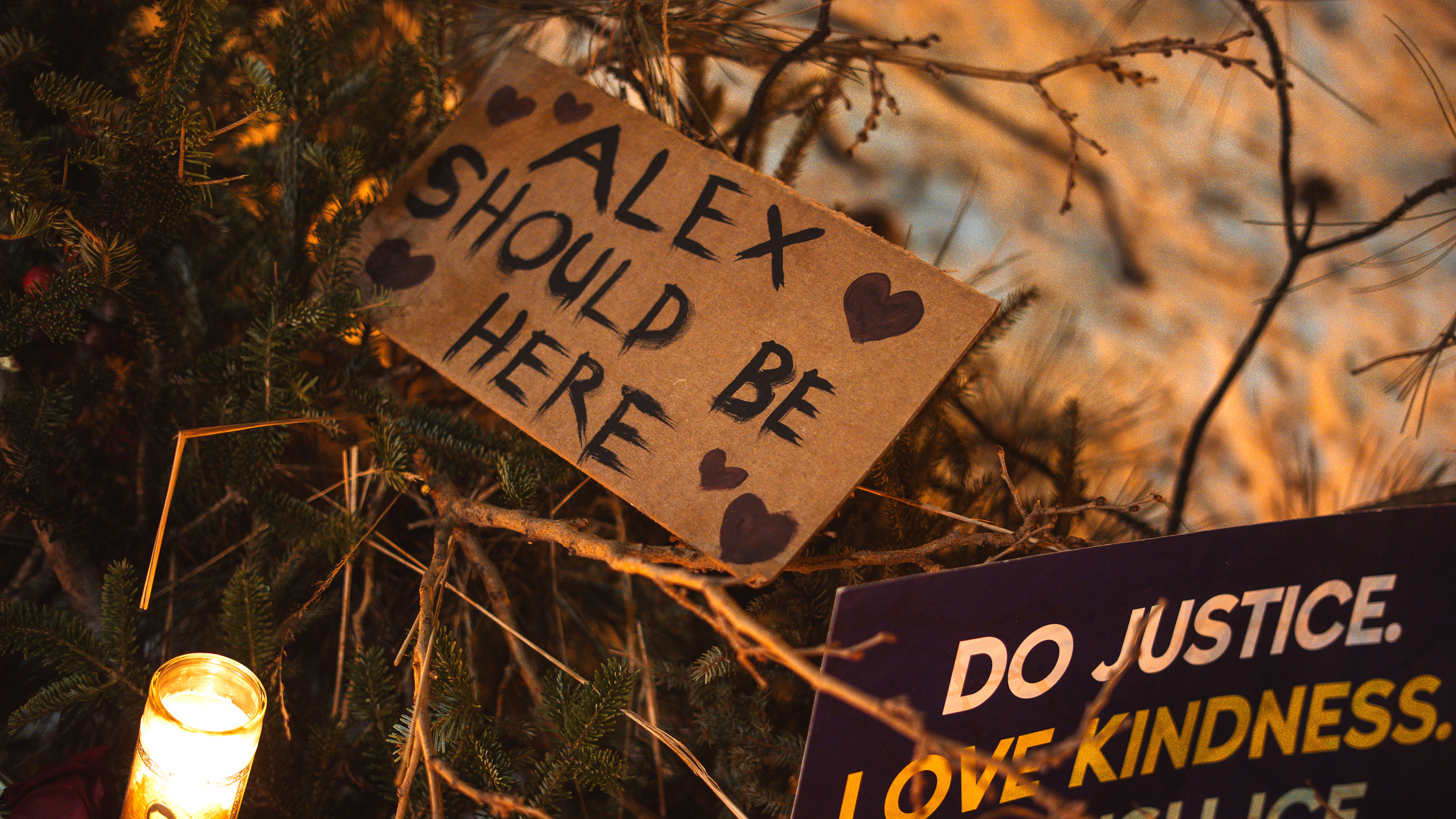
The very morning when David left Minneapolis for Upaya, Alex Pretti was killed by ICE agents. Seventeen days before Alex’s life was taken from him, Renee Good was shot dead by ICE agents in that same city.
I cannot turn away from the reality of those named and unnamed who have been killed, disappeared, surveilled, and sent to hostile environments as a result of the cruelty of our current administration.
I pause again and look at my friend as he says that it is much worse than it is being portrayed in the media. At the same time, he shares that the solidarity of those from Minneapolis and those who have come from afar is something that he considers to be truly miraculous.
I am reminded again of another poem, by the Russian poet Anna Akhmatova:
Everything is plundered, betrayed, sold,
Death’s great black wing scrapes the air,
Misery gnaws to the bone.
Why then do we not despair?
Akhmatova wrote the poem in 1921, one of the darkest years of her life and of Russian history. This was right after the Russian Civil War, when cities were devastated, when food was scarce, and millions were dying of famine, and during the early years of the Bolshevik consolidation, which were marked by terror, censorship, and mass arrests. In the midst of this, her former husband, the poet Nikolai Gumilev, was executed by the Cheka, the Soviet secret police, on false charges of conspiracy. Akhmatova was living in near poverty, barred from publishing, watching her friends disappear into prisons or exile. Her poem is about political collapse and also about ethical and spiritual ruin.
Why then does she not despair? She continues:
By day, from the surrounding woods,
cherries blow summer into town;
at night the deep transparent skies
glitter with new galaxies.And the miraculous comes so close
to the ruined, dirty houses –
something not known to anyone at all,
but wild in our breast for centuries.
As the Prime Minister of Canada recently said at the World Economic Forum, we are at a point of rupture — the loss of trust in our culture, in meaning, and of our humanity has brought many to their knees. So much has been stripped away. Yet Akhmatova’s poem insists that something still remains… that wild thing in our breast. As Tang Dynasty poet Du Fu wrote in the midst of the horrors of the An Lushan Rebellion in 757 CE: The nation is shattered; mountains and rivers remain.
There are so many things that we could say. Yet in many ways, no words. But here is a final note. On Sunday morning, January 25, Zen teacher Wendy Dainin Lau, Sensei, placed Alex Pretti’s name on the left side of Upaya’s altar. Renee Good’s name was already there. And then Dainin placed on the right side of the altar the name of Jonathon Ross, the ICE officer who killed Renee. She also placed another card on the right side of the altar, one for all those who are in ICE. She understands that compassion excludes no one. She understands that the states of mind that lead to brutality are also suffering.
This is not to say that those who have harmed or killed others should not be brought to justice. But it is the courage and wisdom to understand that “seeing into the life of things” (from Wordsworth’s Lines Composed a Few Miles above Tintern Abbey) is what we are endeavoring to do at this time of terrible rupture. This might be one way that we can understand the measure of our humanity.