


The word karma literally means “action” but here we are speaking of the causal laws governing intentional actions and their moral results. In Buddhism, karmic results exist within the stream of an individual’s consciousness and are experienced specifically by the agent of karmic action. If this were not so, the results of someone’s karmic actions would either be wasted or they would fall upon those who did not commit them. The process is predominantly a personal one and directs us to taking a measure of responsibility for our life situation.
Karmic results can be experienced as feelings. They provide the affective quality of our experience. Pain is experienced as the retribution of afflicted actions while the karmic ripening of virtuous actions is experienced as pleasurable feelings. To understand how this translates in life we can take the example of any given situation and observe that different people will experience it and react to it in different ways. One person might find poverty very hard to bear while someone else will find joy and happiness in the same impoverished circumstances. The case of wealth is similar: some people can handle wealth very well, use it for a good purpose and enjoy its benefits, while other people’s lives can fall apart under the temptations and responsibilities that come with being rich. Karma therefore contributes to the subjective side of life experience.
At the same time, karma is a key contributor to the objective side of life experience as well. It is one of the main factors determining the type of rebirth one has: in which realm of existence one is born, and in which life circumstances one finds oneself. The Buddhist view establishes a correlation between inner and outer worlds, between the mind of beings and the world they experience.
Many people think that karma means fate or destiny. It means that if I am in a difficult situation that is my lot, it is retribution for unknown past deeds, and I have to endure it and cannot escape it. Moreover, there is nothing useful anyone else can do to relieve me of my suffering because I alone can pay off my karmic debt. Such a perspective may be dismal and gloomy and hopeless, but it definitely is not Buddhist. In Buddhism, karmic theory is meant to encourage us to think about how we can become the person we want to be, not dwell on what we are at the moment or speculate about what we might have done in the past. The real Buddhist perspective is about attaining freedom, freeing oneself from karmic hindrances and constraints which can feel pretty real but which certainly do not last forever. From the Buddhist point of view the presentation on karma is an optimistic one because it’s always possible to overcome bad karmic results through the power of confession and regret, and by engaging on the path of virtue.
If your volition is clear and strong—you have a clear idea of what you want to do and you set about doing it—then the karmic result will be equally clear and strong. On the other hand, if your intention is weak and hesitant the karmic result will not be well defined either.
The irony, then, is that the Buddhist understanding of karma is quite the opposite of destiny and fate. It is in non-Buddhist belief systems that we find a divine being who creates and maintains the cosmic order in a way that we are powerless to change. It is in other systems that we find the notion of a world order that is inherent in nature, or in the world, with which human beings must conform. And it is in other religions that we find the idea of a supreme God sitting in judgment upon humankind and deciding on rewards and punishments.
Karma is not deterministic. There are numerous occasions where karmic outcomes are uncertain and unpredictable because they depend on a multitude of conditions. In Buddhism, karmic action is never a simple single cause of calamity or good fortune; it’s invariably accompanied by many different conditioning factors that give the outcome its specific qualities. Above all, it really is not about a destiny that is somehow imposed upon us, or bestowed upon us, or even a natural law that rigidly binds us.
One reason it’s difficult to understand karma is because it does not fit into the boxes we are used to. As Dzongsar Khyentse Rinpoche points out, “Concepts such as predestination and free will are Western concepts. Karma is neither predestined nor is it free will. If one understands the illusory nature of karma, then there’s no burden of thinking in terms of predestination or free will. If you order a cup of coffee in a dream, the likelihood is that you will get a cup of coffee but that doesn’t make dream coffee real coffee.” In Buddhist thought karmic causation is part of conventional reality, not ultimate reality, and this shift in perspective means it does not need to be taken with the solemn type of seriousness associated with theistic dogma. …
The Buddha’s definition of karma is this:
O monks, it is volition that I call karma. Having willed, one acts through body, speech and mind. (Anguttara Nikaya, III.415.)
It is intention that has the power to bring about karmic or ethical results. Unlike other ethical systems, Buddhism does not ascribe that power solely to action in itself. An action is therefore called virtuous when the intention behind it arose in a virtuous mind, not because the action is virtuous of itself and in all circumstances. (A virtuous mind is defined as a mind in which the ten virtuous mental factors are present.) It follows that karmic consequences are not produced by unintentional or accidental actions. If you unconsciously step on an ant, your action will not incur the karmic consequences of killing since it was not your intention to kill. If you mindlessly kill someone in a car accident the same principle applies.
However, karmic causation does not apply to all types of volition and to all types of mind. It only applies to actions that are tinged with craving or grasping. This implies that at a certain stage of the path when someone has abandoned craving and grasping, virtuous actions no longer produce karmic consequences because craving has been eliminated from the mindstream. That is how one can eventually free oneself from karma altogether. And it doesn’t apply to actions that do not arise from a clear intention, such as brushing your teeth or walking down the road. These are classified as karmically neutral.
It’s important to know that karmic results do not occur automatically. The theory of karma is not another theory of determinism in disguise. Karmic consequences depend on several factors, in particular the strength of the intention. That means that if your volition is clear and strong—you have a clear idea of what you want to do and you set about doing it—then the karmic result will be equally clear and strong. On the other hand, if your intention is weak and hesitant the karmic result will not be well defined either. Furthermore, it is believed that whenever an action is directed to someone who is spiritually advanced (a Noble One) then the karmic result will be amplified and will be certain to occur through the power of their spiritual field. And finally, karmic consequences are more certain to occur in the case of actions that are habitual and repeated.
Since karmic causation originates primarily in the mind, it is with our minds that we can change the outcome. If karmic causes were external to us we may or may not have control over them, but we are definitely able to work with our minds. Buddhists believe that it’s possible to alter karmic outcomes before they manifest. If the outcome is subject to being conditioned, then we can deliberately set out to create positive conditions to counteract our harmful deeds and thereby reduce the gravity of the karmic result. This principle is the basis for practices of confession, purification, and regret in Buddhism. Karma is not the same as destiny and its consequences are only inevitable if we do not intervene.
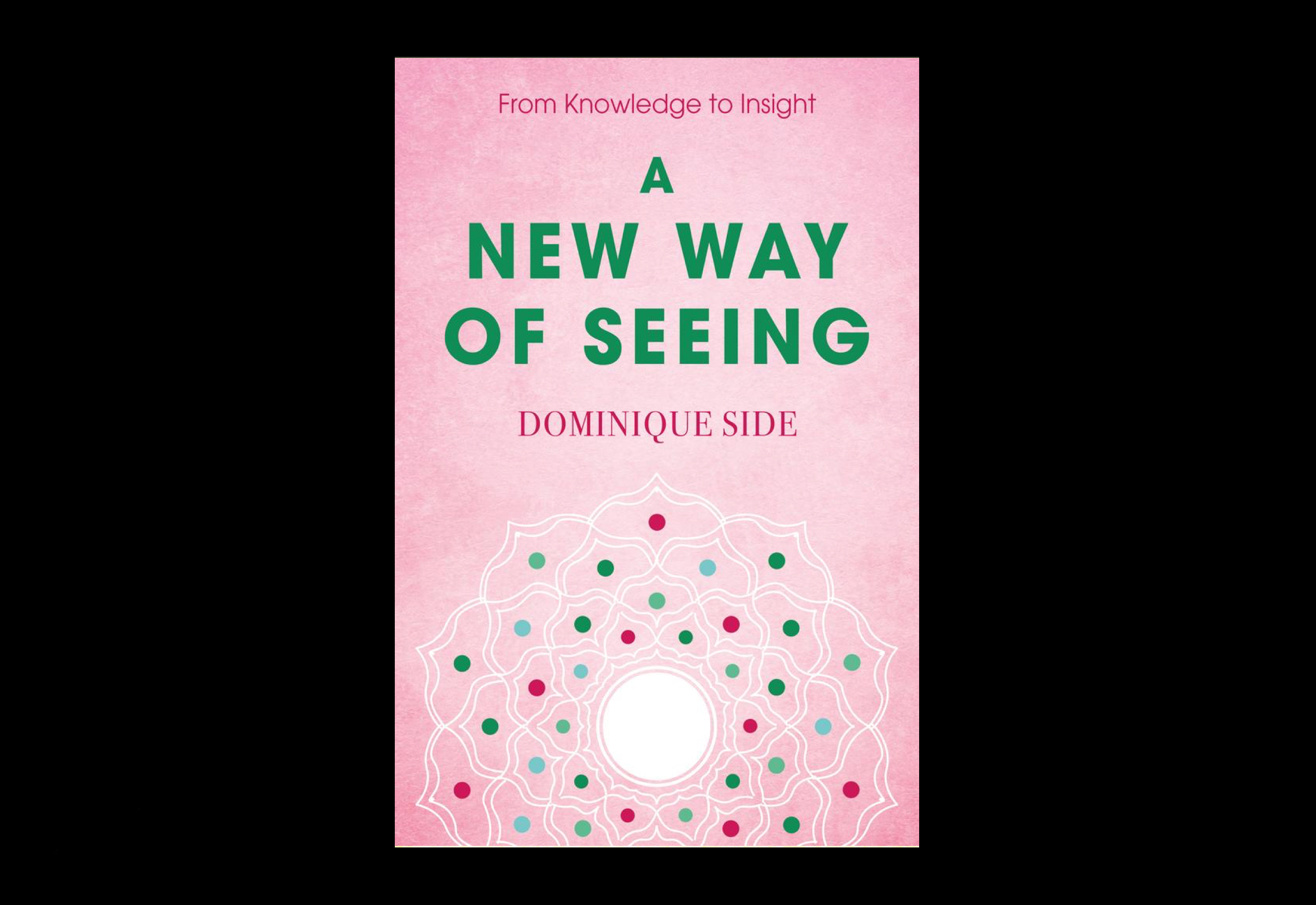
From A New Way of Seeing: From Knowledge to Insight, by Dominique Side. Published by Troubador Publishing, www.troubador.co.uk. Reprinted by permission of the author.