

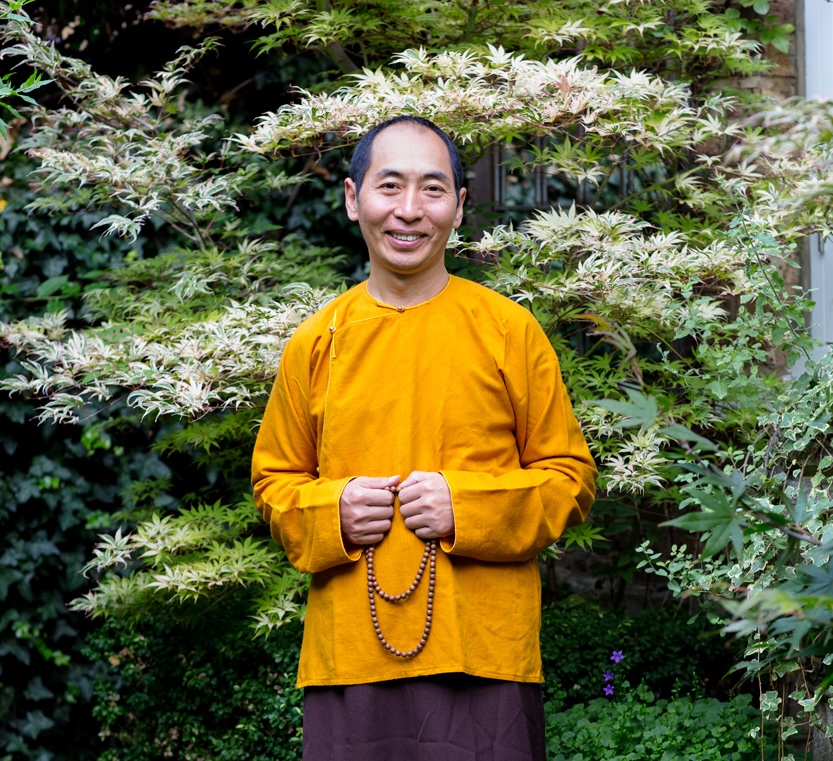

Sometimes Tibetan and Western Dharma communities and entities appear to co-exist but not really know each other, except maybe superficially. Take the case of the 11th Lelung Tulku.
Due to his low profile and lack of self-promotion he is almost unknown in the West. But if you mention his name to Tibetans, particularly scholars, they immediately assume a reverent expression and fold their hands in respect. He seems to be one of the most renowned lamas in the Tibetan community — and for good reason.
Lelung Rinpoches have had close teacher-disciple relationships with renowned masters and lineages (e. g. the Dalai Lamas, Je Tsongkhapa, Mindroling Lamas, etc.) and the present incarnation, the 11th Lelung Tulku, keeps good relations with all lineages of Tibetan Buddhism.
Through lifetimes he has been playing a pivotal role in Tibetan history, shaping it, bringing peace at the time of religious and political upheavals in Tibet, and stood firmly in his rime (nonsectarian) approach, even at the time when such a nonsectarian approach could (and did) work against him, for example during the time of the fifth Lelung Tulku, when sectarian purity was seen as a virtue and any diversion from that was frowned upon by some and condemned by others.
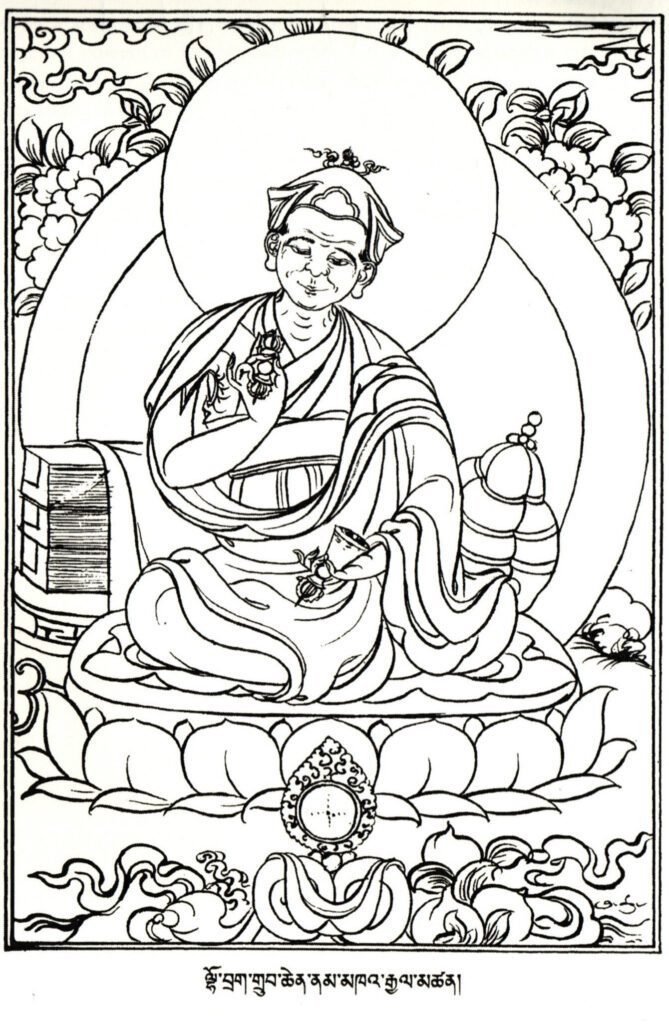
Fitting to his activities, the Lelung is regarded as “one of The Three Principal Incarnations of Tibet (bod kyi sprul sku rnam gsum), Vajrapani”, as Samdhong Rinpoche explained in Buddha In Suburbia, a BBC documentary about him. (The other two are Avalokitesvara and Manjushri.) He has been prophesied by Padmasambhava (also known as Guru Rinpoche) to become the holder of the Sangwa Yeshe (Wisdom Dakini) teachings, a female form of Chenrezig. According to some accounts, he might also be a manifestation of Padmasambhava himself; the Lelungs’ lives and activities indeed resemble his own, both as a protector and through the Sangwa Yeshe related practices.
When I first met him, he had just moved from a garden shed where he was staying for the first few years after coming to the UK, into a small house, not far from the charity shop and adjacent dharma center that he was leading. It must have been quite a cultural difference, going from high thrones, brocade, and bowing disciples in India to the shed, anonymity, and simple life in the UK — but I’ve never seen him make a difference between high and low, either in terms of external conditions or in terms of whom he talks to. He remains engaged today, meeting dignitaries and actively doing construction work in his new Shide Centre in suburban London.
Learning from the Past
A person of good heart sincerely wishes to be an agent of peace in times of conflict; a beacon of clarity when confusion prevails; a ray of hope at times of uncertainty; a source of loving care for the lonely and desperate. One great way to realize this is to learn from examples of the past, and the Lelung Rinpoches are no exceptions.
As His Holiness the Dalai Lama says in the foreword to the collection of Lelung Rinpoches’ biographies, A Drop from the Marvelous Ocean of History: “The real purpose of compiling the biographies of previous Lelung manifestations is for us to learn from their great deeds and follow in their footsteps.”
In recent years, Tibetan lamas of different lineages have been thinking about how to be “a twenty-first century buddhist,” as His Holiness suggests us we should be. In the case of Lelung Rinpoche, his actions are non-sectarian, and include secular environments. In addition to teaching and giving initiations in various monasteries, seeking lost texts and preserving lineages, transmitting the entire Kangyur in Mongolia, he is also taking care of the Peace Garden in London, hosting interreligious collaborations, teaching meditation in a gallery setting, has dialogued with scientists, taught as an associate at Wolfson College of Oxford University, and remains dedicated to hearing and advising schoolchildren and villagers in remote areas of India.
The Shide (pronounced she-day) Center is focused on three areas:
- Serving as a study center with a temple, all dedicated to the Buddhist inner sciences, while integrated with modern science.
- Serving as “world peace center,” dedicated to helping people of all faiths and nationalities come together and realize peace in the world. It is intended also to be a destination of gathering for leaders of communities from all over the world.
- Offering a World Peace Stupa as a monument to peace available for visitors from all over the world.
It’s at all three of these projects that one might find him these days in construction gear.
When a single person is able to act on so many levels of society and influence so many different types of people, it is explained as a continuation of the many past lives’ actions and prayers, developing a plethora of skills and abilities, together with virtuous connections with others. This is clearly something that we can aspire to ourselves, taking everyday situations as a path of mastering them; Rinpoche can be a model for us.
The Prophecy of Vajrapani and the 700-Years’ Celebration
If you come to Dharamsala, India this July, you can attend the 700th anniversary of the first Lelung Tulku, Lhodrag Namkha Gyaltsen. Several prominent lamas have already confirmed their attendance and the program. Starting on July 1 and lasting a little bit over a week, related events will include empowerment of the Great Chakra Vajrapani, Vajrapani ear-whispered lineage, presentation of a reconstructed thangka, and more.
Interestingly, proofreading Lhodrag Namkha Gyaltsen’s work, Rinpoche found the following dialogue between the first Lelung and Vajrapani, in many ways related to this anniversary: “Following these prophecies the Lord of Secrets further declared: ‘Those who offer extensive worship to you, who construct your image and are building stupas, who carry your relics and transcribe the oral lineage, who bow with devotion and offer prayers, who observe your anniversary and chant your name — they shall all be cared by me, Vajrapani.”
Those interested in attending the anniversary can find information here; likewise, those interested in supporting Lelung Rinpoche’s activities can do so here.