
Liminality, the transformative state of being in between, is all around us. We see it in a flower between bud and blossom, the dawn before the sun breaks over the horizon. We feel it when we travel on a flight from somewhere to somewhere, journeying in a transitional space that offers a chance for unaccustomed vistas, literally and figuratively.
“Such things as I have seen out this window I have never dreamed,” artist Georgia O’Keefe wrote to her sister while on a plane journey. “A great river system of green and grey seeming to run uphill to a most dreamlike lake of bluish and pinkish grey…” The perspectives that air travel gave O’Keefe inspired her to take new, more abstract directions in her painting. This shift captures the sense of possibility, of becoming, inherent in the “between.”
“This year, as we say goodbye to the old and welcome the new, let’s put aside our usual ways of seeing.”
In Tibetan Buddhism, between-states are known as bardos, intervals when heightened awareness and new insights are available to us. We’re now entering one of the most fertile between-states: the transitional period as the old year comes to an end and the new year begins, a bardo passage with great possibilities for change.
The Tibetan Book of the Dead is a centuries-old manual for navigating bardo, composed to guide the dead through the intermediate state between death and rebirth. It was also written to guide us, the living, on the journey between birth and death, including bardos we experience during life. The book tells us that, in between-states, we have a precious chance for transformation because “the intellect becometh ninefold more lucid;” and “one possesseth the slender sense of supernormal perception and…the mind is capable of being changed or influenced.”
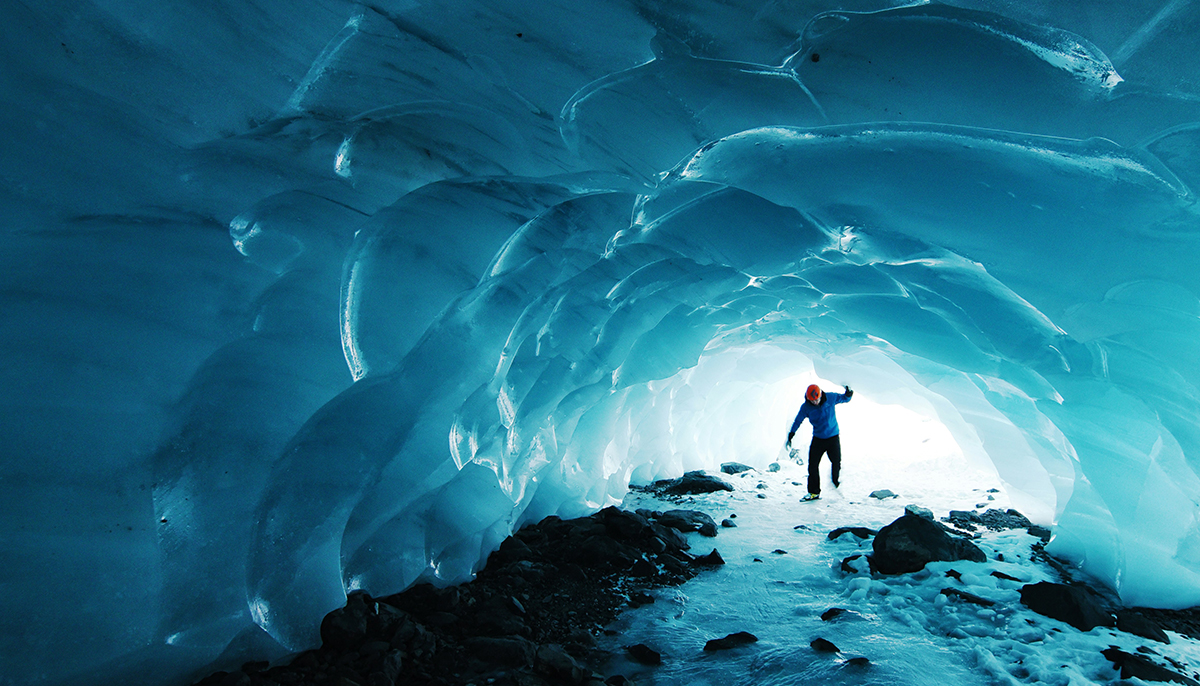
The bardo as this year winds down and the new year gets underway is an opportunity to gain wisdom and determine our path forward. One way to think of this passage is as a time when we’re in retreat or, from a Buddhist point of view, “in the cave.” In the Buddhist tradition, caves are very important; quiet, simple spaces that invite reflection, they’re believed to hold great possibility for fresh perspectives.
My Tibetan grandmother told me about a Rinpoche, or Buddhist master, from Darjeeling who vanished and was discovered to have gone to a high cave in Yatung, near Tibet. He stayed there for three years, “getting power.” Siddhartha Gautama retreated to a cave near Bodh Gaya, India, on his journey to becoming the Buddha, and in the 11th and 12th centuries, the Tibetan spiritual master Milarepa meditated in numerous caves in the Himalayas.
We can embrace the end-of-year bardo as a time to enter the cave and reflect on where we are in our personal lives as parents and children, friends and partners, professionals and artists. We can contemplate “what is” now, our hopes for what will be, and what we can do to make these hopes a reality.
Because the holidays are so busy, this may sound aspirational. However hectic things get, though, even a few minutes in the cave each day can reveal surprising insights, things we only see when we make room for them to become visible. Your cave could be an alcove in your house, a corner of your garden, space in your mind as you take an early morning walk or make breakfast or put up holiday decorations. Where might yours be?
Accustomed as we are to constant thought and motion, we may find it difficult to enter the cave and, once there, to stay there. But if we persevere, open to the alchemy that can take place in bardo, we may discover new interpretations and outlooks. We’re familiar with the idea of exploring the outer world; in the cave, we can make discoveries as we navigate our inner universe.
This year, as we say goodbye to the old and welcome the new, let’s put aside our usual ways of seeing. Let’s allow the seen to give way to the unseen as we travel the mountains and rivers and galaxies of the world within. The discoveries we make can awaken and delight us, helping us to reset our compass and start afresh with the new year.