

As I write these words, sirens are sounding. Not as a memory or a metaphor. Right now, outside my window, on the sixth day of the war on Iran, missile attack sirens are wailing.
My body does not wait for my mind — it has done this before. It contracts, pulls inward, listens with everything it has. The breath I have spent years learning to soften becomes shallow and strategic — that of a creature calculating distance and time. The cup of tea on my table is still warm. The light through the window has not changed. The room is exactly as it was.
And yet, the body knows: something is coming.
I have lived through ten wars. I was born into one. None of them were my wars — I did not choose them, did not start them. I belonged to the people the war was happening upon, not the people deciding it. I arrived, and the war was already there. My body learned what my mind was still too small to understand: the ground is not always steady, silence is not always safe, the men with weapons decide the weather and everyone else just lives in it.
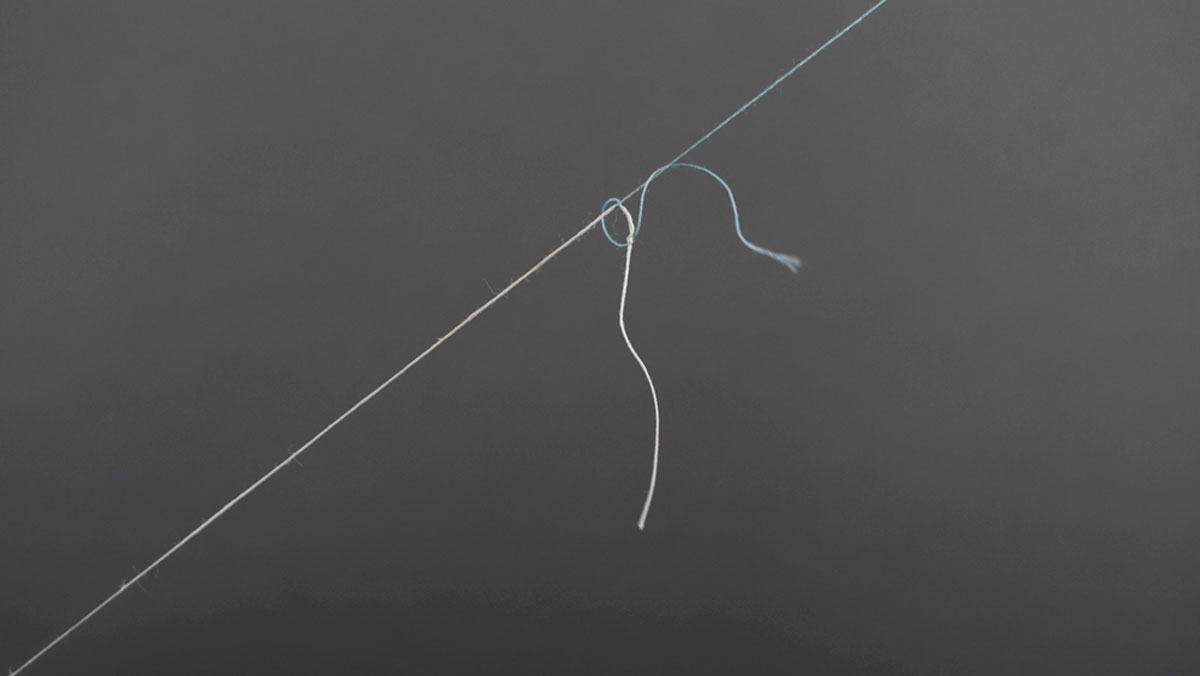
“You may not hear the sirens from where you are reading this, but the thread runs between us regardless — through every choice, purchase, and silence kept or broken.”
War has never been the backdrop of my life — it has been the condition of it. Each one pressed its sediment deeper into my muscles, into the way my ears have learned to search silence for what might be hiding inside it. Each war passed its unfinished grief forward — not as a story, but as a weight already sitting in the chest of the next generation, heavy before they even knew what it was.
I came to mindfulness the way you reach for anything solid when the ground gives way — not for philosophy, but relief. My own suffering and the suffering of my people had become indistinguishable. I didn’t know where one ended and the other began. I needed something that could hold both, without trying to explain them away or transcend them.
War does not only sound its sirens in the afternoon while you sit with your tea. It comes at three in the morning, while you are sleeping, when your body has finally let its guard down. Suddenly, there’s a blast, or a wail, or your child’s hand on your shoulder, and you’re awake. Your heart is already running before your eyes are open. That is the suffering I brought to the cushion. It wasn’t disappointment or existential searching. I brought with me the kind of suffering that lives in the middle of the night, in the body and bones. I brought both my suffering and my people’s, braided together and inseparable.
Contemporary neuroscience research suggests what communities like mine have always known in their bodies: traumatic stress can leave biological traces that travel across generations. The children of people who survived mass violence carry measurable physiological differences in stress hormone regulation and in the architecture of their threat-response systems, even when they were born far from the original harm, or never told the full story. We do not only inherit memory, we can inherit the body’s unfinished response to what memory couldn’t hold.
A child born in Gaza today, if she survives, enters the world with a nervous system already shaped by her grandmother’s displacement, her mother’s grief, the siege and genocide that preceded her first breath. She has not yet had a single experience of her own, and the war is already in her cells.
This is the suffering that compassion must be willing to see directly. Not from a careful distance, or softened by the language of complexity, but as a consequence of choices made by human beings who could have chosen otherwise. I know this suffering as someone who has had to find a way to live inside it. What practice taught me was not how to escape it, but how to be with it.
To be Palestinian is to know pain not as a private experience but as a shared condition — inflicted deliberately, across generations, on a people who did not stop loving their land, their children, or each other. When I encountered the Buddhist teachings on compassion, something in me recognized them — not as revelation but as confirmation. A language for what my people had always lived. What the texts gave me was not the knowledge of suffering but a framework for understanding how that suffering could become a direction, a movement, a practice.
I write these words from inside a wound that did not begin with me and has not ended with me. I am asking you to look at it — not with pity or guilt, but instead with eyes that are willing to be changed by what they see. See the pain that has been deliberately inflicted across generations. See also the beauty we have refused to surrender: our music, our olive trees, our poets who wrote love letters to the land even as it was taken, our children’s laughter rising above the rubble, our insistence on living with fullness and dignity in the spaces that remain. See the injustice clearly, without softening it. Let what you see move you from sorrow into something more faithful to what compassion truly is. Without pity or apology, I urge you to be willing to let another’s reality enter you, and to ask: What is mine to do?
With mindfulness practice, I discovered something that sounds deceptively simple: I could turn toward my suffering without being destroyed by it. Through mindful breathing, returning of attention to my body, and learning to sit with sensations I spent years outrunning, I could feel the grief of watching my people besieged and not collapse into it. I could breathe into the ache and stay present, alive, and here, feeling it fully.
Mindfulness did not bring me to a transcendent equanimity beyond political reality. It didn’t teach me that the external conditions of oppression were, at some deeper level, a product of my own mind’s attachments. It didn’t suggest that if I meditated deeply enough, the bombers would resolve into emptiness.
What it did give me was a different relationship to what cannot yet be changed. It offered me the capacity to feel the full weight of reality without fragmenting under it, and the ability to act from groundedness rather than panic, from love rather than despair.
Staying with the pain is the beginning, not the end. That ground is where these words stand, and it is from that ground — not from theory, not from a safe distance — that the dharma asks something more of us.
When I first encountered the Buddhist teaching on compassion — karuna — I expected it to arrive as a feeling. And it did, at first. Something opened in the chest, soft and wide, like a window after years of sealed rooms. But as I sat longer with the texts and with my own practice, I began to understand that what I had felt was not the destination — it was the beginning of a question that would not leave me alone: And then what?
The Buddha’s compassion was never passive contemplation of another’s pain. It was described as “the wish for beings to be free from suffering” — not the wish to feel sad on their behalf, but the movement of the heart toward liberation, theirs and yours at once. Karuna is not an emotion you hold at a careful distance. It’s what happens when you stop protecting yourself from another person’s reality — when something in you cracks open and makes space for them inside you. Not sympathy, which observes from across the room. Not empathy, which imagines from a safer distance. But this: their suffering enters you and takes up residence. Their cold becomes a cold you cannot unfeel. Their hunger becomes a hunger that will not let you sit still.
From that place of breaking open, the question arises not as an intellectual exercise but as an urgency: What is mine to do? This question is not a gesture or a performance. It is a response to a call you cannot unhear, from someone who is now, in some irreducible way, inside you. That is where compassion stops being something you experience and becomes something you live — not gentler, not more peaceful, but more honest, more awake to the thread running from your daily choices to the bodies of people you may never meet.
The Buddha was not silent in the face of the caste system. Thich Nhat Hanh was not silent while Vietnam burned. He wrote, from the middle of that burning: when bombs begin to fall on people, you cannot stay in the meditation hall all of the time.
The first step of the Noble Eightfold Path, Right View, does not mean viewing the world through a lens of spiritual bypass. Instead, it’s the courage and clarity to see things as they really are, without the distortions of denial, delusion, or comfort. Seeing things as they really are means being willing to say clearly: this child did not die because of karma. These things happened because of choices made by human beings who could have chosen otherwise.
Thich Nhat Hanh taught on the concept of interbeing — the radical truth that nothing exists independently of the web of conditions that produced it. We are not separate. And that means we aren’t separate from harm, either. The weapons in this war were manufactured by companies whose shares are traded on global markets; the targeting systems guiding missiles over sleeping children were built by technology companies whose products many of us use daily.
It was a conversation with my dear friend and dharma teacher, Lubna Masarwa, that made me see the connection between compassion and boycott — how one, followed honestly, leads to the other.¹ Throughout history, when people of conscience have looked clearly at systems of deliberate harm and asked what is mine to do — one answer has emerged again and again, across cultures, across traditions: withdraw your participation. Let your daily choices become the truest expression of what you believe.
This is not a tactic, but a practice. It is the practitioner saying: my compassion doesn’t end at the door of the supermarket. My inner work and my outer choices are not two separate lives. I will not buy my peace of mind with willful blindness.
The Montgomery Bus Boycott held for 381 days — not through speeches alone, but through the unglamorous, daily act of choosing not to fund a system that degraded human dignity. Nelson Mandela named the international boycott of apartheid South Africa as one of the forces that finally brought the regime to the table, not bullets or borders. People deciding, in the ordinary moments of their ordinary days, that their money carried a moral weight they could no longer ignore.
We are living inside this kind of moment. The companies profiting from this war are not hidden. The supply chains connecting your daily spending to the missiles, and surveillance systems are documented and publicly available. What’s missing isn’t information, but the willingness to let that information change us.
This is precisely what the dharma asks. Right Action is not reserved for the meditation hall or the retreat center — it extends to every transaction, every choice, every small refusal. The Buddha did not teach that our practice ends where the market begins.
Boycott practiced from this place is love made precise — love that follows the thread of harm all the way back to its source and says: not in my name, not with my money, not anymore. It is the most nonviolent act available to almost anyone, regardless of wealth, platform, or power. It requires no permission and costs nothing but the comfort of not looking. And it works — slowly and stubbornly. The way water works on stone.
I began writing these words to the sound of sirens. By the time you read it, I don’t know what will have happened — to me, to the people I love, to this war still unfolding as these words form. I am writing from inside something that has no ending yet. That is not a literary device. That is where I live.
What I know is this: the practice I am describing is not theoretical. It’s what I am doing right now, in this body and breath. The cushion didn’t prepare me for peace as the absence of sirens. It prepared me for something harder and more real: the capacity to remain present, grounded, and capable of love — especially when the sirens sound.
You may not hear the sirens from where you are reading this, but the thread runs between us regardless — through every choice, purchase, and silence kept or broken. The practice I am describing is available to you too. Not later, but now.
Precise love is not gentle love. It is the hardest love there is — and it is the only love equal to this moment.
¹ Lubna Masarwa is a Palestinian dharma teacher whose work sits at the intersection of contemplative practice and liberation. This essay grew, in part, from a conversation with her about compassion and boycott.