

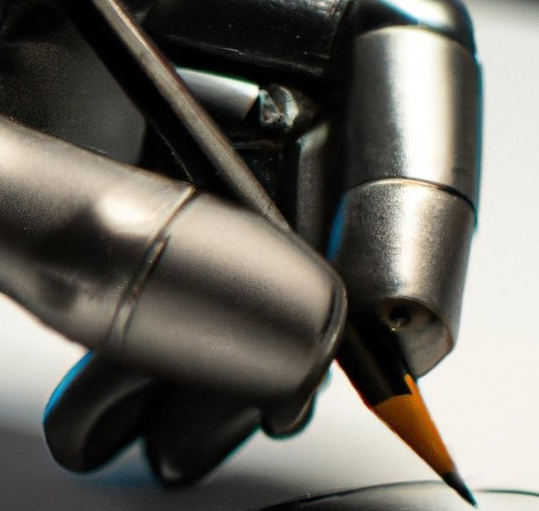

I sometimes wonder if what I’ve written is truly mine. I ask AI to polish a single sentence, and the result is better than my original. So I hand over a paragraph, then an entire draft. At some point, I am no longer the author; I am the editor. Finally, I have to ask: Who wrote this?
The question cuts across law, publishing, and academia. Who is the actual agent of creation? If I design the prompt, is that enough to claim copyright? The algorithm did the writing, but the intent was mine. The subject is split, and the boundary is blurred. Who is actually performing these acts?
The same dynamic plays out beyond creative work. In remote tech support, I watch someone else control my screen. In autonomous driving, I delegate the wheel to AI. With autonomous agents, the human operator vanishes entirely. The mouse moves on its own, opens files, writes emails, and makes calls — and at each step, the “I” recedes a little further.
Most of this is voluntary. We hand things over, bit by bit, for convenience or efficiency. At what point, though, does an action stop being mine?
The worry, on the surface, looks like job insecurity or a copyright dispute. But underneath lies something more fundamental: the fear of losing agency itself. What is this “I”? Where does it begin and end? Can agency be delegated — or does the self simply expand and contract?
Buddhism has engaged directly with these questions. So let’s look at what both science and Buddhism say about the self, and then ask how the logic of non-self (anatta) and dependent origination (paticca-samuppada) might respond to the ethical questions this moment raises.
Is Agency an Illusion? Science Confronts Non-Self
The sense of “I” feels obvious. Almost nobody doubts that it is “I” who breathes, reads, thinks. But step back, and the boundaries of the self turn out to be far less clear than we assume. This is not a philosophical puzzle. Science has run into it directly.
Start with life itself. Science has yet to agree on what “alive” actually means. There are, it is said, as many definitions of life as there are people trying to define it. Life has been described as the sum of properties a material system possesses, a mechanism that produces order from order, or the process of replicating genetic information. In each case, the supposed boundary of the self turns out to be far looser than intuition suggests — and none of these definitions accounts for the felt sense of “I.”
The aspen groves of Utah look like tens of thousands of separate trees; underground, they are one genetic individual connected by a single root system. Even genetically distinct trees swap nutrients and signals through fungal networks — the so-called Wood Wide Web. Viruses cannot metabolize or reproduce alone; prions replicate a structure using only protein, with no DNA or RNA. From an information-theory standpoint, life is the storage and processing of information — matter arising from information, “It from Bit.” At the molecular level, a living thing is a sophisticated information-processing system, and the “self” is simply the center of that processing, not an independent substance lurking behind it.
Step outside the boundary we call skin, and the wider web of dependent origination comes into view. Focus on the boundary between self and AI, and the web blurs. Shift to the connections, and it comes into focus.
What science keeps finding in its search for what the self is made of is, instead, how it is made. The boundary was never fixed to begin with. Yet knowing this does not make the felt sense of “I” go away. The brain and senses construct that story so relentlessly and so seamlessly that, like fish unaware of water, we never notice the construction happening.
How Does the Brain Build “I”?
The brain cannot take in the world as it actually is — there is simply too much of it — so it compresses incoming experience into patterns, templates, predictions. Consciousness is not a simple input-output channel. It is a compressed fiction — an edited highlight reel, not raw footage.
All perception, on one account, amounts to a kind of “controlled hallucination” — what we call reality is simply the brain’s most stable version, shared widely enough that it no longer registers as such. The same logic applies inward: when the heart races, the brain guesses the cause and translates the signal into fear, excitement, or joy. Emotion is inference, not readout.
When the senses break down, the construction becomes visible. In sleep, with sensory input cut off, the brain amplifies its own signals and produces dreams. In synesthesia, sounds arrive as colors, letters as tastes — showing that the sensory channels are not fixed pipes. Different species sense different slices of the world entirely. Sensation is not a mirror; it is a lens that bends.
Brain damage makes this construction most visible. When specific regions fail or connections sever, the layers of “I” that felt permanent peel away one by one, exposing the scaffolding underneath. Cotard’s syndrome, depersonalization disorder, and body integrity identity disorder are cases in point.
“My body, my feelings, my thoughts” — all of it is the brain’s work. It weaves specific signals into the bundle we call self. When the weaving unravels, any part of “I” can become strange. The self is not a thing the brain discovers. It is a story the brain tells, moment by moment, using signals from inside and outside the body. While the story holds, we sense it as real. But it is sense-experience, not fact.
The Self Is Constructed: Buddhism Speaks of Non-Self
Science went looking for the substance of the self and found instead how it is built. Buddhism starts from the other end: by taking that construction apart.
Non-self is what most sharply distinguishes Buddhism from other philosophical and religious traditions, and it has generated enormous scholarly discussion. Respecting that landscape, I want to try something a bit unconventional: reading three Buddhist concepts — the seven stations of consciousness (satta-vinnana-thitiyo), the five aggregates (pancakkhandha), and dependent origination — through the lenses of modern biology and information theory, in order to think about AI. Cross-framework comparison calls for care, but it may be one way to get clearer about consciousness at the human-machine boundary. What lies ahead is a leap of thought that may feel somewhat unfamiliar, even uncomfortable — so please fasten your seatbelts.
Seven Stations of Consciousness: One Body, One Mind?
Buddhist non-self has a surprising dimension. Rather than simply dismantling the self, it maps — through the seven stations of consciousness (DN15) — the dynamics by which body and perception arise in mutual dependence. That map turns out to be surprisingly useful when it comes to AI.
The seven stations are seven modes in which consciousness abides, spanning the three realms: the Sense-Desire Realm (kamadhatu), with sentient beings across the six realms of rebirth (first station); the Form Realm (rupadhatu), with Brahmakayika beings (second), Abhassara beings (third), and Subhakinha beings (fourth); and the Formless Realm (arupadhatu), encompassing the Sphere of Boundless Space (akasanancayatana, fifth), the Sphere of Boundless Consciousness (vinnanancayatana, sixth), and the Sphere of Nothingness (akincannayatana, seventh), all three associated with meditative attainment.
Within the lower four stations — beings in the Sense-Desire and Form Realms, all of whom have a “body” (rupa) — the further subdivision turns on how body and perception (sanna) combine: diverse body and diverse perception (nanatta-kaya nanatta-sanna); diverse body but unified perception (nanatta-kaya eka-sanna); unified body but diverse perception (eka-kaya nanatta-sanna); unified body and unified perception (eka-kaya eka-sanna).
This is hard to picture by ordinary intuition. The concept of “body” varies enormously across traditions and disciplines; the interesting territory here is where those definitions diverge. Setting aside the first type — diverse body, diverse perception, which is relatively straightforward — let’s look at the second and third.
Second station: diverse body, unified perception (nanatta-kaya eka-sanna). A cloud-based AI model is a single system interacting with millions of users simultaneously. The aspen grove works the same way. From a genetics standpoint, an individual organism might be read as just one of many bodies that the information system called DNA has selected in order to persist across time.
These are not strict equivalences. But when everyone is still arguing over what life means, and when we are confronted with a form of intelligence no one has seen before, it is worth asking whether the pairing of body and perception might be far more varied than common sense allows.
How we define body and perception shapes how we interpret consciousness. The center of gravity in consciousness research has already shifted: from the brain to the nervous system broadly, then beyond animals entirely, to the signaling systems of plants and microbes. That shift makes sense within this frame.
Third station: unified body, diverse perception (eka-kaya nanatta-sanna). An octopus has more neurons in its arms than in its brain. Each arm senses and responds independently. Severed from the body, the arm keeps moving. One body, multiple centers of perception. Dissociative phenomena read the same way.
In the digital world, this is routine: one person runs multiple email identities, or slots a second SIM into a smartphone and operates as a different subject — unremarkable in a country like South Korea, where the smartphone functions as legal ID and social self.
The point is not to flatten these examples onto the canonical taxonomy. The seven stations carry both practice-oriented and ontological weight that resists simple equation. What matters is that this ancient taxonomy already held open the possibility that body and perception can combine in far more ways than common sense allows.
Five Aggregates: Taking the Self Apart
If the seven stations map modes of body-perception combination, the five aggregates analyze the mechanism by which the sense of “I” gets built. What we take to be a real, unified self is a temporary assembly of five bundles — and how those bundles are defined, especially “form” (rupa), determines how the analysis runs. Following the definition used above, this essay treats matter as “the body in its invisible dimension” and reads the aggregates through information theory: not to reduce mind to computation, but to explore the grammar by which subjective experience gets constructed.
In this frame: form (rupa) is the interface where unprocessed signals first make contact; sensation (vedana) is the immediate value-response of the “internal” system to those signals; perception (sanna) reads patterns in incoming information and assigns names; volitional formations (sankhara) are the formative force built on those patterns; consciousness (vinnana) discriminates the current state within this whole context. Together, the five aggregates constitute the process by which information gets turned into a self.
Nowhere in those five processes is there a fixed “I.” The aggregates arise and cease moment by moment. Their complex, layered interplay produces what we might call the controlled hallucination of the subject called “I.” That is precisely where modern neuroscience has also arrived, coming from the opposite direction: no fixed operator anywhere in the system.
Dependent Origination: Neither the Same Nor Different
If the self is constructed, is yesterday’s “I” the same as today’s? Buddhism’s answer is clear and paradoxical at once.
King Milinda asks the Elder Nagasena: Is the one reborn after death the same person, or a different one? Nagasena’s answer is unequivocal: “neither the same nor different.” The analogy that follows — the king as a child, the king now — becomes clearer when set beside a river or a flame. We call the river by the same name even though different water flows every moment. We call the flame the same even though different fuel burns every moment. “I” is no different.
Dependent origination names the structure of this flow: “When this exists, that exists; with the arising of this, that arises. When this does not exist, that does not exist; with the ceasing of this, that ceases.” The self is not a free-standing substance but a process held together by mutually conditioning factors — gathering when conditions gather, dissolving when they scatter. No fixed center anywhere.
The Finger, Not the Moon: The Raft of Representation
The seven stations show that body and perception can pair in far more ways than common sense allows. The five aggregates show that “I” is a temporary assembly of five ongoing processes. Dependent origination insists that the assembly is a flow, not a substance. What is constructed can come apart.
Yet we can understand non-self without being able to accept it. Why?
The answer lies in representation. Every cognitive system compresses complexity to function. The brain can’t process the torrent of sensory data from scratch each time, so it bundles recurring patterns into categories and locks them in as concepts. Without this compression, we’d drown in noise.
But compression has a cost. Once a representation solidifies, it tends to absorb new information into its existing categories. The unfamiliar gets interpreted through the familiar; what doesn’t fit gets filtered out as noise. The more refined the representation, the deeper it digs in. The self is no exception: the moment the brain compresses sensory data into a coherent “I,” that “I” starts to feel like a substance. The cognitive shortcut becomes a perceptual prison.
Language is the most powerful representational tool humans have — and the most structurally biased. It presupposes an agent; to use it at all is to step into a grammar that separates action from actor and quietly reifies the actor. Language didn’t create the self, but it keeps reinforcing the self as if it were real. Buddhism has long recognized the trap. The Buddha’s teachings are a raft for crossing the sea of suffering — indispensable for the crossing, but something to set down once you’ve reached the other shore (MN 22). That power is precisely what makes the raft so hard to leave behind.
At certain moments, the Buddha chose silence instead — demanding a suspension of the assumptions underlying the questions themselves. The Upanisadic neti neti (“not this, not this”) and Zen’s refusal to rely on words or letters arise from the same recognition. But setting the raft down completely is rare. Most of us can’t let go.
If we can’t let go of the raft, how do we live with both non-self and responsibility?
Karma: No Agent, Yet the Fruit Remains
The most common — and most dangerous — misreading of non-self is the slide from “the self is constructed” to “therefore there is no responsibility.” If an AI decision harms someone, can we say: no fixed subject, no accountability? Buddhism says flatly: no.
A brahmin asks the Buddha: is the one who acts and the one who bears the consequences the same person? If yes, a fixed self is presupposed. If no, the basis for accountability disappears. The Buddha calls both positions extremes and teaches dependent origination as the way through (SN 12.46). Even without a fixed agent, the flow of karma is unbroken. Present intention and action become conditions that lead, through the web of dependent origination, to their consequences.
In Buddhism, the heart of karma is intention (cetana). Not the act itself, but the intention behind it. In the AI context, that principle clarifies exactly where responsibility lies. Even when the decision is made by an AI system, the human intentions woven into that system are already inside the causal flow. What was the developer’s purpose in designing it? What direction did the data accumulate in? With what intent did the user set it running? Intention builds a causal chain regardless of whether a fixed agent exists.
Think of someone throwing a stone into a river. They cannot know exactly where the ripples will travel — but the intention and the act are already at work as their cause. The greater AI’s autonomy, the stronger the ripples the stone sets off. The ripples travel further — and the intention of the one who threw the stone travels with them.
Dissolving the substantial self doesn’t dissolve responsibility. If anything, within the web of dependent origination, the consequences of what is done through AI’s power become wider and deeper.
Lest Emptiness Become Nihilism: Ethics in the Age of AI
Emptiness means not the absence of existence, but the absence of inherent existence. Everything changes according to conditions — which means how we shape conditions is exactly what matters. A brick can become a building or not, depending on how it is stacked. That depends, above all, on someone’s intention. Emptiness doesn’t erase accountability; it throws the weight of intention into sharp relief.
Step outside the boundary we call skin, and the wider web of dependent origination comes into view. Focus on the boundary between self and AI, and the web blurs. Shift to the connections, and it comes into focus.
The Buddhist virtue of non-heedlessness (appamada) takes on new weight here. Usually translated as “don’t be lazy; be diligent,” its etymology points to something more active: a mind not intoxicated, unceasingly keeping itself oriented toward what is wholesome. In the context of AI, this means something specific: the ongoing, unrelenting work of asking whether the intent embedded in the system is fair and oriented toward the good. That is what appamada looks like as a social practice.
The higher AI’s scalability, the more urgently this wakefulness is needed — and it must be present at the very point where intentions are instilled: design and use. Once the ripples are moving, correction is hard. For developers, that means the design stage. For users, it means care in choosing which systems to use, and resistance to handing over full authority. At every stage, for every actor, AI harnessing is necessary. Treating this lightly is not an understanding of emptiness. It is an abandonment of it.
Who Wrote This?
This essay began with a question about agency. It looked at first like a question about copyright or lost jobs, but the further it went, the further it led back to a much older one. What is a subject? What is “I,” and where does it begin and end?
Science, in its search for the self, arrived where Buddhism had long been: non-self. But non-self does not lead to an absence of responsibility. Buddhism’s answer runs the other way. If the self is a web of conditions, the conditions “I” create spread without edges throughout that web. Without a fixed fence, the ripples travel further. The developer’s intent, the design of the system, the user’s choice — all of it creates conditions and generates results. The insight that there is no self is not the dissolution of responsibility. It is the beginning of a wider, relational accountability that outgrows the narrow frame of “I.”
The mouse moves on its own now. Algorithms make decisions. What matters more than recovering subjectivity is getting the direction right — and staying awake to it.
Who wrote this? That question stays open. But the deeper question Buddhism is asking is this: through this, what conditions are being created, what relationships sustained, what direction set? Even if there is no fixed self to defend, there are relationships worth keeping.
Originally published by Bulgyo Pyeongron (Buddhist Review, Korea), Summer 2026.