


I am at an interfaith gathering of clergy who are meeting with local police. One of our unhoused neighbors—a middle-aged female struggling with her mental health—was recently shot with rubber bullets.
Some clergy express outrage at the violent police tactics. Others point out the need for appropriate mental health services, training, and boundaries for both police officers and unhoused neighbors. One clergy member says, “I’ve witnessed a police officer unnecessarily use force with a community member in the food pantry line.” Another says, “The police protect our congregation from bomb threats.” The conversation escalates into a highly emotional discussion about whether our local police are protectors or perpetrators.
Feeling torn between the pain in the room and the conflicting truths being raised, I need a different way to meet this situation. So, I turn to my practice of the three tenets of the Zen Peacemaker Order: not-knowing, bearing witness, and taking action.
First, I let go of my opinions and rest in not-knowing. Then I bear witness to what is happening in this moment. I hear the traffic noise outside the room and the raised voices inside. Finally, from a more grounded and centered place, I take action and say my piece. I speak of us not as opposing sides but as a team, one that is enriched by different cultural experiences, needs, and views.
The Three Tenets and the Pure Precepts
The three tenets are part of the Rule of the Zen Peacemaker Order (ZPO), of which I am a member. They were developed in 1997 by the late Roshi Bernie Glassman and other founding teachers of the ZPO. Practiced in sequence, the three tenets equip us to act skillfully to alleviate personal and societal causes of suffering and create a more compassionate, just, and peaceful world.
They begin with the invitation to give up fixed ideas about ourselves and the universe through the practice of not-knowing. Then, they lead us, through bearing witness, to open ourselves to the joy and suffering of the world. Finally, effective action arises naturally from the open mind of not-knowing and the accurate, clear seeing that bearing witness makes possible.
The three tenets are rooted in the three pure precepts, which are themselves part of the traditional sixteen precepts of the bodhisattva—commitments that shape the ethical foundation of Mahayana Buddhist practice. The three pure precepts are:
- Do no evil, refrain from doing harm, and refrain from unwholesome deeds.
- Do good, engage in what is skillful, and perform wholesome deeds.
- Do good for others, purify your mind, and cultivate an awakened mind for the sake of all beings.
In the first pure precept, evil can be understood as the illusion of separation, so refraining from doing harm is to practice recognizing the truth of nonseparation. Take a moment to let go of the preconceptions, assumptions, and expectations that divide us from others and separate us from life. This is not-knowing. Pausing to take a mindful breath makes space for us to intentionally connect with life and enter the next moment or situation with an empty heart-mind. By affirming our inherent interconnection with all beings and things, even for a moment, we rest in an infinite container free of division and exclusion.
The second pure precept—performing wholesome deeds and engaging in what is skillful—finds expression in bearing witness. To bear witness is to spend time listening deeply to the many facets of a situation, opening to its complexity and allowing separation between you and the situation to disappear. If you feel stuck in complexity, you can turn inward, follow the rhythm of your body breathing, and say phrases like, “I notice… I see… I hear… I sense…” etc. In this way, you truly listen for what resonates in your heart-mind as you bear witness to the reality around you.
The third pure precept—to purify your mind and cultivate an awakened mind—is likened to taking action. Having purified the mind through not-knowing and bearing witness, action becomes spontaneous and skillful. It is not preconceived; it does not come from the cognitive mind. It is often simple, organic, and easy. By opening to not-knowing and bearing witness to all that arises in the present moment, a new, unexpected, and skillful action can arise.

The Three Tenets Mala
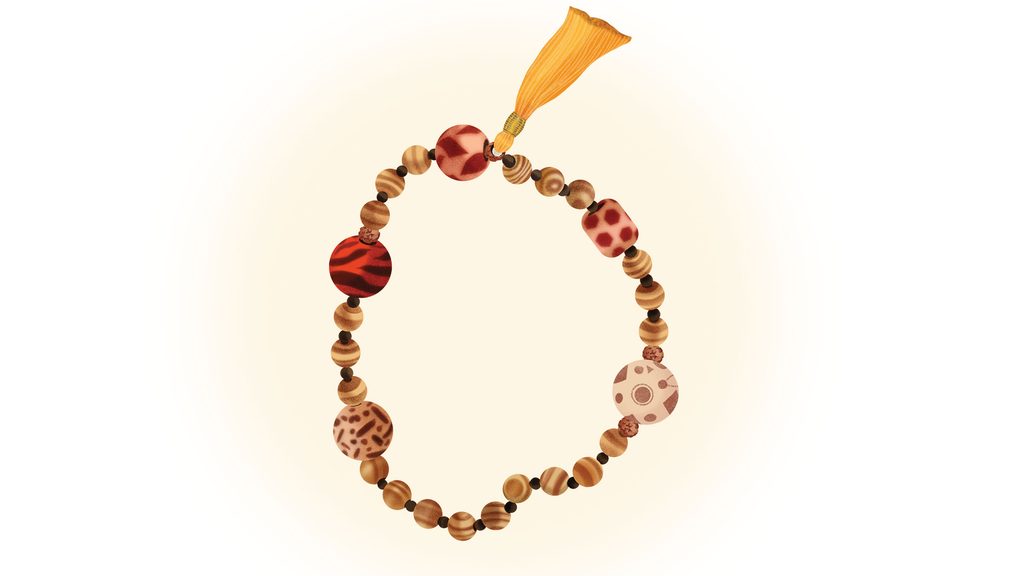
In Buddhism, a mala is a string of prayer beads used to count mantras, chants, breaths, invocations, etc. One way to contemplate and practice the three tenets is through a mala specially made for that purpose.
The three tenets mala (TTMala) was developed in 2016 by Roshi Wendy Egyoku Nakao, my teacher, as a way of working with the three tenets in our daily lives. You can do the practice when you feel stuck, triggered, low energy, overwhelmed, overcome with negative thoughts/emotions, etc. You can use it to reflect on your life, cultivate gratitude, or when you feel bored, numb, disconnected, or spaced out. You can use the TTMala if you are in conflict with someone, encounter a difficult situation at work, or when you want to appreciate someone. Ultimately, you can use it anytime.
The three tenets mala is divided into five sections, representing: the situation, not-knowing, bearing witness, taking action, and love. Each group of beads begins with a large head bead, followed by smaller beads representing contemplations you can do relating to each topic. When you do three tenets mala practice, you pass each bead through your fingers while reciting aloud the contemplation associated with it.
The tactile quality of holding the mala beads can help focus the mind and invite a moment of pause. By touching each bead and saying the invocations, you can open to what is beyond thinking, beyond the small ego self, beyond identity, and beyond constructions of time.
This devotional practice can help ground and center you in this very life as it is. The mala practice invites into your circle of life everything that you tend to ignore, leave out, demonize, or want to cut off. In this opening, you may begin to sense a mirroring between self and other. Such radical inclusivity helps create a somatic feeling of expansion and connection in all directions. When you can viscerally experience everything as awakened, then what once seemed in opposition naturally drops away.
How to Make Your Own Three Tenets Mala
You can find everything you need to make a three tenets mala at your local bead or craft store, or if you have beaded jewellery or malas that you’re not using, consider repurposing those beads. You will need:
- Beading string or wire that is thin enough to fit through the bead holes and yet durable enough to not break
- 5 large beads, preferably all different
- 21 or more identical small beads, either wood, stone, or ceramic
- 31 or more spacer beads (optional)
- 1 tassel
Once you have your materials ready, follow these steps to assemble your mala.
The five large beads each represent one of the five sections of the mala: the situation, not-knowing, bearing witness, taking action, and love. Take your time deciding which large bead best embodies each section. What does not-knowing feel like and look like to you in bead form? What about bearing witness? Taking action? Love?
Thread the situation bead onto your string or wire, followed by three smaller identical beads. If you’re using spacer beads, thread them between the beads. If you wish, you can use a thin needle to help with threading. Alternatively, you can apply a little nail polish to the end of the string; it will stiffen as it dries, making threading easier.
Thread the not-knowing bead on your string or wire, followed by three smaller identical beads and, if applicable, spacer beads.
Thread the bearing-witness bead, followed by nine or more identical smaller beads and, if applicable, spacer beads. When this section has more than nine beads, it gives a sense of inviting in more ingredients, or elements, that you’re bearing witness to.
Thread the taking-action bead, followed by three smaller identical beads and, if applicable, spacer beads.
Thread the love bead, followed by three smaller identical beads and, if applicable, spacer beads.
Tie the mala securely. If you’re not using spacer beads, make sure you do not tie it too tightly, otherwise it will be hard to use.
Use the tail ends from your knot to attach
the tassel.
How to Do Three Tenet Mala Practice
Once your mala is complete, you can use it to enter the three tenets in a direct, tactile way. This practice is meant for moments when life feels complex, emotionally charged, or uncertain. As you move bead by bead, allow the phrases and contemplations to open your heart, soften fixed ideas, and reconnect you with the wholeness of life.
1. Getting Started
Begin by rubbing the mala between your palms and saying, “I affirm the oneness of all life. All things coexist in relationship to each other.”
2. The Situation
Hold the large situation bead between your thumb and index finger and say, “I call the buddhas and bodhisattvas to witness my process.” State the who, what, when, where, and how of your situation. Be as specific as you can.
Then, for each of the three smaller beads after the situation bead, say the following phrases, one per bead.
Bead 1: “I acknowledge the awakened nature of all beings.”
Bead 2: “I meet all beings with respect and dignity.”
Bead 3: “I invite all hungry beings into my practice.”
3. Not-Knowing
Hold the large not-knowing bead between your thumb and index finger and say, “I practice not-knowing.”
Then, for each of the three smaller beads after the not-knowing bead, say the following phrases and reflect on their accompanying contemplations.
Bead 1: “I open my mind by releasing my knowing.” Ask yourself: What beliefs, opinions, and judgments am I holding?
Bead 2: “I open my heart by releasing my fears and resentments.” Ask yourself: What fears and resentments do I recognize?
Bead 3: “I open my being to new possibilities.” Ask yourself: What tensions, places of resistance, and fixed ideas can I release?
4. Bearing Witness
Hold the bearing-witness bead between your thumb and index finger and say: “I practice bearing witness.”
Then, holding each of the following smaller beads in turn, express one “ingredient”—something that arises from the situation—for each bead. Say what you see, hear, taste, touch, smell, feel, sense, wonder, believe, observe, perceive, and so forth. Notice your thought patterns. It may be helpful to say, “I notice that…” or “I feel that…” Give yourself enough time for everything to arise.
If you have more ingredients than small bearing-witness beads, simply loop back to the first one and continue identifying ingredients.
5. Taking Action
Hold the taking-action bead (also called the do bead) between your thumb and index finger and say, “I use my energy and love to serve the wholeness of life. I will…” then state your action.
Next, as you move through the three smaller beads, say the following:
Bead 1: “By this action, I serve the situation.”
Bead 2: “By this action, I serve…” (Say a name or names.)
Bead 3: “By this action, I take care of myself by…” (Name ways to care for yourself.)
6. Love
Hold the love bead between your thumb and index finger and say, “I affirm love as the great force of my life.”
Next, moving through the following three smaller beads, say:
Bead 1: “I offer my gratitude and thankfulness to…” (Say a name or names.)
Bead 2: “I dedicate the merit of this practice to…” (Name someone other than yourself.)
Bead 3: “I humbly take my place in the circle of life.”
7. Conclusion
To conclude the practice, rub the mala between the palms of your hands and reaffirm the oneness of life.