
With red faces and steaming breath, more than two hundred faith leaders from across the country climbed back onto the buses. Dressed in brightly colored regalia, they’d just completed a forty-minute patrol monitoring ICE in ten-below-zero weather on Lake Street in Minneapolis.
After a short loving-kindness meditation and song, I invited folks on the bus to debrief. A few people posted on one corner had seen six heavily armed men in face masks emerge from an SUV and surround a minivan occupied by a terrified-looking brown-skinned woman and three children. The agents questioned her and then left quickly. Our patrollers barely had time to start recording, but without that moment of bearing witness, no one outside the scene would ever have known it had happened.
“This is a precious time, one for us to take action, to care for our communities, to protect the most vulnerable among us, and to stand against violence with a commitment to nonviolence.”
If you have seen images of violence here in Minneapolis, it is only because the community is committed to showing up and documenting what is unfolding. And even then, what we captured is only a drop in the bucket compared to the countless other moments of intimidation and violence that go unrecorded. ICE has operated in Minneapolis for many years, and although the level of activity fluctuates, the community’s response—patrols, documentation, and mutual aid—remains steady.
To know the Buddha’s first noble truth is to bear witness to suffering. The great bodhisattva Kannon is “the one who hears the cries of the world.” Sanjusangendo temple in Kyoto, Japan, is filled with a dazzling array of 1,001 Kannon statues, each with myriad hands holding tools to respond to the suffering they perceive.
This is how I feel living in Minneapolis. I dwell among an array of people who see suffering, care about it, and use myriad ways to respond. People all over the city and at our Zen center share stories of being on patrol. We field phone calls, emails, and chats requesting help, asking where to send donations, and offering to volunteer. Folks give rides to neighbors, deliver food, maintain spreadsheets to coordinate care, and raise grocery and rent funds for those who aren’t safe leaving their homes. We take to the streets in the thousands. Those patrolling with cameras face trauma—and even risk death—to bear witness to the suffering ICE has brought to our community.
For years, I’ve focused on studying and communicating the wisdom of the Flower Garland Sutra. One of its central themes is celebrating the wondrous diversity of people and spiritual practices. In the sutra, we encounter a dazzling array of teachers: beggars, queens, boys and girls, monks, nuns, rich men, mathematicians, sailors, perfumers, goddesses, bark-clad outcasts, folks who change genders, people dressed in rags, those bedecked in jewels, a prince who almost loses his life working to free all the prisoners in his land, and great bodhisattvas like Avalokiteshvara and Manjushri.
They teach in myriad different ways that are appropriate to themselves and those they meet. They teach by physical touch, feeding people, making perfumes, writing, teaching meditation, expounding the dharma, revealing suffering, and facing down the violent threats of a king.
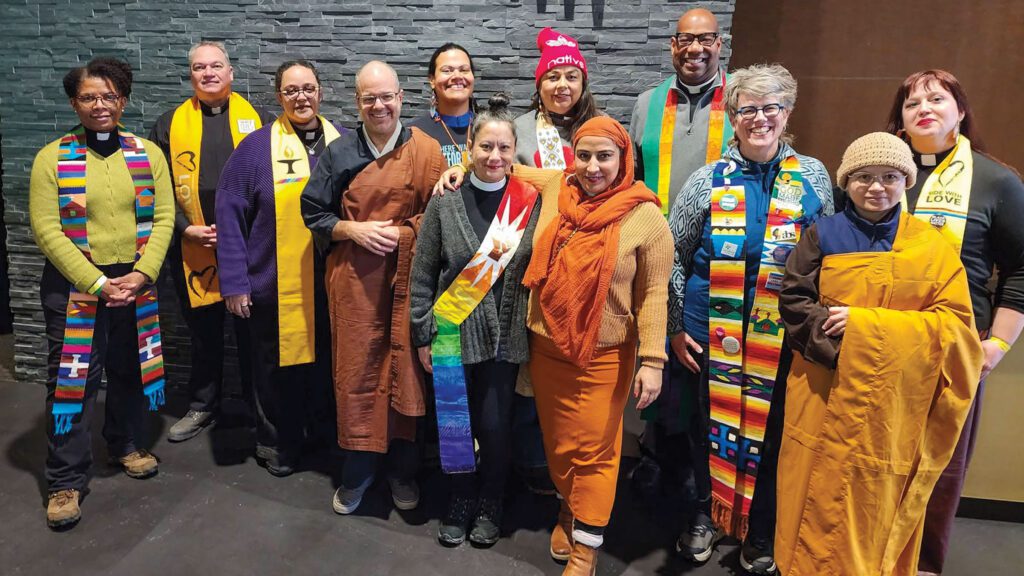
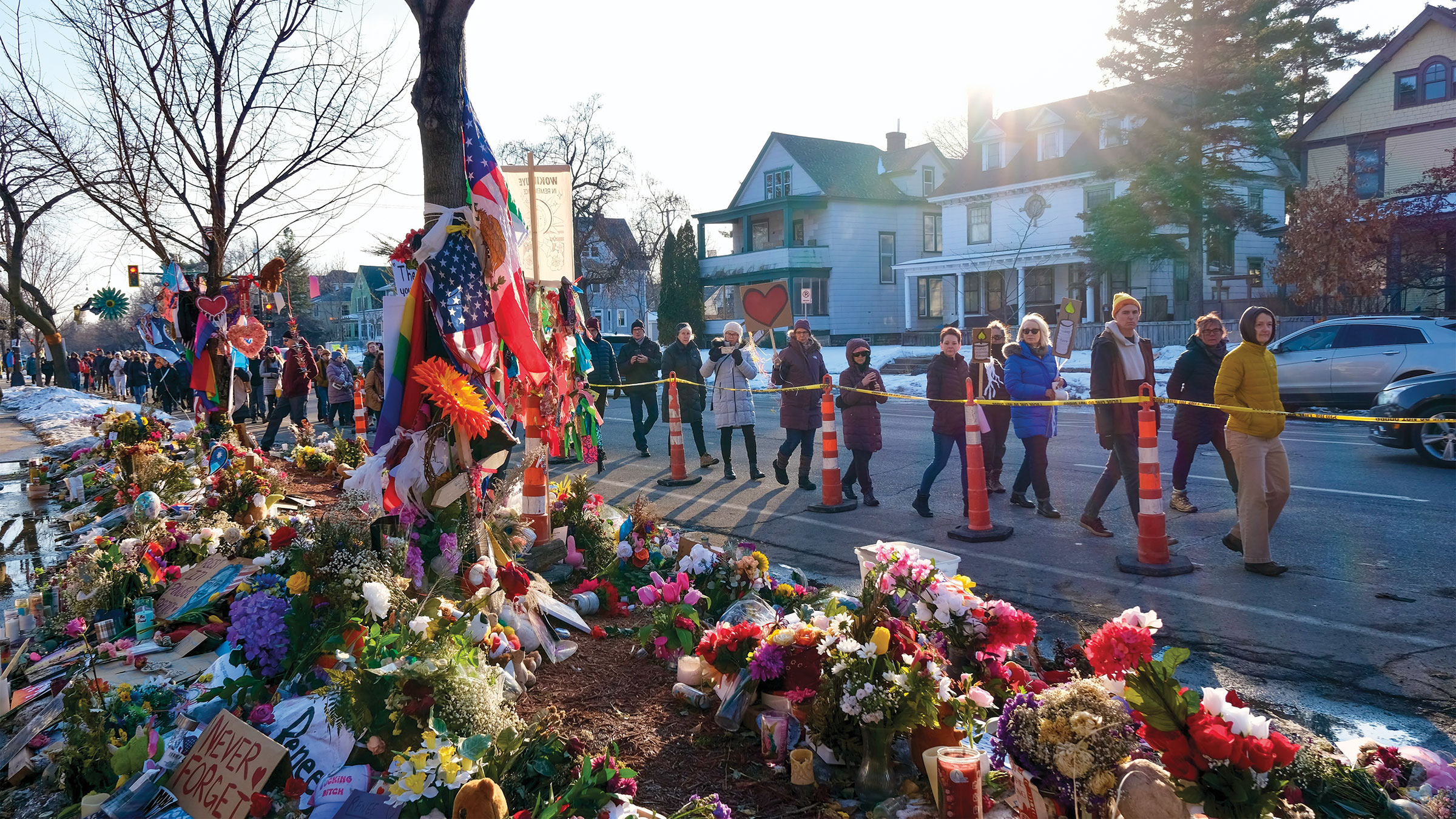
On one morning in January, some of the out-of-town faith leaders gathered in Minneapolis packed food for delivery. Others went on a pilgrimage to George Floyd Square and the Renée Good memorial. A minister with EMT training tended two observers whose car window had been smashed by ICE agents. A hundred local clergy, including Buddhists, were arrested while practicing nonviolent civil disobedience with a thousand people singing in solidarity and vigil with them. Daily practice continues in our Buddhist communities. This morning, I started the day singing with a crowd of citizens across from a line of federal agents in riot gear; I will end it by beginning a weekend meditation retreat.
The roots of all this care go deep. Mahayana Buddhist teachings say that when we act, we plant either wholesome or unwholesome seeds, and these seeds will always bear fruit. People here in Minneapolis have been planting wholesome seeds of networks of care and welcoming immigrants for years. As we worked through the anguish and rage after the killings of Philando Castile, George Floyd, and others, we cultivated commitment to each other and to countering racism and state violence against people of color. People still gather at George Floyd Square every morning to model community, creativity, and justice. The Buddhist frame of cause and effect invites us to focus not on controlling situations but on the quality and skillfulness of our actions. When we act with mindfulness and awareness of interdependence, we are creating a world of mindfulness and awareness of interdependence.
Here in Minneapolis, emotions have run high. People speak of despair, rage, terror, anxiety, joy, and pride. There is very real trauma. As a Zen teacher, I try to make space for these emotions to be known. When we meet emotions with compassion, we plant seeds of compassion. Surely, many people here were enraged and lashed out at ICE agents. I am not trained or authorized to judge people. My vows call me to bear witness to all of it. My path is to create a context for nonviolence, for people to be compassionate toward how they feel, to realize that we are all in this together, and to face violence with nonviolence. Vast numbers of people here are engaged in these practices.
If movements for liberation are about control, they are not movements of liberation. We are forging communities of love and connection, of recognizing that, as Rev. Jim Bear Jacobs says when he invokes his Indigenous elders, “We are all related.”
This is a precious time, one for us to take action, to care for our communities, to protect the most vulnerable among us, and to stand against violence with a commitment to nonviolence. Nonviolence requires tremendous courage, but I see regular people embodying it every day. The Dhammapada teaches, “Happily the peaceful live, discarding both victory and defeat,” and American labor leader and civil rights activist Cesar Chavez once said, “There is no such thing as defeat in nonviolence.”
In the deepest heart of nonviolence, there are no enemies. None of us here is perfect. When we see folks as others or as enemies, may we have compassion for the alienation in our hearts. I try to see that even violence is not my enemy. Buddhist teachings and the practices that ancestors have passed to me show me that nothing is outside myself. We are all intimately connected in the web of cause and effect.
As long as we’re alive, we can offer something for liberation from suffering right now. The possibilities are boundless, and we are bound together in this network of possibilities. I don’t think we need great shining heroes with blazing victories. I believe we need neighbors, we need community, we need each other, we need to see that we are all related and to act according to this truth.