


After ten years of committed Zen practice, I decided to do a rigorous weeklong retreat with a senior Zen teacher. I had to arrive two days before the retreat began for protocol training so that I would be in sync with the retreat’s highly choreographed practice rituals. They trained me in how to bow at the threshold of the meditation hall, enter, and mount my cushions precisely. Any deviation warranted a reprimand from the practice leader. I even had to tie my practice robes “just so.” Nothing was left to chance, including the way I served and ate my food. Even if I just looked up from my meal, I’d hear the monitor admonish me to look back down.
For obvious reasons, this style of Buddhist practice is not for everyone. Many meditation students feel these rituals are harsh—and to some extent they are—but after years of practicing Zen, I understood these protocols were designed to keep students continuously alert and attentive. As one Zen teacher said, “Zen retreats are a setup for self-consciousness.” You know at any instant you might trip up, so you bring mindfulness to each moment, every bite of food, even the tiniest movements. As you pay attention, if you relax into the practice, you can begin to inhabit full presence effortlessly.
On the first day of the retreat, the teacher called in each student for our first individual meeting. Here he would give us our koan to work on for the week.
Zen koans are stories, questions, or epigrams that help us move beyond our ordinary thinking mind and experience the true nature of reality directly. Many take the form of memorable exchanges with enlightened Zen masters—encounters that halted a student’s thought patterns and woke them up to the ultimate truth.
Each koan is a puzzle that seems to have mismatched parts. You can’t make them fit through a force of will or clever manipulation. Even if the pieces start to fit, they may fall apart again at any moment. For example, a well-known entry-level koan is, “What is the sound of one hand clapping?” To our rational mind this makes no sense, but koans are not understood through logic; you can’t dissect or analyze them if you want genuine understanding. Instead, koans reveal themselves by opening a hidden door deep in the heart-mind. Once opened, you get a glimpse, or even a deep dive, into the great mind of awareness that is clear and without obstruction.
Sixty students were present at this retreat. When the practice leader called me to my initial meeting with the teacher, I entered a waiting room with several others. As part of the traditional Zen ritual, I had to remove my socks despite the early spring cold. Touching my bare feet to the frigid tile floor sent a shiver up my body, but the cold kept me alert. Just before I entered the teacher’s room, I had to strike a bell three times. I rang it as evenly as possible, as I assumed my precision, or lack thereof, helped the teacher gauge my presence.
I haltingly stepped inside, wondering how this encounter might reflect my own state of mind. I did my best to appear calm and collected.
The teacher raised a practice stick, looked directly at me and asked, “When you see the stick, where is God?”
After his question sunk in, this koan made me happy. It was so simple, what I labeled a “baby koan,” a humble question designed for beginners. I wasn’t a beginner and figured he gave me this koan to prime me for a more difficult one to follow.
I smiled at his question and bent forward to grab the stick. But as my hand encircled it, he held tight. There was no way I could snatch the stick from him to make my point. I let go, and he lowered the stick. He asked me the question again.
Truth is, my stick grab didn’t arise from deep wisdom or insight. Because the teacher gave me what I perceived as a “beginner koan,” I didn’t explore the question sincerely. I just mimicked what I assumed was the right answer based on other koans I had studied. It was immediately clear that my response hadn’t ripened.
All of us students met with the teacher three times a day to present our answer to our koan as it stood at the moment. During the next several meetings, I attempted additional canned answers, or I just made them up as I went along. I yelled, kicked, gestured, and mostly made a buffoon of myself. Nothing worked. After a few days, I realized that he had stumped me. Maybe this wasn’t a beginner koan after all, no matter how simple it seemed on the surface.
Seeing the futility of my efforts, I began to let go, to allow the koan to sink into my body, and I invited the question into my heart. My certainty long gone at last, I inhabited “don’t-know mind.” In Zen, don’t-know mind is our original mind before we form opinions or concepts that lead to suffering when we cling to them. This is where koan practice comes alive.
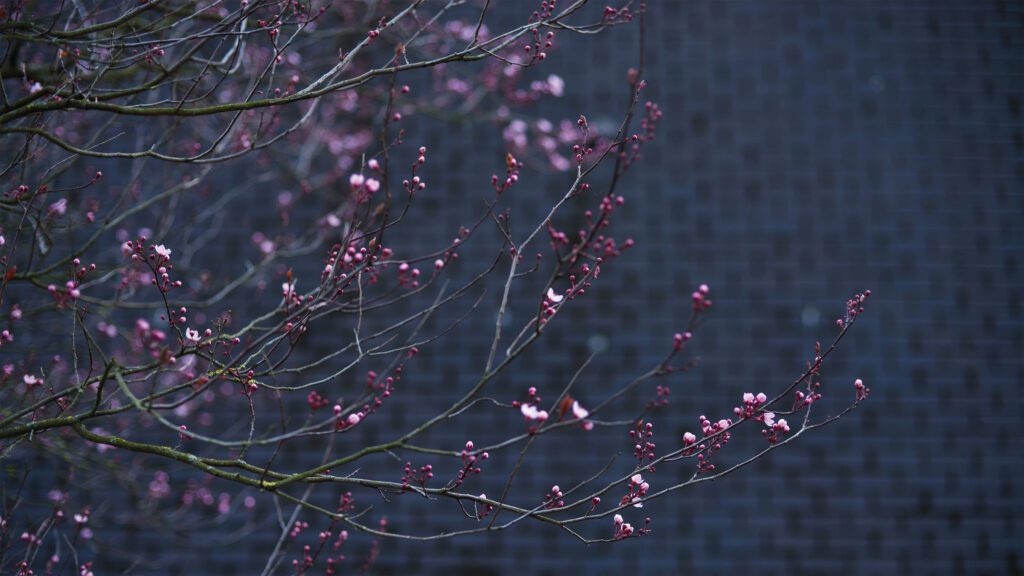
About midway into the retreat, I saw a cherry tree in bloom during an outdoor walking meditation. At the end of the session, I spontaneously went over to pick a small branch for the teacher. I was reminded of the Zen koan about the Buddha silently holding up a flower. He was at Vulture Peak, standing before a crowd gathered to hear him teach. But he stayed silent and simply held up a single flower. Of the assembled crowd, only his disciple Mahakashyapa responded—with a smile. The Buddha recognized that Mahakashyapa had understood his wordless transmission.
The spirit of this awakening story seemed to point directly to the koan I was working on. At our next koan session I walked through the door with the cherry twig in hand. As the teacher asked me the koan, “When you see the stick, where is God?” I raised the cherry blossoms. This was the first time my answer felt somewhat connected to my inner knowing. He smiled and said he could see I felt an affinity for nature. But he also said my answer was incorrect. Then he encouraged me to keep at it; he wanted me to “get my money’s worth.”
I left the session in a knot. “If the cherry blossom doesn’t speak to interconnection, to God in the stick, in me and him, what does?” I knew I didn’t know. So, the koan stayed in my body, and the question arose from time to time, “When you see the stick, where is God?” Often the question faded into silence. But it never entered my analytical mind again.
On the last day of retreat, just before my final koan interview, I walked out of a bathroom stall, and a door flew open in the heart-mind. The koan broke free and an answer appeared. It felt right. The scaffolding of my self collapsed into groundlessness, yet I could stand. I smiled.
I entered the interview room without hesitation and presented the answer to the teacher. He nodded his head and approved my answer. I wasn’t surprised at all. In fact, there wasn’t a sense of “me” or “mine” at that moment, I didn’t own the answer, it hadn’t come from me. There was no doubt.
I left the retreat relieved that I had indeed “gotten my money’s worth,” but a feather of doubt returned and tickled me. I wondered whether approval mattered at all, or if the real work had already happened. I couldn’t find an answer, though, and after a few days I let it go.
Many years later, I read a few articles that seemed to indicate this Zen teacher sometimes gave passes to people by the end of his retreats. But only if he saw some genuine clarity in their answers. I also read an article by a long-term student of his who described his efforts with a similar koan. He said he had never gotten a pass from the teacher over many years. He also shared how the koan had become a great teacher, helping him to let go repeatedly into the inherent mystery of life, to return to don’t-know mind when that’s what life called for. In my mind, he got more from the koan by not breaking through.
In truth, the koan served us both in different ways. I would never see that teacher again, and he’s no longer alive. Yet that rigorous week of koan study helped me to let go and trust inner knowing at a far deeper level than any of my previous koan studies. Slowly, I began to see that the spirit of koan practice was not limited to formal Zen questions. It could also be carried into the unresolved places of ordinary human life—into grief, uncertainty, ethical crossroads, and love itself. Over time, I stopped asking which koan to take up and began learning how to live with the questions that had already found me. These are what I call life koans.
Life koans are not just questions we devise; they are the ones life places directly in our path, often without our consent.
As Rainer Maria Rilke said, “Be patient toward all that is unsolved in your heart and try to love the questions themselves…. Do not now seek the answers, which cannot be given you because you would not be able to live them. And the point is, to live everything. Live the questions.”
Working with unresolved questions in your meditation practice is an intentional focus, which differs from basic breath and body awareness. You are directing your attention to something more specific, in this case, deep questions in your life. You’re creating an intention to bring the question into your heart with a quality of openness and interest, but not with an intent to analyze or resolve.
When you take time to turn inward with a spirit of patience and inquiry, instead of requiring the dilemmas to go away or insisting on immediate resolutions, you can discover the resources you need. Unresolved questions can contain a rich source of insight; learning to live with them brings about a radical shift that opens the door to clarity and equanimity.
Your question may be about some aspect of your life that doesn’t make sense: loneliness, career, or finances, a difficult relationship, perhaps old conditioning that keeps reappearing unexpectedly no matter what you do. It may be about health or chronic pain, the loss of a loved one, or perhaps deep spiritual questions about life and death. Most of us are intimately familiar with our themes, the questions that we just can’t resolve.
In exploring your questions this way, they can transform into a life force. Living your deepest questions is living your life fully; loving your questions is loving even those parts of your life and those parts of yourself that you may have shut out.
This is where a radical shift can occur. Unresolved questions often point to the parts of our lives that we resist, such as deeply conditioned fear or uncertainty. Trying to figure out a resolution pulls us away from the immediacy of experience, the very place where a question can come alive.
A portal to wisdom opens only when we step out of the realm of the intellect and loosen our habitual drive to solve. Living our questions brings us fully into the present where insight can arise on its own when the time is right.
A Guided Meditation for Living the Questions
The following guided inquiry offers one way to work with questions in meditation:
• Settle into your meditation posture, bringing your attention to your breath and breathing naturally. Take some time with your breath practice and relax if you can.
• Now take a few minutes to find your question and bring it into your heart.
• Open to it as a living thing.
• If nothing arises, just let yourself dwell in the silence of not knowing.
• As thoughts or stories arise, gently let them go and return to your question until it settles into your body.
• Notice without judgment what you feel.
• As the question settles into your body, you may feel sadness or grief, despair, anger, fear, love, or compassion. You may even feel neutral. Whatever you’re feeling, don’t try to dig it out or force an answer. Avoid attaching to names or explanations. Just feel it.
• Even if you feel neutral or blank, stay with the experience. Chances are it will change of its own accord if you stay present with it.
• The question may also appear as energy. This can happen when we move the question out of the realm of thought and into heart.
• If something arises that doesn’t fit with your familiar answers, something unexpected or illogical, don’t dismiss it right off. Give it some room and cultivate an attitude of curiosity. See if it has a kernel of truth.
• If you feel overwhelmed and quickly engage in busy or intensive thought, the question may be too charged. Pull back and focus on the breath or another object of attention until you feel more settled. Then return to your question as you feel ready.
• Once your question settles into your being, just let it rest there and don’t try to direct or see the outcome. This is where your mindfulness practice will serve you, in this spaciousness of mind and heart that we can’t so easily access in our day-to-day activities.
• As you settle further, just allow yourself to be where you are with the question, either in clarity or confusion. Whatever it might be, just be open to it, welcome it, and let it be in your heart.
With this meditation, what we’re learning to do is hold the question in the realm of not knowing, the realm of mystery. And slowly we learn to respond from an unbiased heart.