

Category: Buddhist Wisdom

Strike! Rise! Dance! — bell hooks & Eve Ensler
They’re two of the most fearless women we know. Prepare to be challenged by their dialogue on “Beyond the Body” held at The New School in New York City.

Buddha’s Daughters: An interview with dharma teacher, writer, and editor Carolyn Gimian
Carolyn Rose Gimian has edited many of Chögyam Trungpa Rinpoche’s books, including his Collected Works. She’s also a senior teacher in Shambhala International whose teachings are characterized by her down-to-earth wisdom braided with her playful sense of humor. One of Carolyn’s teachings is in my anthology Buddha’s Daughters: Teachings from Women Who Are Shaping Buddhism in…

Buddha’s Daughters: An interview with Karen Maezen Miller
Karen Maezen Miller on her new teachings in the anthology Buddha's Daughters: Teachings from Women Who Are Shaping Buddhism in the West.

OK, Here’s the Deal
Authentic practice is always available to us, but it doesn’t come cheap. Konrad Ryushin Marchaj reminds us what’s really at stake.

Take a Good Hard Look
Everyone faces doubts about their progress on the path, says Doug Phillips, and the Bahiya Sutta shows us how to meet that doubt honestly.

Commentary: Respect the Fifth Precept
Noah Levine's commentary on the fifth precept, sobriety, and taking refuge.

Reviews: Milarepa, He Started Like Us
Karl Brunnhölzl reviews "The Yogin & The Madman" by Andrew Quintman, a new biography of Milarepa.

Reviews: How the Buddha Became St. Josaphat
Reviews of "In Search of the Christian Buddha: How an Asian Sage Became a Medieval Saint" by Donald S. Lopez, Jr. and Peggy McCracken.

Book Briefs – Summer 2014
Brief summaries of Buddhist books from the Summer 2014 issue of the Buddhadharma magazine.

Women in Buddhism Study Initiative, University of Hamburg
Bhikkhu Analayo spent many years poring through the voluminous discourses of the Pali canon, trying to unravel an enduring mystery. What, he wondered, was the Buddha’s true view on the ordination of female monastics, or bhikkhunis?

The World Catches Us Every Time
A mysterious beast captures your attention. Is it distracting you or calling you? It can be hard to tell, says Zen teacher John Tarrant, what’s distraction and what could have real meaning for your life. Either way, there’s no going back.

The Distortions We Bring To The Study of Buddhism
Dzongsar Jamyang Khyentse calls on Westerners to acknowledge the distortions we may bring to the study of Buddhism—through our cultural arrogance, the deceit of ego, and simple ignorance. The successful transplant of such a subtle and challenging practice as Buddhism, he says, depends on thorough study and clear recognition of our habitual patterns.

Losing Katherine
Katherine was the sort of person who might suddenly ask, “How do you know love?” Natalie Goldberg recounts what she learned from this friend.

The Bearable Lightness of Being
When we honor life but don’t make it a big deal, we become more joyous. The fancy name for that, says Pema Chödrön, is enlightenment.

About a Poem: Ruth Ozeki on Ono no Komachi
How do we remember a woman’s life? Can we piece her together from a few lines of poetry?
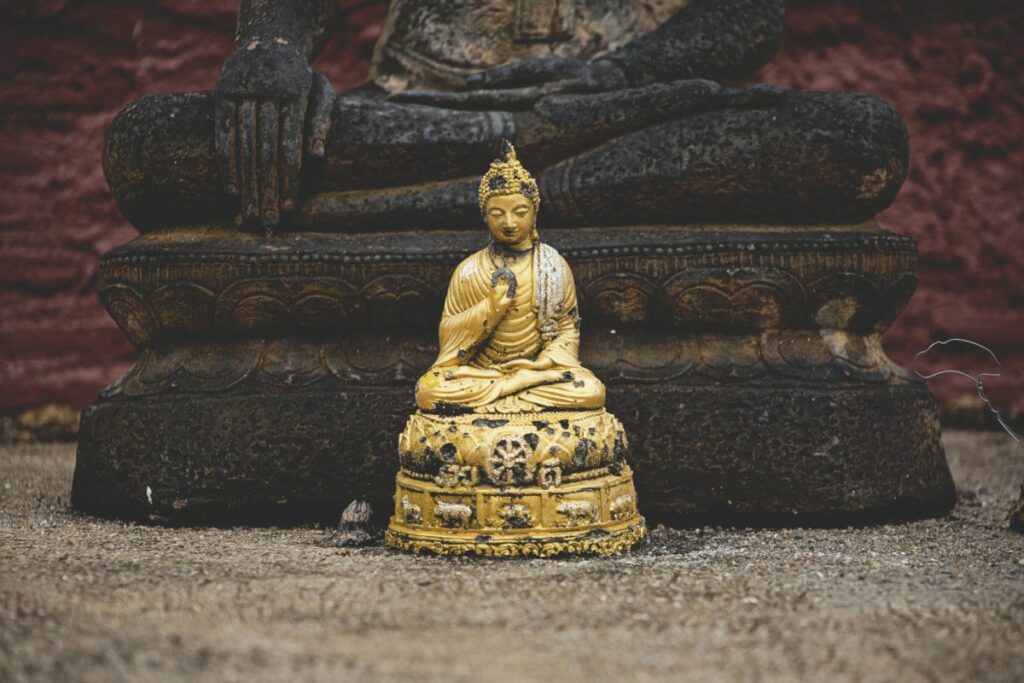
Forum: Your Teacher and You
A forum on what it means to have a teacher today, how you can make the most of the relationship, and what you can do when it’s not working.

Teachers Are People Too
We want our teachers to practice what they preach, but when we look closely, they can seem just as flawed as the rest of us. Sumi Loundon Kim discovers for herself what’s so special—and so ordinary—about being the teacher.

Reviews: Buddhism — A to Z
Rory Lindsay reviews "The Princeton Dictionary of Buddhism" by Robert E. Buswell Jr. and Donald S. Lopez Jr.

A Commentary on “The Eight Bardos”
According to Tibetan Buddhism, all life and death take place in the gap, or bardo, between one state and another. While the most famous bardo is the one between death and rebirth, there are others that also shape our lives. Khenchen Konchog Gyaltshen presents a commentary on Milarepa’s song of realization “The Eight Bardos.”

A Meeting of Hearts and Minds
In a teacher-student relationship, says Jakusho Kwong, it’s not enough to know your teacher’s heart and mind. You also need to know your own.